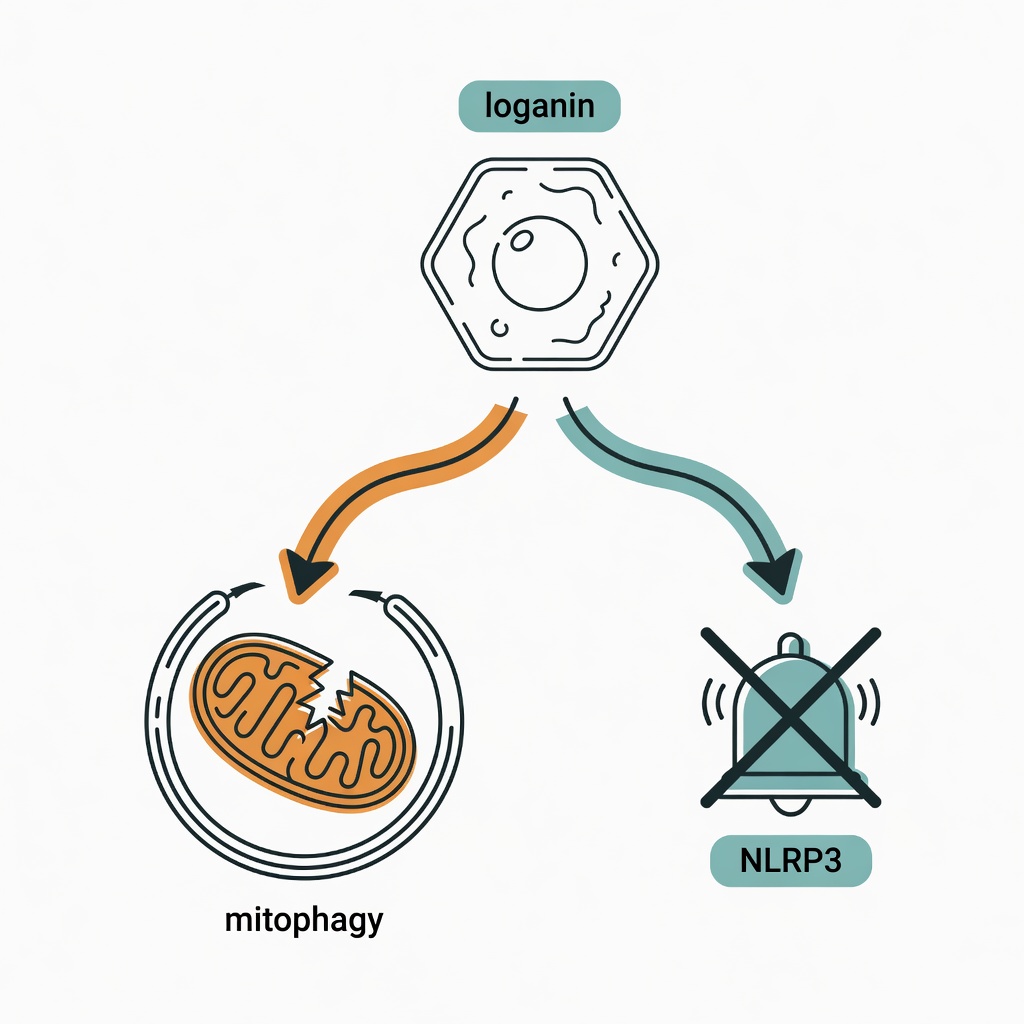
Why some liver cells survive a chemical hit
Loganin, a modest iridoid glycoside from Cornus fruit, helps liver cells endure chemical assault by flipping two defenses at once: clearing damaged mitochondria and muting an inflammatory alarm.
You have probably heard Cornus praised as a “liver and kidney tonic,” yet the active piece stayed fuzzy. A 2026 study in Chinese Journal of Integrative Medicine pinned the work on loganin. In a carbon tetrachloride (CCl4) model of acute injury, treated mice showed lower AST and ALT and less swelling, necrosis, and inflammatory infiltration. The point is not another vague “liver herb.” It is how loganin acts: two switches, not one.
Dual protection: trash out, alarm off
Loganin does not lean on a single tactic. It runs two lines at the same time:
- Mitophagy: hauling out damaged mitochondria.
- NLRP3 inflammasome suppression: damping a major inflammatory alarm.
The clearance line starts first
Damaged mitochondria leak reactive oxygen and drag down energy supply. Cells already keep a clearance line for this junk: mitophagy. Loganin raised PINK1, Parkin, Beclin-1, Atg-7, and LC3, the core parts of that line, and lowered p62, which otherwise clogs it. Net result: brisk turnover of broken mitochondria.
Then the alarm goes quiet
Once triggered, the NLRP3 inflammasome summons a wave of inflammation that can hurt hepatocytes. Loganin dampened NLRP3 activity, cut IL-6 and TNF-α signals, and improved antioxidant markers: SOD up, MDA down. With both lines engaged, the cell holds up better under chemical stress.
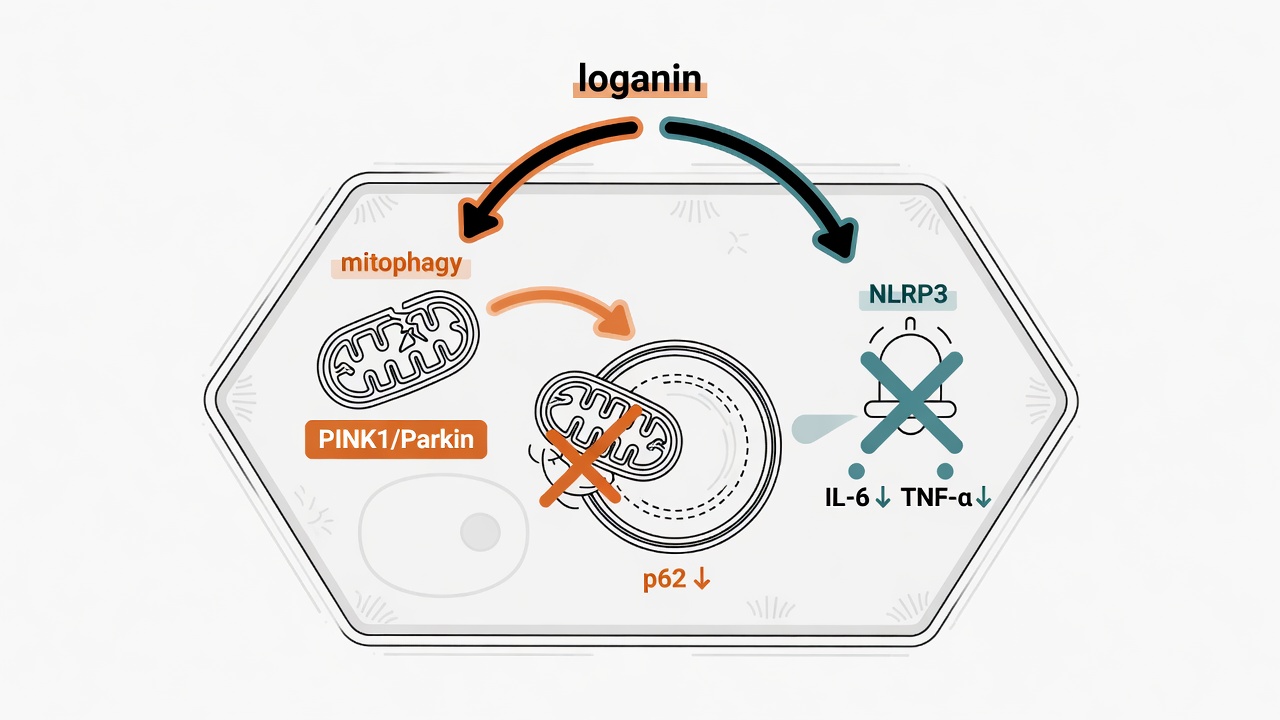 Figure 1. Dual mechanism of loganin: mitophagy (PINK1/Parkin tagging damaged mitochondria for clearance; p62 down) and NLRP3 inflammasome suppression (IL-6/TNF-α down).
Pull the clearance key, and protection fails
A reversal test asked whether mitophagy was load-bearing. Block it, and watch whether protection collapses.
Animals: 30 male C57BL/6 mice in 5 groups (control, CCl4 model, loganin at 40 mg/kg and 80 mg/kg, and silybin as positive control), dosed by gavage for 6 days. Both loganin doses cut AST and ALT (P < 0.01) and eased hepatic swelling, necrosis, and inflammatory infiltration.
Cells: In hepatocytes hit with CCl4, loganin protected. Add Mdivi-1, a mitophagy inhibitor, and that benefit vanished. Taking away the clearance line and losing the rescue is stronger evidence than correlation alone.
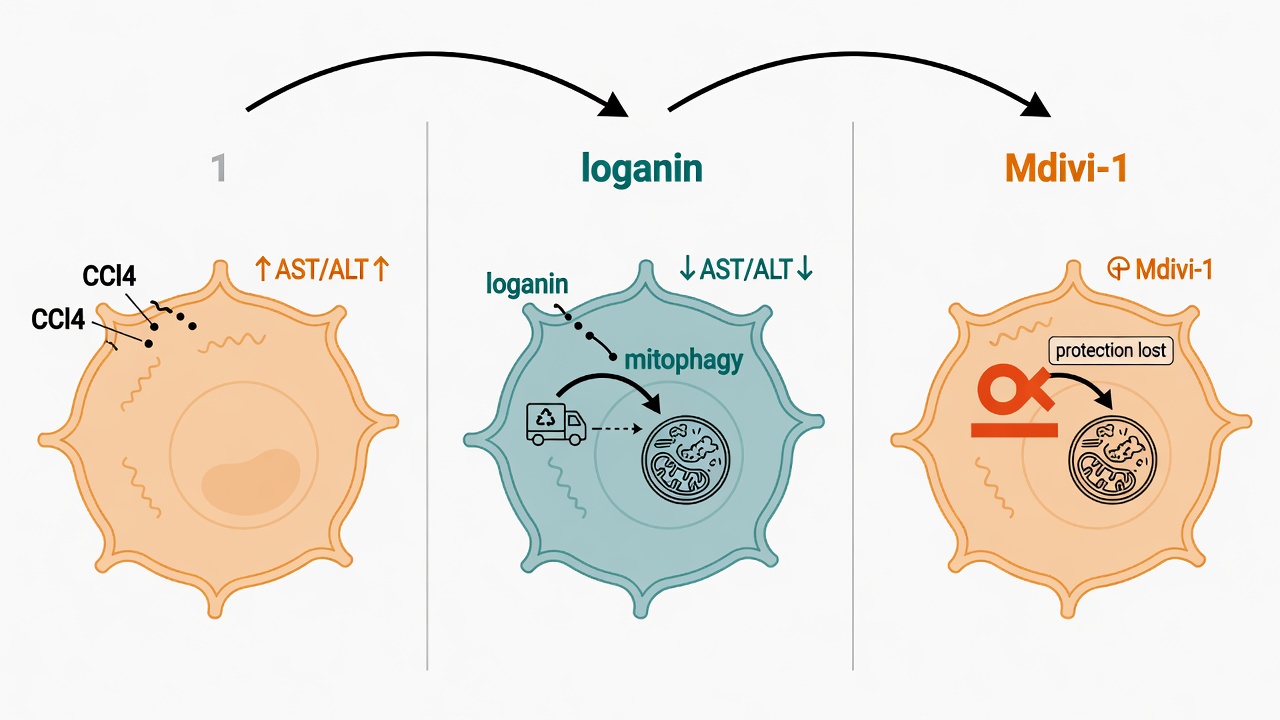 Figure 2. Causal reversal: CCl4 injures the liver; loganin lowers AST/ALT; Mdivi-1 blocks mitophagy and undoes the protection.
Caveats: mice are not patients
These findings come from mice and hepatocyte lines, using CCl4, a lab toxin, not the fatty, viral, or alcoholic liver disease you meet in clinic. Loganin’s own antioxidant activity blurs how much credit belongs to trash-clearing versus antioxidation. Mdivi-1 also disrupts mitochondrial fission, so the reversal is elegant but not pure. And excess autophagy can harm in some liver injuries; clearing trash is not always a win.
What this means for you
This paper maps a drug-target lead, not a green light to “eat Cornus for the liver.” Human dose, safety, and efficacy are still open.
If you want something you can actually hold onto:
- Drink less alcohol.
- Keep weight in check to cut fatty-liver risk.
- Skip unverified supplements or herbs of unknown origin.
- Stay current on hepatitis vaccines.
- Get routine liver function tests.
None of that makes a headline. It is still the most reliable way to ease strain on your liver today.
References
- Jiang, M., et al. (2026). Loganin Alleviates CCl4-Induced Acute Liver Injury by Promoting Mitophagy and Inhibiting NLRP3 Inflammasome. Chinese Journal of Integrative Medicine. https://doi.org/10.1007/s11655-026-3851-3