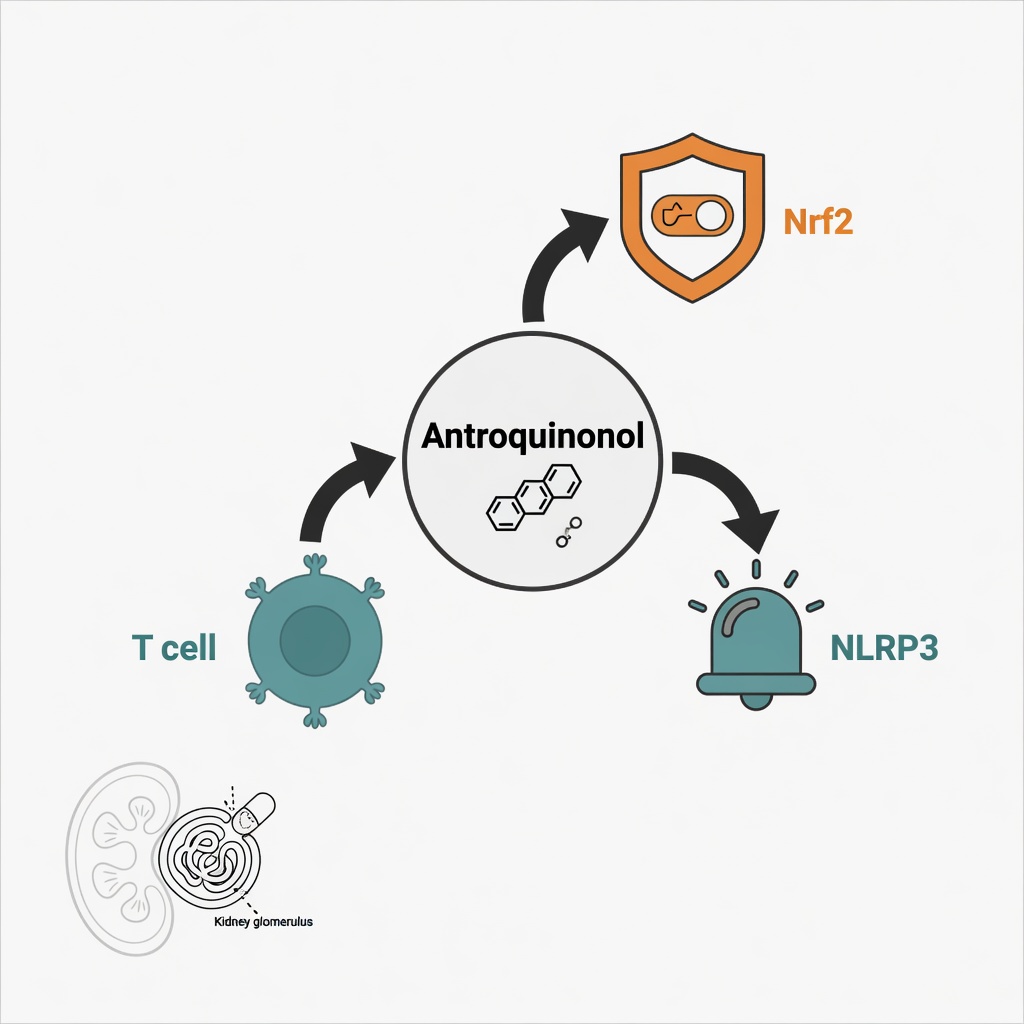
Inside each of your kidneys sit more than a million tiny filters called glomeruli that sieve your blood every day, keeping protein in and letting waste water out. One disease turns your own antibodies against those filters: they clump together, jam the mesh, and inflammation starts to smoulder. That disease is IgA nephropathy, the most common primary glomerulonephritis on the planet.
It is a quiet illness: many people feel nothing until a routine check turns up blood or protein in the urine. Once it starts to advance, roughly a third of patients slide toward kidney failure over about two decades, ending up on dialysis or waiting for a transplant. To this day, medicine still has no drug aimed squarely at its root.
One molecule, three pathways at once
In IgA nephropathy mice, a purified compound from Antrodia camphorata worked three pathways in parallel and bought the kidney's filters some breathing room, an unusual angle for a disease with no targeted therapy.
Antrodia camphorata is a rare fungus native to Taiwan's forests. From its mycelium, researchers purified an active molecule called antroquinonol. Most attempts to protect the kidney hunt for a single fire to put out. This one behaved differently: the same molecule tended three at once, raising Nrf2, the cell's master antioxidant defence, reining in overactive T cells, and turning down the NLRP3 inflammasome, the spark that recruits more inflammatory help.
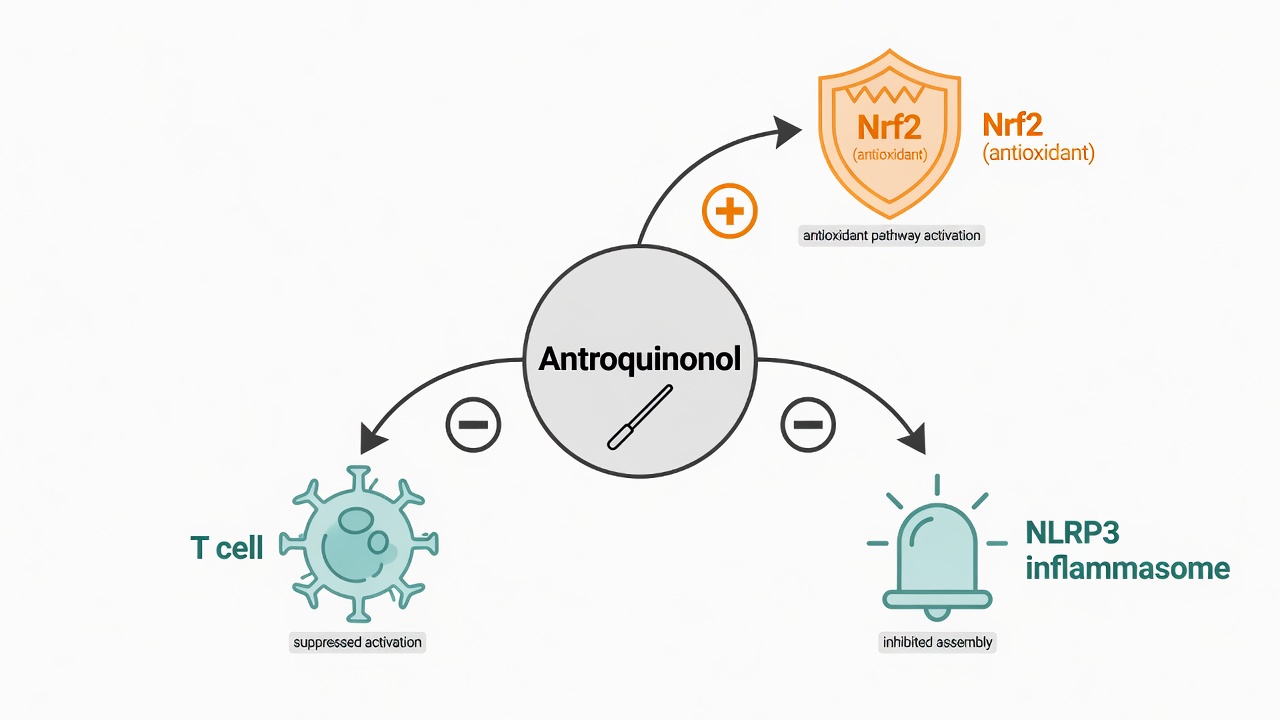
Figure 1: Antroquinonol raises Nrf2 antioxidant defence while pressing down T cells and the NLRP3 inflammasome, three routes to cool a burning filter.
Why hit three targets? IgA nephropathy is not one broken part. Reactive oxygen species (ROS) pile up in the kidney, immune cells barge in, and inflammation that will not stop all feed each other. Put out only one fire, and two keep burning on the filter.
What the mice actually showed
The team used an accelerated form of IgA nephropathy in mice, compressing years of disease into a few weeks. Mice given antroquinonol showed clearly fewer of the worst lesions: glomerular overgrowth, crescents, scarring, and the inflammation ringing each filter were all pushed down.
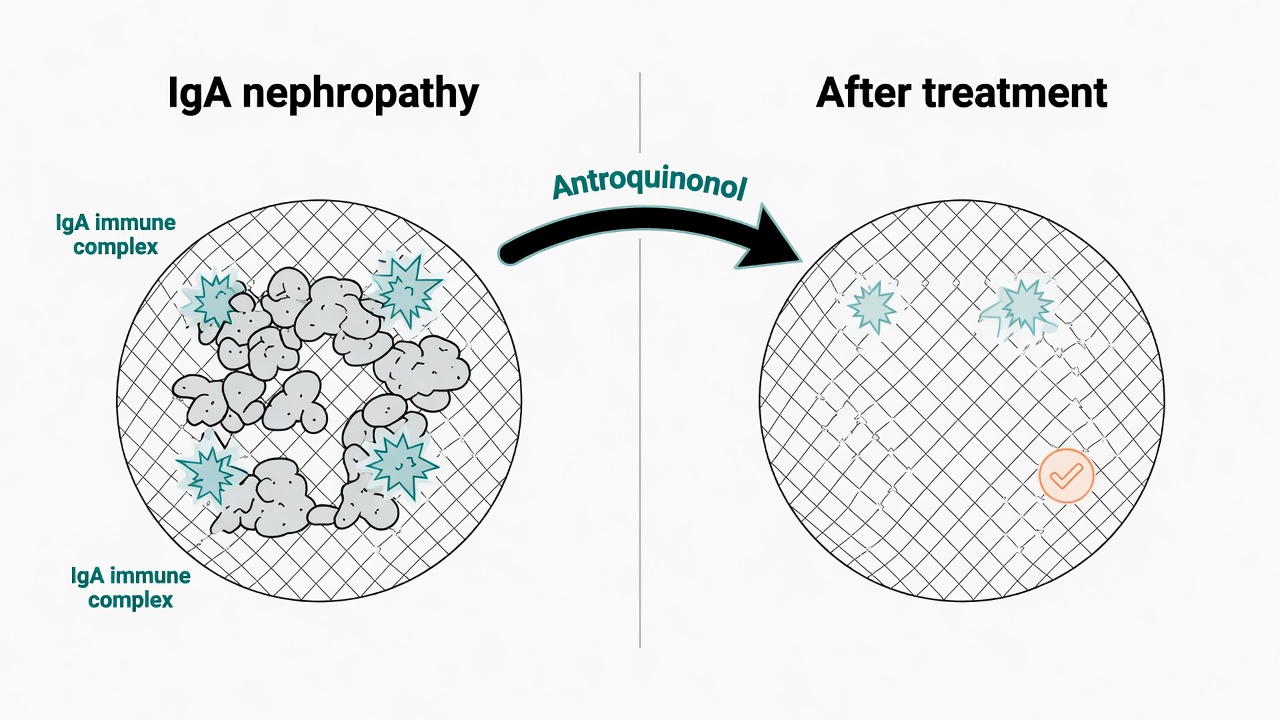
Figure 2: On the left, IgA immune complexes clog the filter and summon inflammation. On the right, antroquinonol steps in and the mesh clears.
The point that matters most is timing. Even when the drug was given after disease was already established, the mice still improved, with less protein in the urine and better kidney function. That suggests more than prevention; it looks like treatment. In the dish, when IgA immune complexes prod macrophages, they ignite the NLRP3 inflammasome. Antroquinonol lowered ROS inside those cells, and the fire cooled.
But these are results in mice and in cultured cells, not people. The accelerated model runs far faster than the slow, chronic disease humans live with, so the size of the effect may be inflated. The study used antroquinonol purified down to a single compound at an experimental dose, which is not the same thing as the mushroom or the capsules you can buy. And a single team's 2013 finding still waits to be reproduced by others.
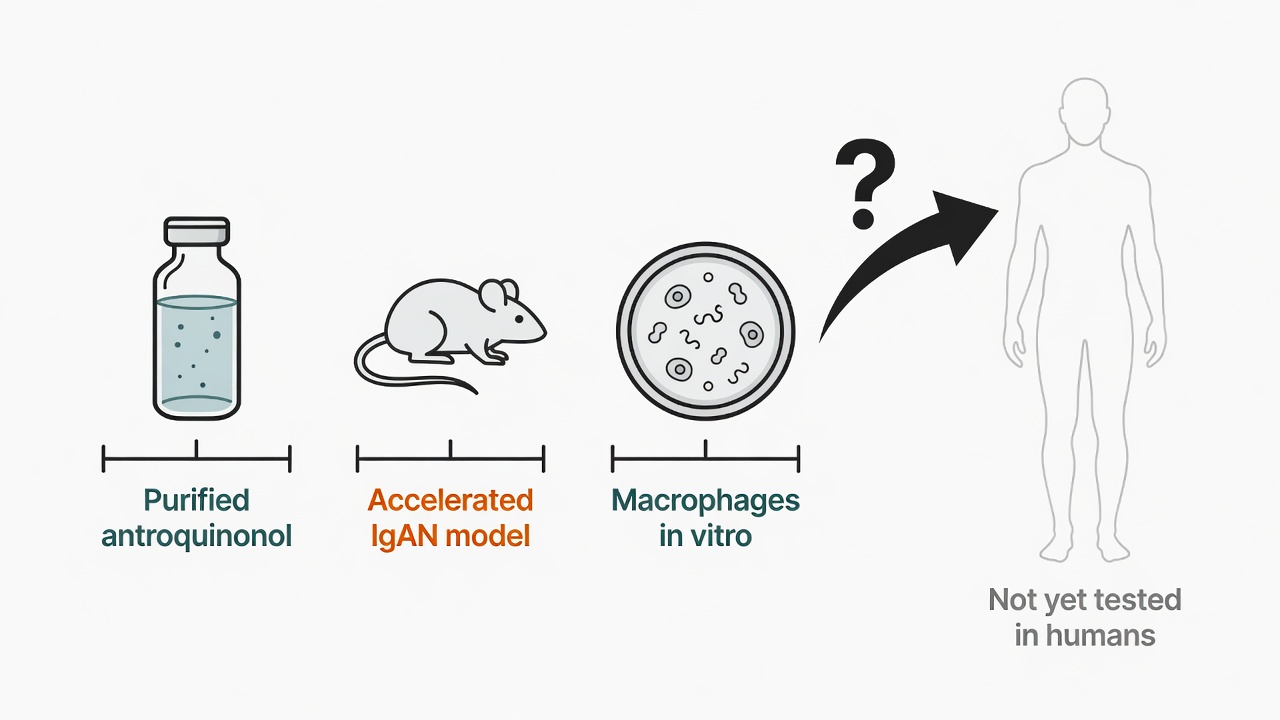
Figure 3: This study's borders sit around a purified compound, an accelerated mouse model, and macrophages in a dish. It has not yet stepped into human bodies.
What we can say, and what we cannot
What science can tell you today is this: in mice, a single molecule from a forest fungus calmed oxidation, immunity, and inflammation together, giving a battered kidney filter room to recover. That three-route cooling points a direction for designing IgA nephropathy drugs.
What it cannot yet say is whether it works in people, and at what safe dose. Antrodia camphorata itself has entered some clinical development, but kidney protection remains preclinical. Shutting inflammation off entirely has a cost too: press it too hard and you may leave yourself open to infection. The real answers will come from carefully designed human trials.
Until then, the practical value of this work is modest but clear: IgA nephropathy lights more than one fire on the filter, and a useful drug may need to cool several at once.
References
- Yang et al. (2013). Antroquinonol mitigates an accelerated and progressive IgA nephropathy model in mice by activating the Nrf2 pathway and inhibiting T cells and NLRP3 inflammasome. Free Radical Biology and Medicine. doi: 10.1016/j.freeradbiomed.2013.03.024