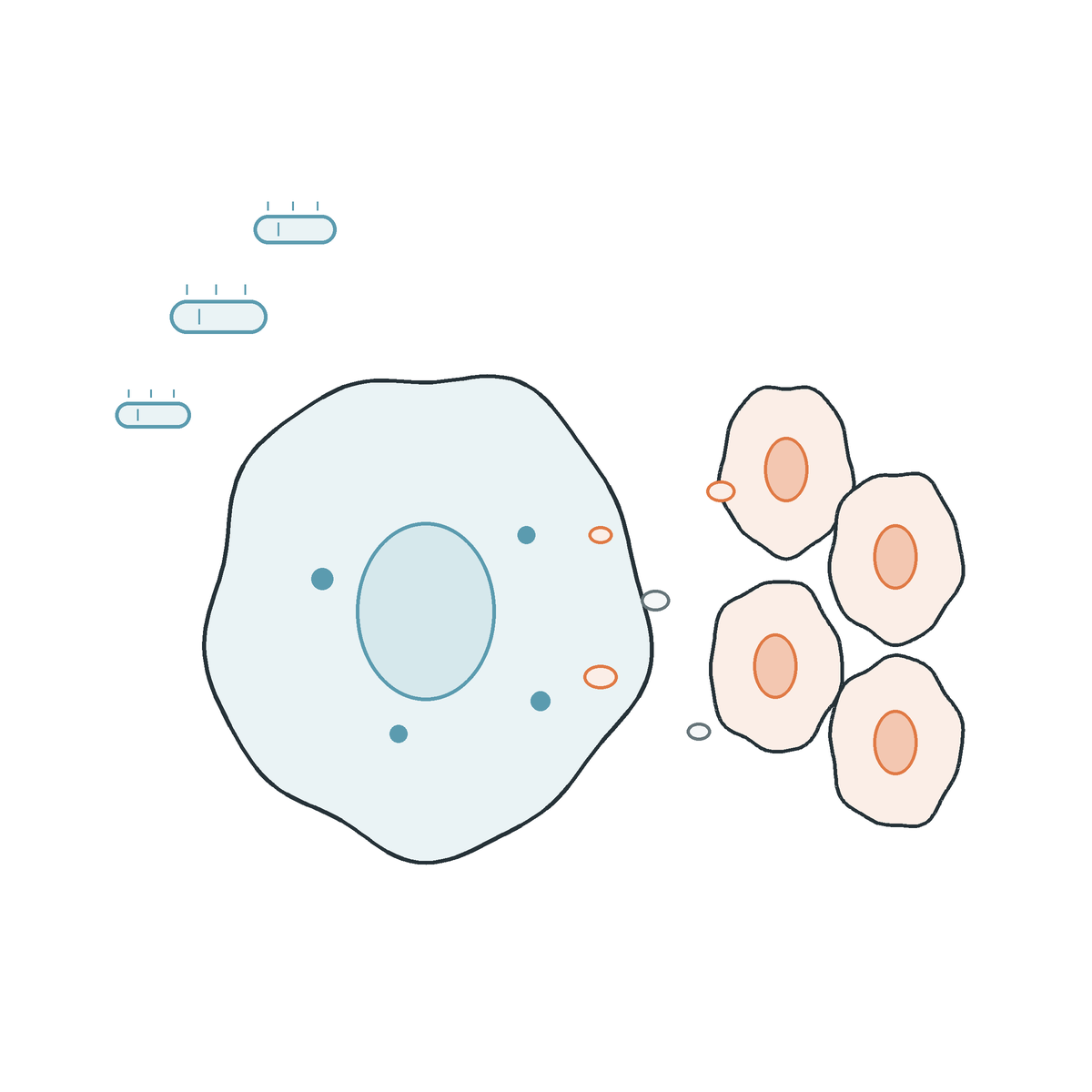
About 85% of colorectal cancers are microsatellite stable (MSS), a subtype that often responds poorly to PD-1 immunotherapy. A recent study tested the gut bacterium Akkermansia muciniphila (Akk) in mouse and cell models, then reported a small phase 1 trial. The work offers a preclinical mechanism and early safety information, but it does not show that a probiotic treats human colorectal cancer.[1]
The proposed mechanism comes from preclinical work
In mouse tumors and cell experiments, the researchers found that Akk can reduce the engulfment of apoptotic tumor cells by tumor-associated macrophages through TLR2/NF-κB signaling.[1]
Macrophages normally clear dying cells. After Akk treatment, mouse tumors contained more apoptotic-cell signals and double-stranded DNA. Experiments with macrophages also showed activation of cGAS-STING signaling and interferon-β, alongside stronger effector markers in CD8+ T cells. The authors used interventions such as TLR2 blockade, Gas6 supplementation, macrophage depletion, and STING-related experiments to test parts of this pathway. These results support a functional role for the pathway in the models; they are more than a simple correlation, but they are not proof of the same mechanism in people.[1]
There are still mechanistic gaps. The team did not directly trace, in a living animal, DNA released by apoptotic tumor cells into macrophages. Recombinant Amuc_1100 reproduced some Akk-like effects, but the authors treat it as a candidate component; further work is needed to show that it is necessary for the response. A proposed pathway should not be drawn as a fully settled human mechanism.[1]
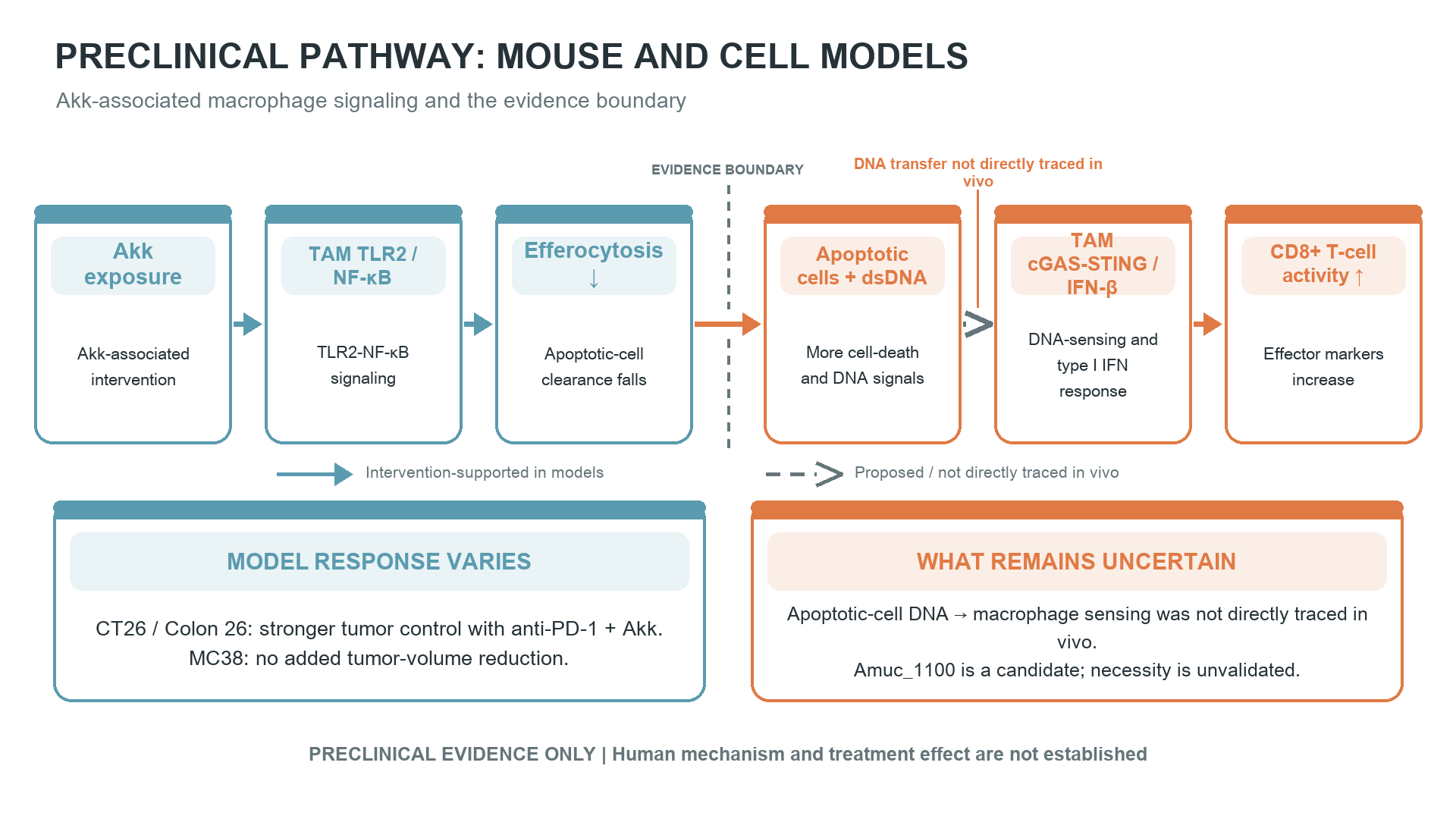
Figure 1 | Preclinical mechanism evidence. The dashed link marks a DNA-transfer step not directly traced in vivo.
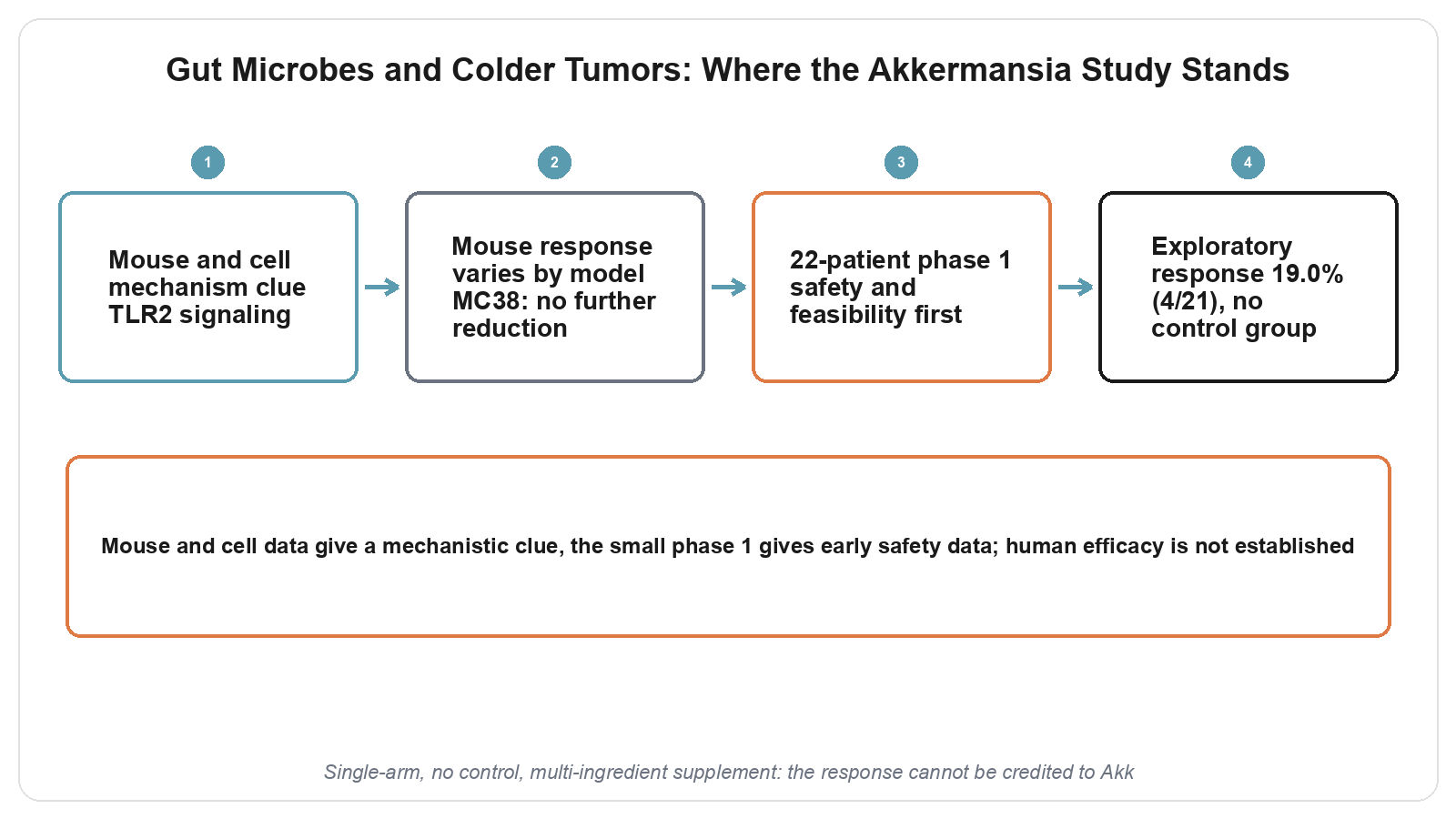
The mouse response varied by model
Akk combined with anti-PD-1 treatment improved tumor control in CT26 and Colon 26 models, but it did not further reduce tumor volume in the MC38 model, which was already responsive to anti-PD-1 alone.[1]
This difference matters. It suggests that the effect may depend on the immune context of a tumor, and that a result in one mouse model cannot be generalized to every colorectal cancer. The experiments also used different mouse strains and tumor settings, so they answer a mechanistic question rather than establish a universal treatment rule. We cannot carry this pathway directly from mice into clinical practice without human evidence.[1]
The human phase 1 study prioritized safety
The clinical component was a single-center, single-arm, open-label phase 1 study. Its primary purpose was to assess safety, tolerability, and feasibility of an Akk-containing probiotic formulation given with anti-PD-1-based combination therapy.[1][2]
Twenty-two patients with advanced MSS colorectal cancer were enrolled after prior standard treatment, and all completed the planned two treatment cycles. Nineteen of 22 participants (86%) experienced an adverse event, mostly grade 1–2 diarrhea, fatigue, or dry skin. Three participants had grade 3 events. The report describes no grade 4 or higher toxicity and no probiotic-related infection.[1]
Among 21 patients whose scans could be evaluated, the objective response rate was 19.0% (4/21; 95% confidence interval, 5.4%–41.9%), and the disease control rate was 76% (16/21). These are exploratory results. The trial was designed for preliminary safety and feasibility data, was not powered to establish efficacy, and had no control group.[1]
The treatment also makes attribution difficult. Participants received different anti-cancer regimens alongside the supplement, and the supplement was not a single-ingredient Akk product: it contained pasteurized Akk, two other bacterial strains, kiwifruit powder, and resistant potato starch. We therefore cannot determine how much, if any, of the observed response was due to Akk itself rather than the other ingredients, background treatment, patient selection, or chance.[1]
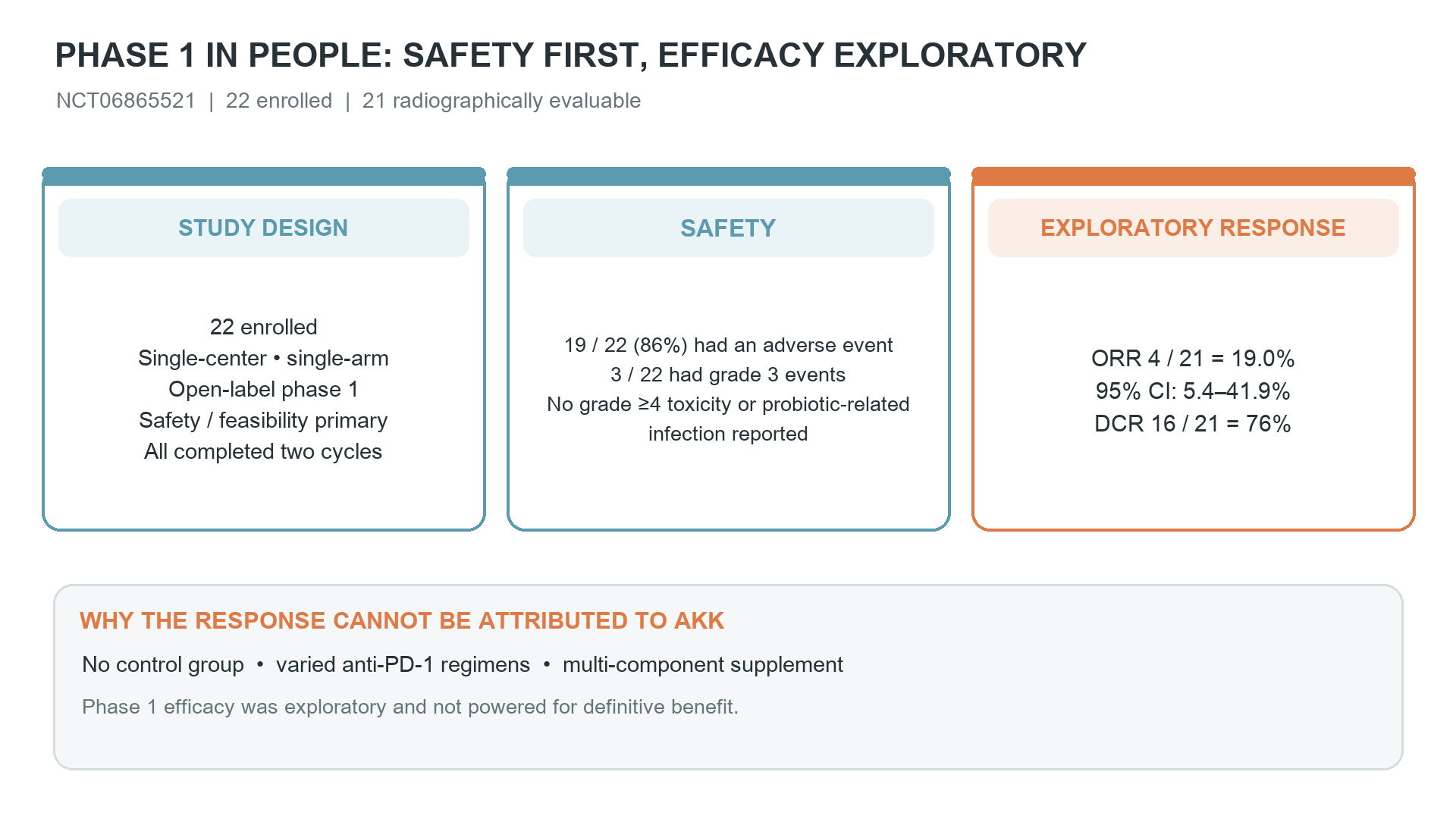
Figure 2 | The clinical study primarily assessed safety and feasibility; response data were exploratory.
What the study can and cannot support
The study connects a plausible preclinical pathway with early clinical safety observations, which makes the question worth testing in a controlled trial. It does not establish that Akk improves immunotherapy outcomes in people, nor that consumers should add a probiotic to cancer treatment.[1]
The evidence has several boundaries: the mechanistic work was mainly in mice and cultured cells; the human study was small, single-arm, and short; there was no comparator; background cancer regimens varied; and the supplement contained multiple components. The researchers also note that long-term safety under different disease or immune conditions needs further study. A randomized study with a larger cohort, a clearly defined formulation, and longer follow-up would be needed to separate safety from efficacy and to identify which patients might benefit.[1]
For now, the responsible reading is narrow: the mouse and cell results provide a mechanism to investigate, while the phase 1 trial offers preliminary safety data and an exploratory response signal. Neither result is a treatment recommendation, and patients should not start, stop, or change prescribed cancer therapy on the basis of this study alone.
Sources
- Jiang et al. “Akkermansia muciniphila attenuates macrophage efferocytosis to enhance anti-PD-1 efficacy in microsatellite-stable colorectal cancer.” Cell Host & Microbe, 2026. DOI: 10.1016/j.chom.2026.09.014, PMID: 42887494.
- ClinicalTrials.gov. NCT06865521.