TL;DR: A pill designed to lower blood sugar turns out to directly clear senescent cells from the body. The drug companies never saw this coming — and this accidental finding may prove more important than the drug's original purpose.
One Pill, Two Surprises
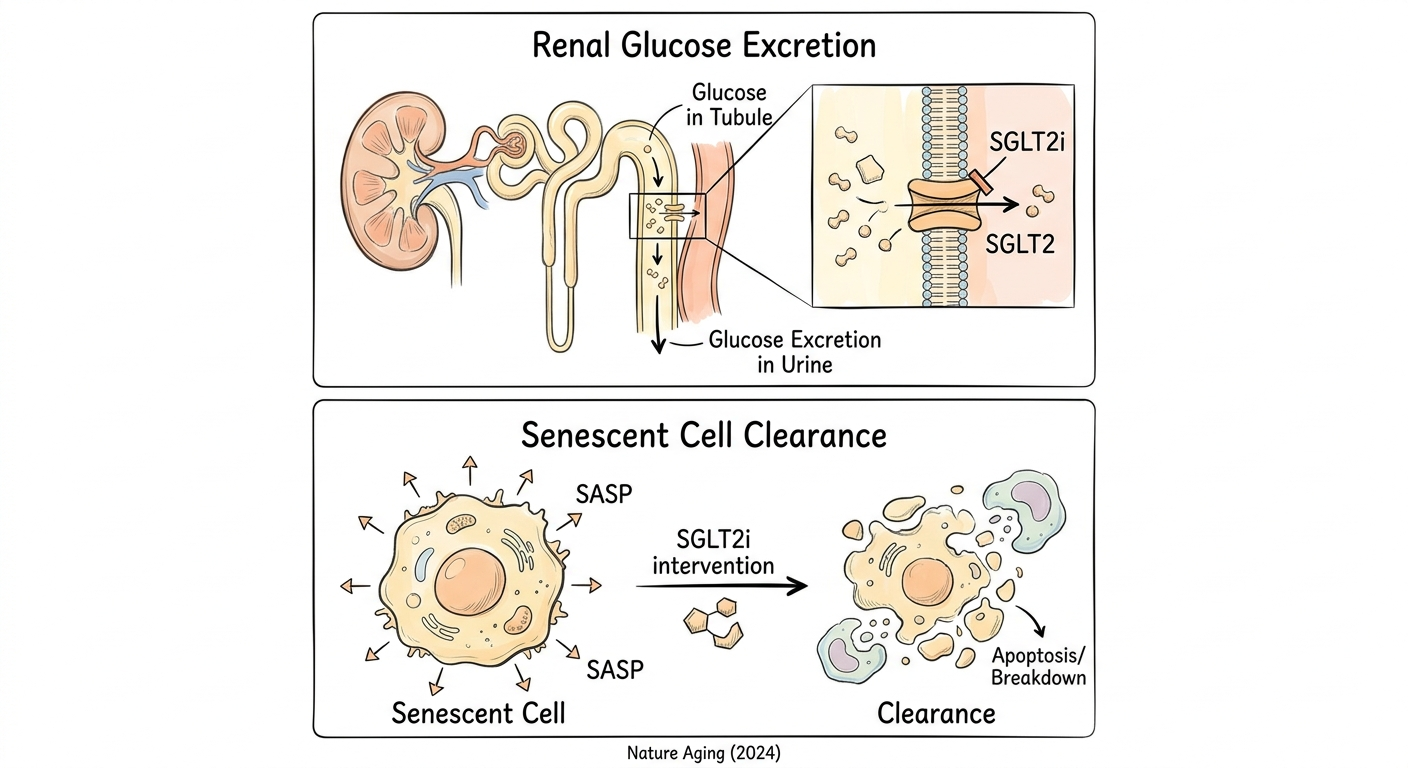 Figure 1: Diabetes drugs may affect both glucose control and cellular senescence pathways.
You may have heard of Ozempic — the injectable drug that Hollywood celebrities can't stop talking about. Or perhaps you've read about SGLT2 inhibitors offering "heart and kidney protection," and wondered: how does a blood sugar pill end up protecting the heart?
Behind both stories lies the same plot twist: when scientists designed these molecules, they were watching insulin and glucose. They didn't realize these drugs were quietly doing far more inside the human body.
In 2024, a team led by Katsuumi at the University of Tokyo published a paper in Nature Aging with a clear finding: SGLT2 inhibitors (such as empagliflozin) can directly eliminate senescent cells. Not indirectly. Not statistically. Directly.
What Is a Senescent Cell? Think of a Smoke Alarm That Won't Stop
Your body replaces cells constantly — old ones die, new ones take over, orderly and efficient. But some cells refuse to follow the rules. After sustaining damage, they neither die nor recover. Instead, they linger and continuously broadcast "danger signals" to surrounding tissues. These are senescent cells.
Think of them as a smoke alarm that won't stop ringing even though there's no fire. The noise disrupts everything around it. These cells release pro-inflammatory molecules — collectively called the Senescence-Associated Secretory Phenotype (SASP) — that accelerate joint degeneration, arterial stiffening, neuronal damage, and even cancer-permissive microenvironments.
The challenge is: how do you silence the alarm?
Researchers have long sought "Senolytics" — drugs that can selectively remove senescent cells. Several candidates (like dasatinib plus quercetin) have shown early clinical promise. Nobody expected that a drug already taken daily by hundreds of millions of people had already been doing this job.
SGLT2 Inhibitors: Originally Just a "Glucose Drain"
The design logic was simple: the kidneys normally recycle glucose from the bloodstream, and the SGLT2 protein is the pump responsible. Block the pump, and glucose exits through urine. Blood sugar drops. Clean, direct, mechanical.
But Katsuumi's team found that empagliflozin, once inside cells, does more than block the glucose pump. It disrupts the energy metabolism and survival signaling of senescent cells, pushing them back toward apoptosis. In animal studies, mice treated with SGLT2 inhibitors showed a marked reduction in senescent cell burden, along with lower SASP-related inflammatory markers.
A 2025 systematic review by Yesilyurt-Dirican et al. in npj Aging confirmed this pattern across multiple animal models — a reproducible signal, not a one-laboratory anomaly.
GLP-1 Receptor Agonists: Another Accidental Multi-Tool
If SGLT2 inhibitors work through the kidney, GLP-1 receptor agonists (GLP-1RA, such as semaglutide) take a different route. They mimic the gut hormone GLP-1, prompting the pancreas to release more insulin, slowing gastric emptying, and signaling satiety to the brain.
But Li et al.'s 2026 meta-analysis in Metabolism revealed that GLP-1 receptors are distributed far beyond the pancreas — in adipose tissue, immune cells, cardiovascular tissue, and neurons. When GLP-1RA activates these receptors, it simultaneously suppresses mTOR signaling (the so-called "aging accelerator"), reduces NF-κB-driven chronic inflammation (the amplifier behind SASP), and promotes autophagy via AMPK pathways, clearing out damaged organelles before they pile up.
Papakonstantinou et al.'s 2024 mechanistic study in Current Issues in Molecular Biology confirmed these effects are measurable at the molecular level — trackable through defined pathways, not just statistical associations.
Think of GLP-1RA as an accidental cell maintenance crew. It showed up to manage portion sizes and accidentally swept out the cellular garbage, dialed down chronic inflammation, and tapped the brakes on aging's accelerator.
What Can You Do Now?
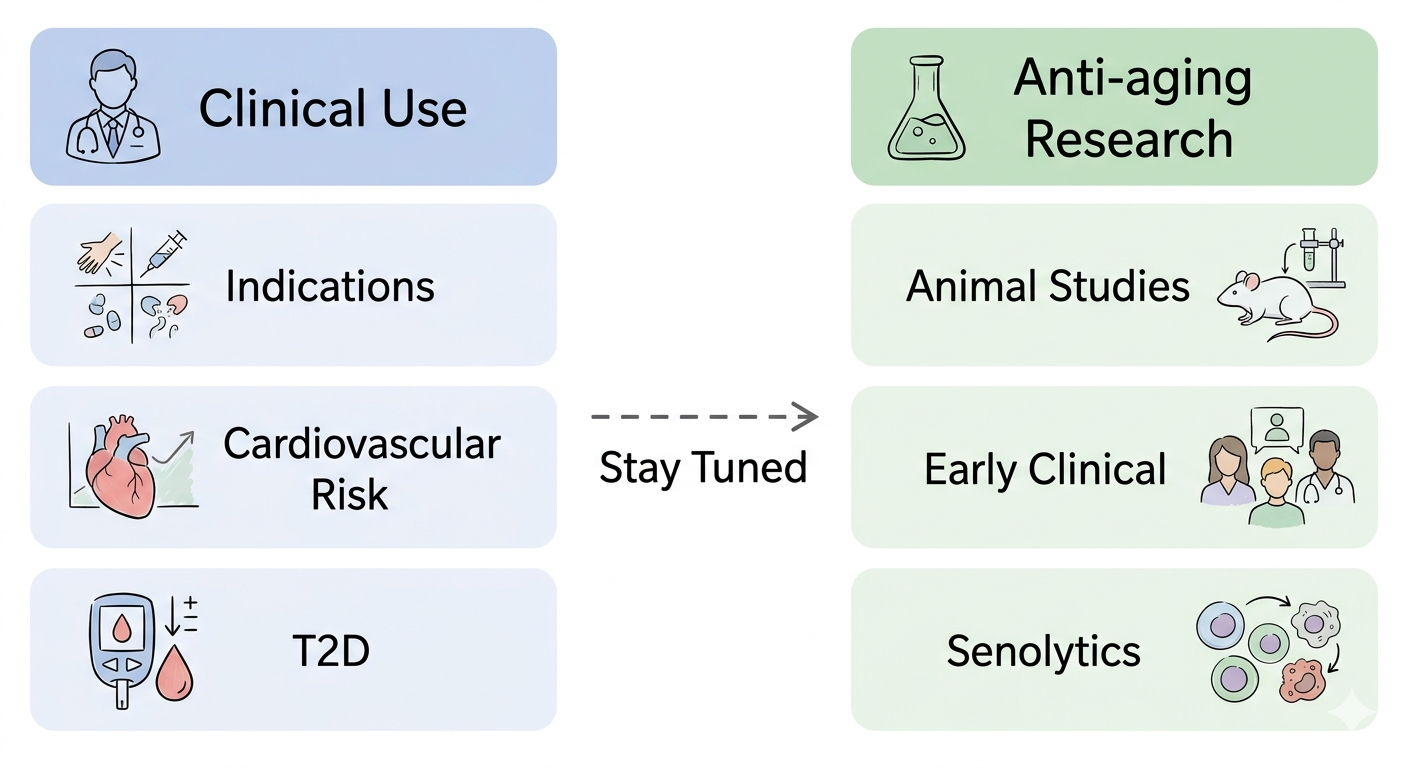 Figure 2: Watch the evidence, talk with your physician, and avoid treating early anti-aging findings as a self-medication license.
Let's be direct: these findings are still in the animal and early clinical stages. You should not ask your doctor for empagliflozin or semaglutide "for anti-aging purposes" — both drugs carry approved indications and real side effects, and using them without medical guidance is not appropriate.
That said, this space is worth watching. The safety profiles of both drug classes are exceptionally well-characterized — built from millions of patients over years. If anti-aging clinical trials advance, the translation timeline for repurposed drugs could be far shorter than for entirely new molecules. If you have metabolic syndrome, type 2 diabetes, or cardiovascular risk, your physician may already have clinical reasons to discuss these drugs — and you now have an additional question to bring to the conversation.
The Drug Nobody Planned For May Be the One We Remember Most
Science's most interesting turns are rarely the ones that were designed. Viagra started as an angina drug. Aspirin's antiplatelet effects weren't discovered until decades after its invention. Now SGLT2 inhibitors and GLP-1RA take the stage, carrying a question nobody originally asked: can aging be, at least in part, treated with a pill?
The answer isn't here yet. But the question — being asked seriously for the first time — already changes everything.
That moment has arrived.
Sources: Katsuumi et al., Nature Aging (2024) | Yesilyurt-Dirican et al., npj Aging (2025) | Li et al., Metabolism (2026) | Papakonstantinou et al., CIMB (2024)