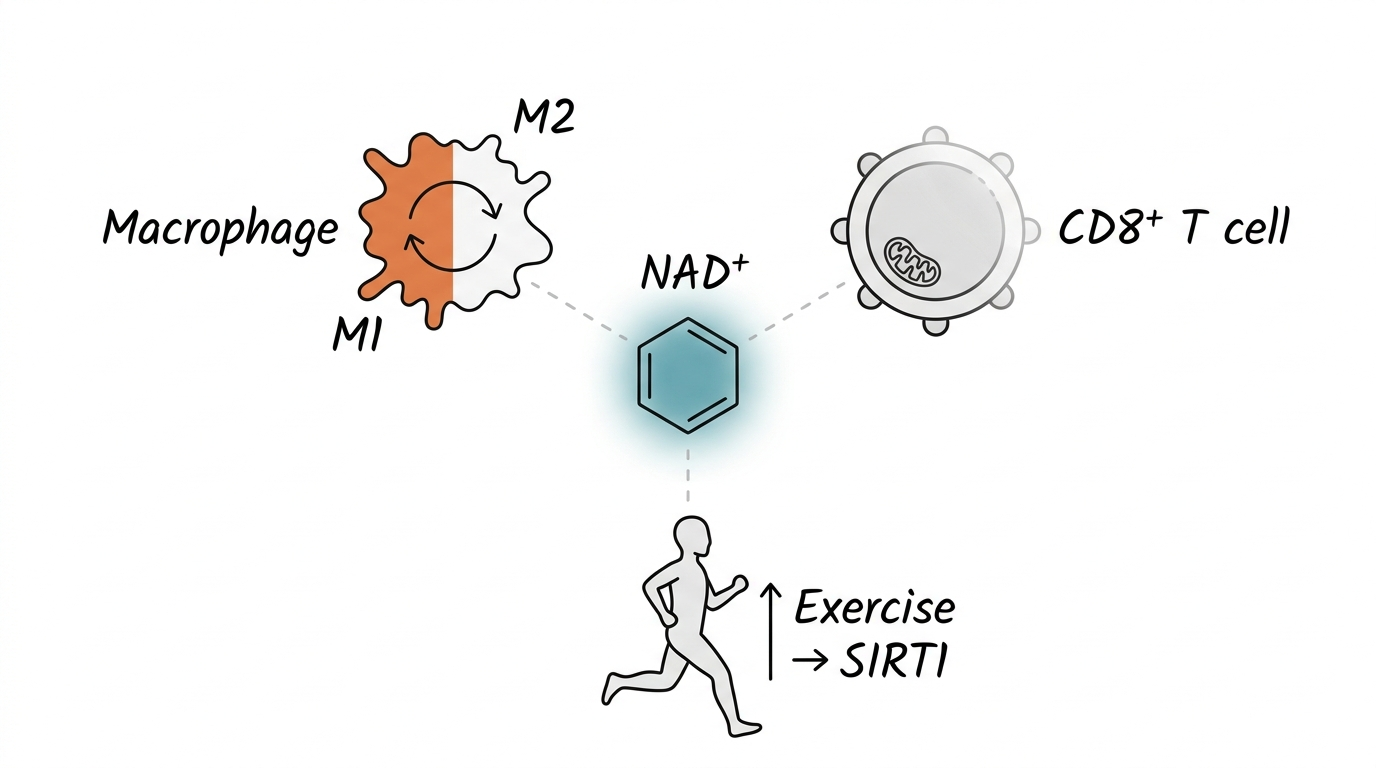
In brief: Three new studies paint one picture. NAD+ runs deeper into immunity than most people realize. Two ways to refill: NMN as an external shortcut, exercise as the built-in circuit.
NMN Lands in Nature Medicine — Not for Anti-Aging
You have probably seen NMN advertised as an anti-aging supplement. Influencers endorse it. E-commerce sites discount it. Labels promise "reverse aging." But in April 2026, NMN appeared in Nature Medicine for the first time, and aging had nothing to do with it.
It rescued platelets.
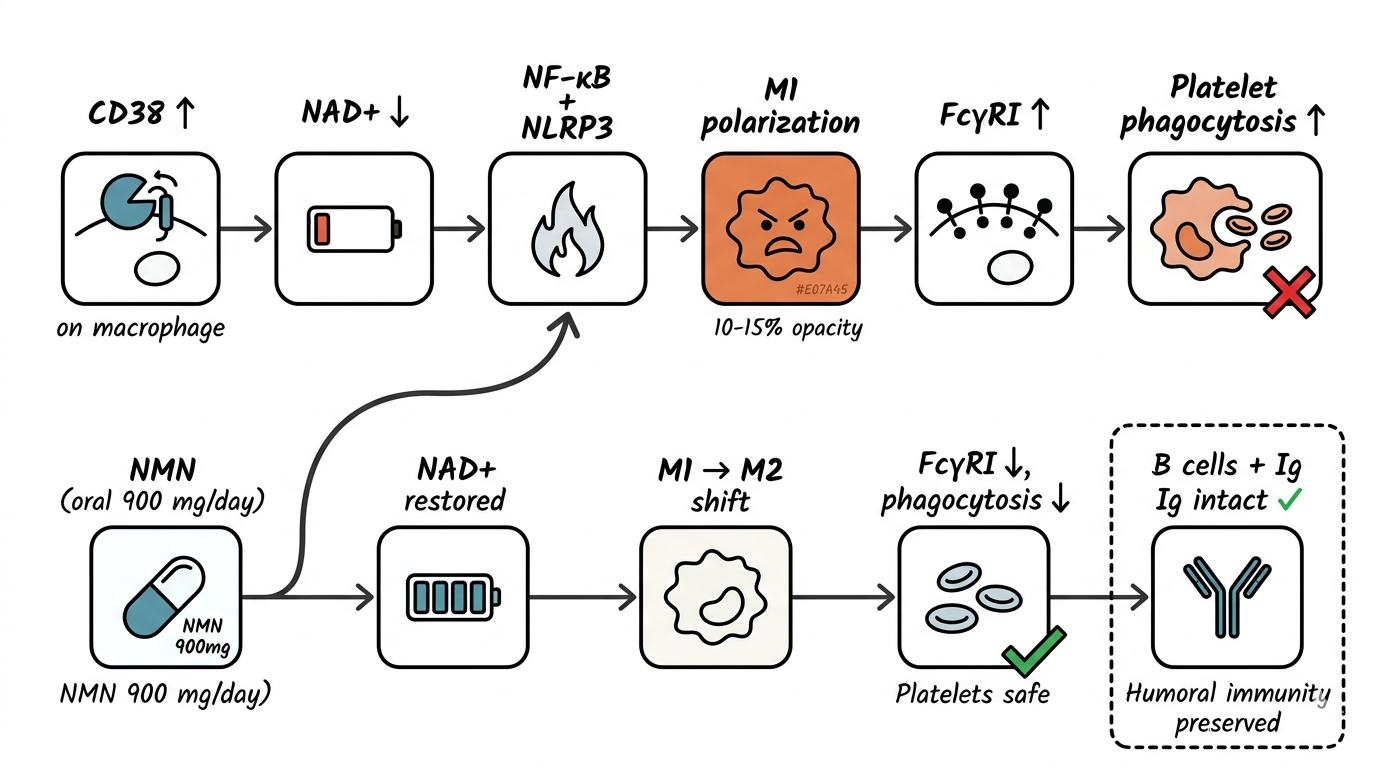
Patients with immune thrombocytopenia (ITP) have an immune system that tags its own platelets with antibodies, then sends macrophages to devour them. Standard treatments either suppress the entire immune system (corticosteroids) or wipe out antibody-producing B cells (rituximab). The price: soaring infection risk. Li and colleagues gave 25 treatment-refractory patients 900 mg of oral NMN daily for two weeks. Twenty percent hit the primary efficacy endpoint. Fifty-two percent still showed a response six weeks after stopping. Zero serious adverse events. Immunoglobulin levels held steady, humoral immunity intact (Li et al., 2026).
A metabolic supplement, in a phase 1/2 clinical trial, brought autoimmune patients' platelets back up without suppressing immunoglobulins. Sounds too good? There is a mechanism.
The Problem Is the Scavenger, Not the Antibody
Why would a metabolic supplement have anything to do with immunity?
The answer lies in CD38, a protein on macrophage surfaces. CD38 is the top NAD+ consumer in the cell. In ITP patients, macrophage CD38 runs abnormally high, draining intracellular NAD+. Once NAD+ drops, NF-κB fires up, NLRP3 inflammasomes ignite, and macrophages flip into "berserk mode" (M1 polarization), devouring platelets at an accelerated rate.
NMN simply refills NAD+. With NAD+ restored, NF-κB is suppressed, inflammasomes go quiet, macrophages shift from M1 to M2, FcγRI expression drops, and phagocytic activity slows. Platelets stop being killed by friendly fire.
But NMN never touches B cells or plasma cells. Your antibody factory keeps running. Only the out-of-control scavengers get calmed down. The research team calls this "precision immunometabolic reprogramming," not immunosuppression (Li et al., 2026).
The Other Front of Immune Aging: Mitochondrial Debris Triggering False Alarms
NAD+ depletion sabotaging immunity is not limited to macrophages.
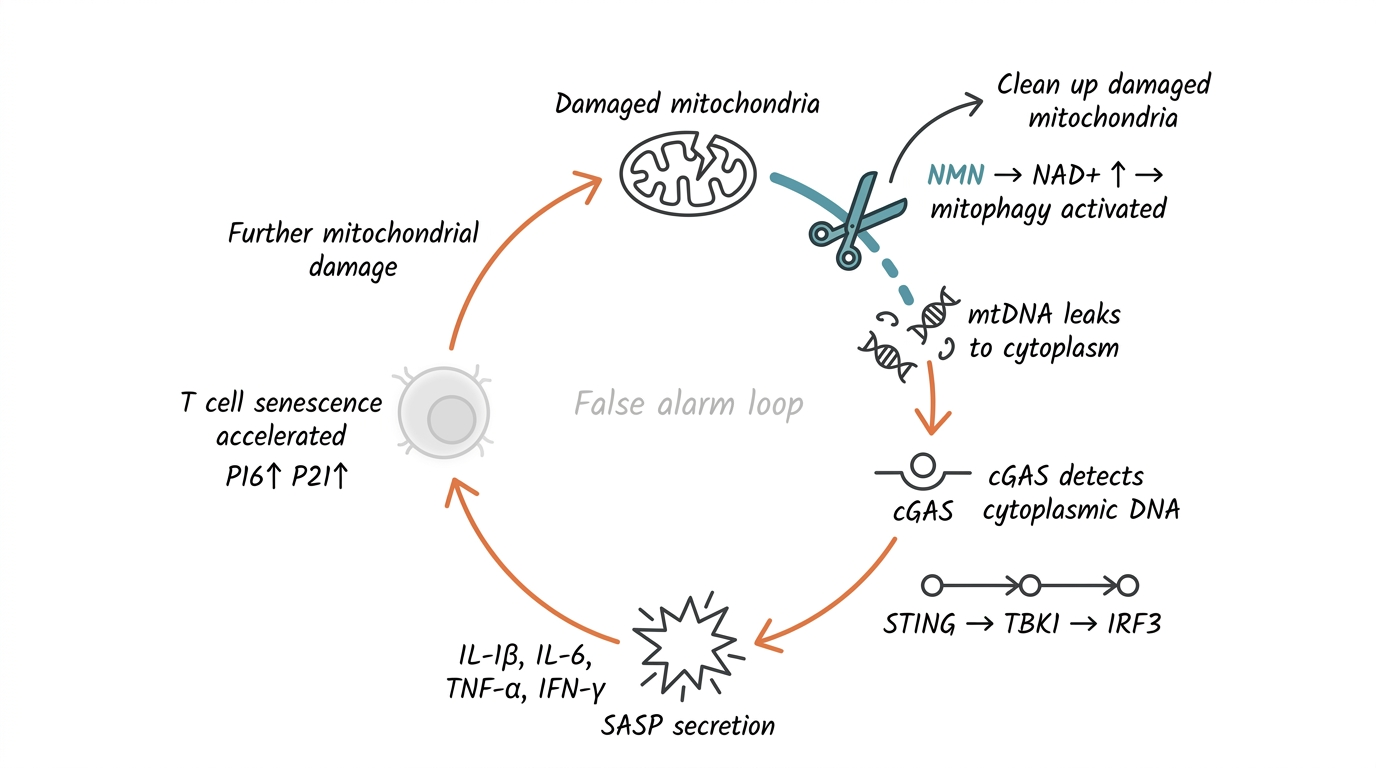
Ye and colleagues found that the tumor microenvironment "ages" CD8+ T cells. These immune killers, normally tasked with hunting cancer cells, enter senescence en masse in tumor-bearing mice. They do not die. They do not work. They just leak inflammatory signals that disrupt their neighbors.
The culprit is mitochondria. In senescent T cells, mitochondrial membrane potential collapses, ROS surges, ATP crashes. Damaged mitochondria spill their own DNA into the cytoplasm, triggering the cGAS-STING innate immune alarm like smoke setting off a fire detector. Once the alarm sounds, interferon-stimulated genes light up, SASP factors pour out, and T cells spiral into a "false alarm loop": aging feeds inflammation, inflammation feeds aging.
NMN breaks the loop by activating mitophagy. It replenishes NAD+, restarting the cellular cleanup crew that packages and removes damaged mitochondria. No more leaked mtDNA, no more STING alarm. Tumor-bearing mice receiving NMN injections showed significantly extended survival, with inflammatory markers dropping across brain, liver, and spleen (Ye et al., 2024).
The Cheapest NAD+ Refill: Lace Up Your Shoes
NAD+ decline can be offset by NMN. But your body has a built-in recharging system.
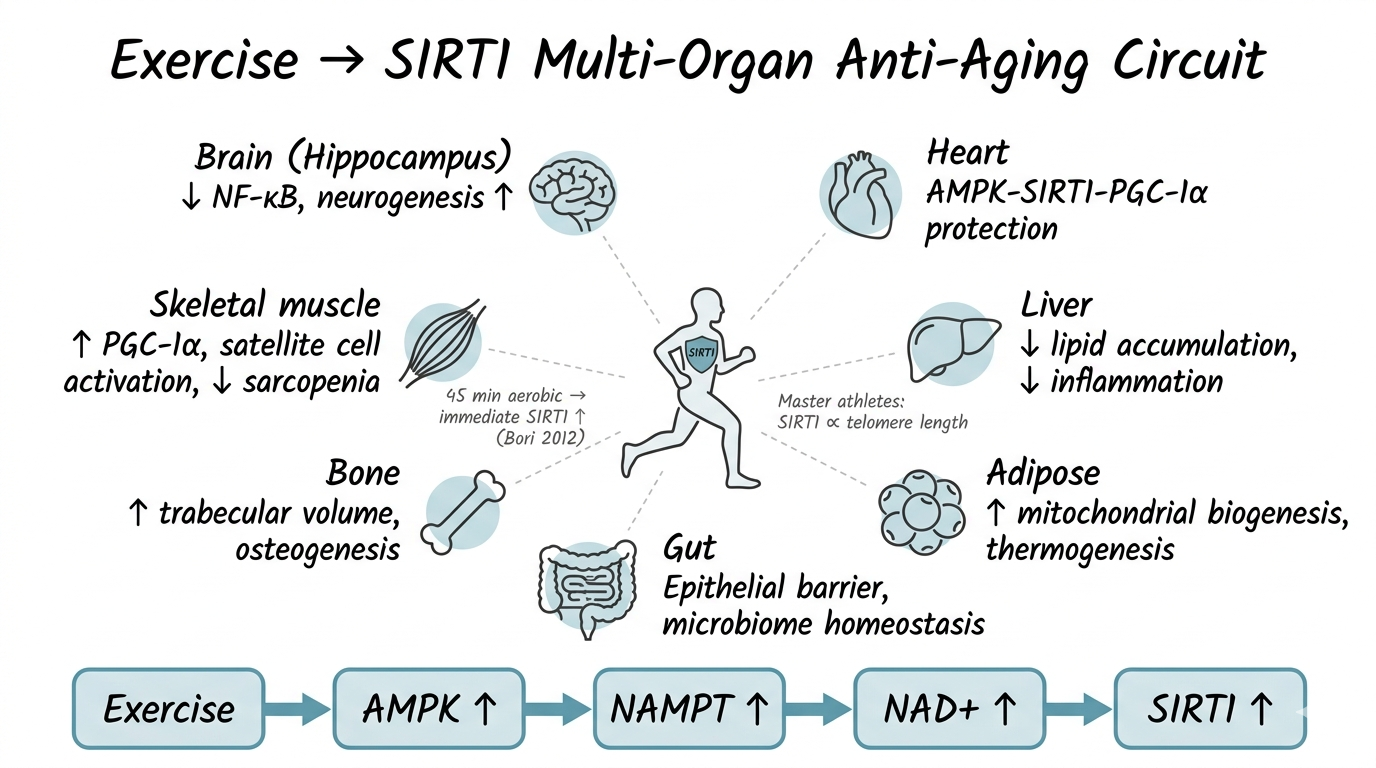
A review by Leite and colleagues in Biogerontology consolidates one conclusion: exercise is the most effective natural activator of SIRT1. SIRT1 is an NAD+-dependent enzyme that deacetylates dozens of downstream proteins governing DNA repair, mitochondrial biogenesis, anti-inflammatory signaling, autophagy, and telomere maintenance. Think of SIRT1 as a full-body patrol guard, and NAD+ as its ammunition.
How does exercise reload? AMPK activation upregulates NAMPT — the rate-limiting enzyme for NAD+ synthesis — raising NAD+ levels and bringing SIRT1 back online. This AMPK → NAMPT → NAD+ → SIRT1 positive feedback loop operates across at least seven organs: skeletal muscle, heart, liver, hippocampus, adipose tissue, bone, and gut.
Human evidence is accumulating. Lifelong exercisers show SIRT1 levels positively correlated with telomere length. Postmenopausal obese women who completed 16 weeks of resistance training had significantly higher blood SIRT1 alongside reduced body fat and fatty liver markers. Even a single 45-minute session of moderate-to-high intensity aerobic exercise immediately upregulated SIRT1 in elderly skeletal muscle (Leite et al., 2026).
Stay Cool, Then Get Moving
Three papers all say the same thing: NAD+ reaches into immunity. Macrophages going rogue, T cells aging, SIRT1 stalling, they all trace back to the same line.
Two paths to refill. NMN is the external shortcut. Exercise is the built-in circuit. They may work together, but no head-to-head clinical comparison exists yet.
Keep your expectations in check: the NMN trial is phase 1/2, 25 patients, no placebo control. The T cell work is in mice. SIRT1 human evidence is mostly small-sample observational. These are starting points.
But all three papers point the same way: your immune system needs NAD+. While we wait for phase 3, the one path nobody argues about is stepping out the door for a run.
References
- Li et al. (2026). Low-dose oral nicotinamide mononucleotide for immune thrombocytopenia: a phase 1/2 trial. Nature Medicine. doi: 10.1038/s41591-026-04366-x
- Ye et al. (2024). NAD+ supplementation prevents STING-induced senescence in CD8+ T cells by improving mitochondrial homeostasis. Journal of Cellular Biochemistry. doi: 10.1002/jcb.30522
- Leite et al. (2026). Sirtuin 1 as an emerging exerkine in the aging process: unveiling its multifaceted biological roles. Biogerontology. doi: 10.1007/s10522-026-10442-z
Author: TheVoidWeaver | Updated: 2026-05-19