TL;DR: There is a fire inside your body that never fully goes out. It does not give you a fever, but it quietly burns through your organs for decades. New findings from Science and Cancer Cell reveal that this fire and cancer share a deadly feedback loop—and your daily choices are already shaping how hot it burns.
The Fire That Never Goes Out
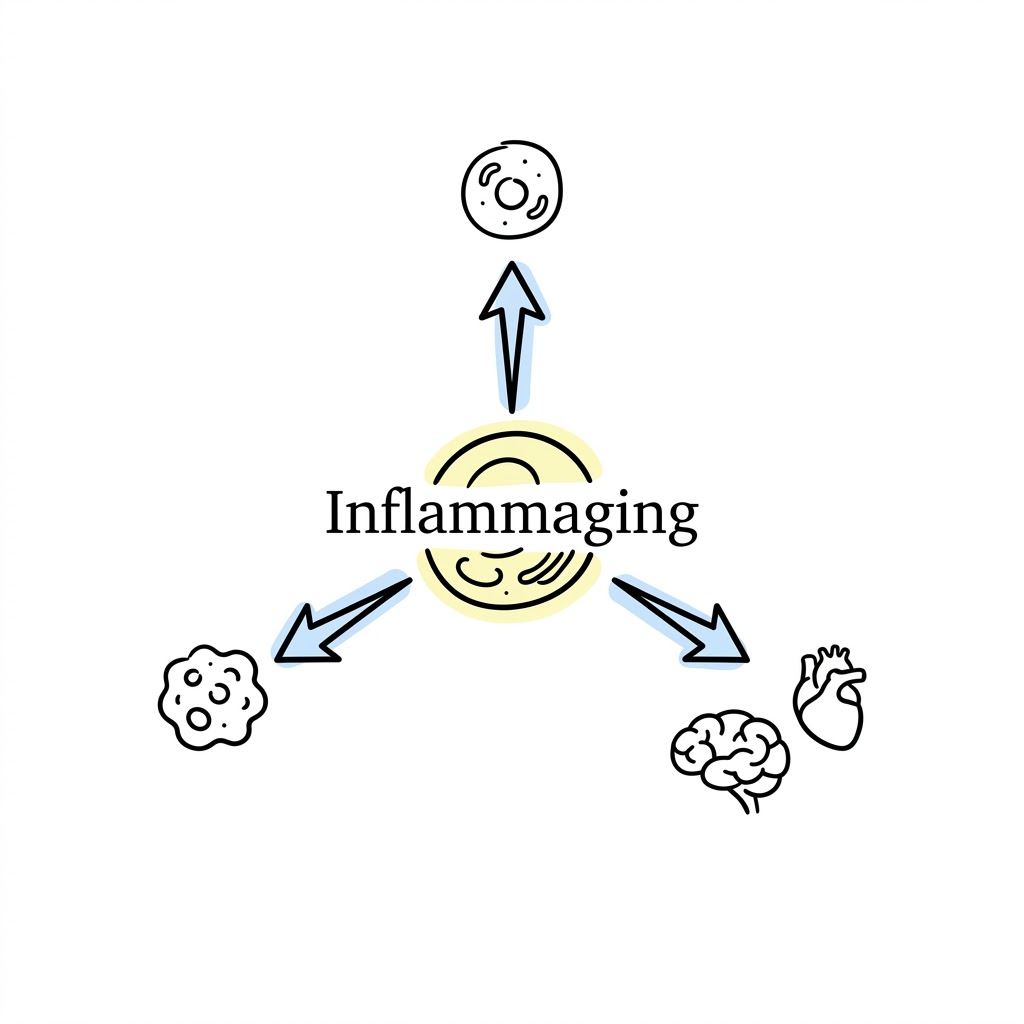
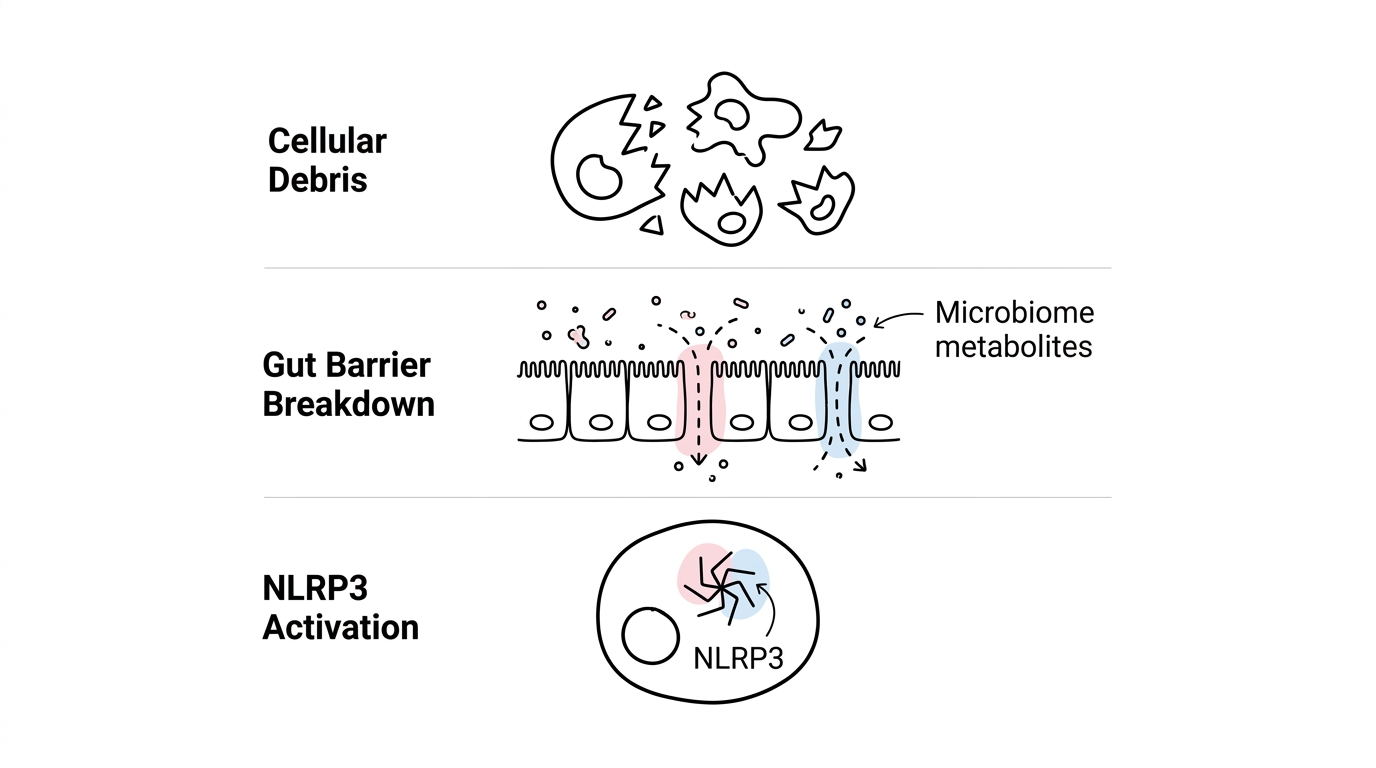 Figure 1: Inflammaging quietly weakens blood vessels, neurons, and bone marrow across the body.
There is a fire inside your body that never completely goes out.
It does not make you feverish. It does not hurt. Yet it burns, day after day, through your blood vessel walls, your neurons, your bone marrow—in places you cannot feel. Scientists call it "Inflammaging": the chronic, low-grade inflammation that is woven into the very process of growing old.
This is not a metaphor. This is biology with molecular pathways, specific signaling molecules, and cross-organ circuits.
Picture a gas stove with a broken knob, permanently stuck at the lowest flame. Most days you smell nothing. Life goes on. But ten years later, the wooden ceiling above the stove has turned faintly black, hairline cracks have appeared in the wall, and the structure of the entire house has quietly weakened. Inflammaging is that broken knob inside you.
How old are you? That is how many years this fire has already been burning.
The Molecular Code: How IL-1 Turns Aging Into a Cancer Incubator
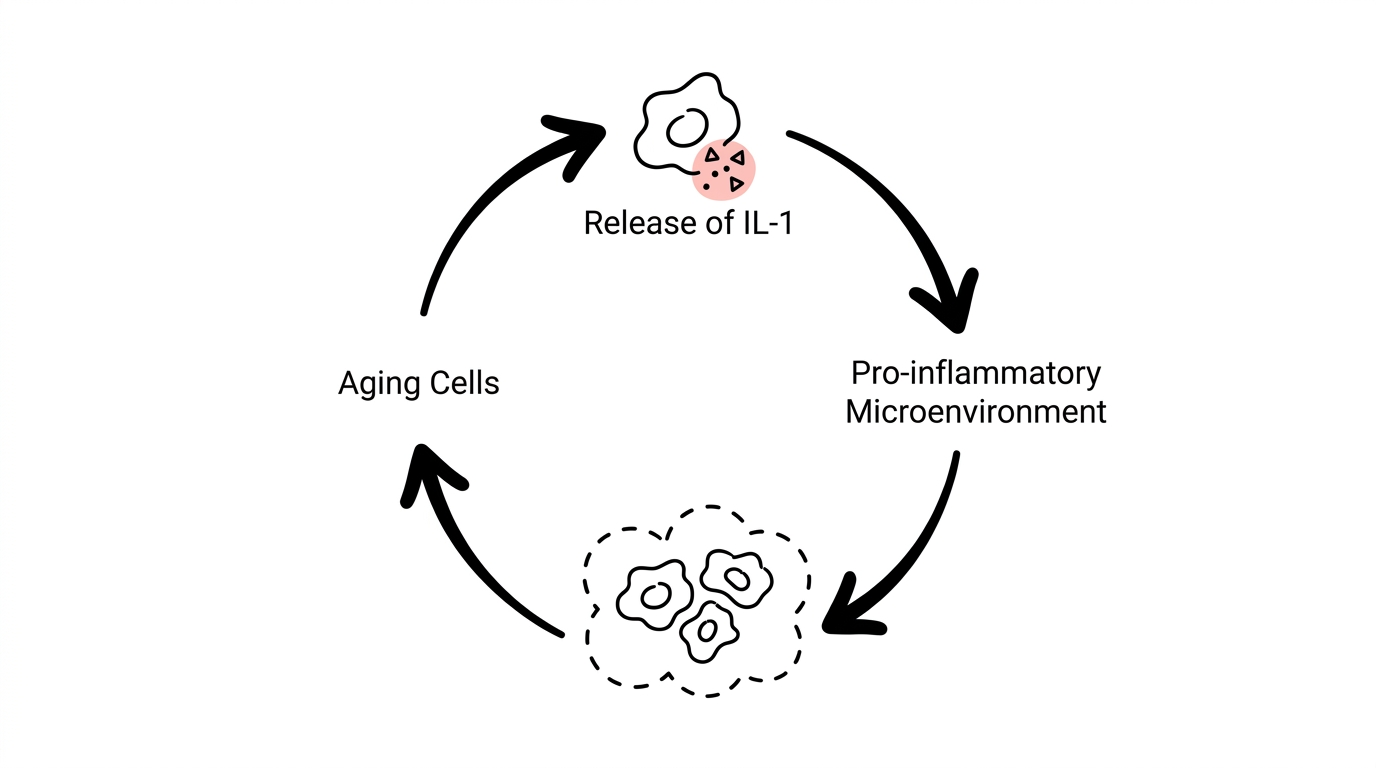 Figure 2: IL-1 creates a positive feedback loop between aging, chronic inflammation, and cancer risk.
In 2024, the journals Science and Cancer Cell sounded the alarm almost simultaneously. Researchers found a molecule in aging bone marrow playing the role of a double agent: IL-1α, a cytokine.
Under normal circumstances, IL-1α is the immune system's emergency dispatcher. When tissue is damaged or infection strikes, it triggers the alarm and mobilizes white blood cells. Once the threat is resolved, it stands down.
In aging bone marrow, this dispatcher never stands down.
Park et al. (2024, Science) showed that aging hematopoietic stem cells continuously leak IL-1α, driving a state called emergency myelopoiesis—a crisis mode meant for acute infections that, in aging tissue, becomes the default. The immune cells produced in this state are dysfunctional and actually worsen tissue damage, pushing cells toward pre-malignant states.
More alarming was the finding from Liu et al. (2024, Cancer Cell): IL-1 signaling forms a positive feedback loop between aging and cancer. Senescent cells release IL-1. IL-1 creates a pro-inflammatory microenvironment. That environment accelerates senescence in neighboring cells, which then release more IL-1.
A molecular snowball, rolling faster as you age.
The data: In adults over 70, circulating levels of IL-6, IL-1β, and TNF-α run 2–4 times higher than in 30-year-olds. That is not noise—that is a system in a state of chronic burn (Singh et al., 2024).
Why Your Immune System Forgot How to Turn Off the Fire
You might ask: the immune system is remarkably sophisticated—why can it not simply extinguish this fire?
The answer, as Franck et al. (2025, Ageing Research Reviews) lay out, is that Inflammaging is not a single malfunction. It is a context-dependent, multi-origin process—like an orchestra in which every instrument is out of tune in a different way.
At least three layers drive this disorder:
Layer one: accumulating cellular debris. As cells age and die, the immune system is supposed to clear the wreckage. With age, that clearance slows. Debris accumulates. The immune system keeps responding to it. Like a city where garbage trucks come less and less often, the smell—the inflammatory signal—never fully dissipates.
Layer two: leaky gut barrier. Trillions of microbes live in your intestines, communicating with your immune system in the language of inflammatory signals. As the gut barrier weakens with age, bacterial metabolites leak into circulation, sustaining a low-grade systemic immune response.
Layer three: chronic NLRP3 inflammasome activation. NLRP3 is the cell's internal crisis sensor, designed to fire only in genuine emergencies. In aged cells, its sensitivity threshold drops—it begins reacting to ordinary metabolic byproducts. Andonian et al. (2024, GeroScience) identify chronic NLRP3 activation as the key bridge linking metabolic aging to immune aging.
Three overlapping ignition sources. No single switch to turn them off.
What You Can Do About This Fire
Here is the fact that is both sobering and empowering: the trajectory of your Inflammaging is not written entirely in your genes.
Diet is the most direct lever. The Mediterranean dietary pattern—rich in Omega-3 fatty acids, polyphenols, and fermented foods—has been shown across multiple cohort studies to meaningfully lower circulating inflammatory markers. Every meal is a small adjustment to that broken knob.
Regular moderate-intensity exercise is one of the most well-documented anti-Inflammaging interventions. Exercise induces a brief, controlled acute inflammatory response—but this trains the body's resolution mechanisms, keeping the immune system's off-switch limber. Think of it as regular fire drills that keep the fire department ready.
Sleep quality is chronically underrated. Insufficient sleep is an independent risk factor for elevated IL-6 and CRP. Every hour of sleep you sacrifice quietly adds fuel.
Where Does This Fire End?
The most frightening thing about Inflammaging is not what it causes in isolation.
It is that it is the shared foundation beneath nearly every major aging-related disease: Alzheimer's, cardiovascular disease, type 2 diabetes, multiple cancers. The discovery of the IL-1 feedback loop makes the connection explicit: aging and cancer are not parallel tracks. They are mile markers on the same road, driven by the same engine.
Researchers are now exploring targeted IL-1 inhibition (the monoclonal antibody Canakinumab is already approved), small-molecule NLRP3 inhibitors, and Senolytics—therapies designed to selectively eliminate senescent cells. These remain at a distance from everyday clinical use, but the direction is clear.
You cannot replace the broken knob. But you can choose to stop adding fuel.
Start with your next meal.
Reflect: If Inflammaging quietly begins in your thirties, which of your current daily habits do you think is most likely feeding the fire?