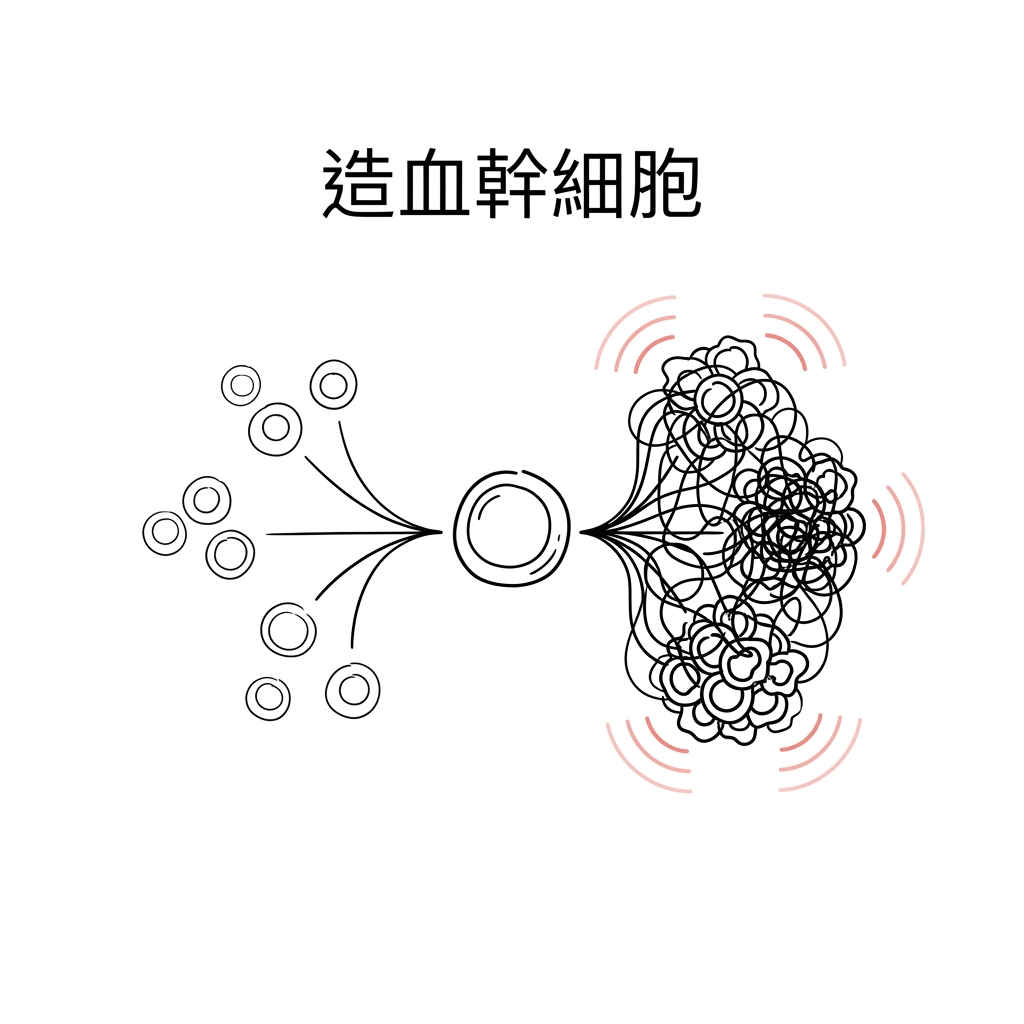
TL;DR: You produce over 200 billion blood cells every day. But the stem cells responsible for that production are slowly going on strike. A wave of landmark papers in Nature, Science, and beyond now show that hematopoietic aging doesn't stay in the bone marrow — it triggers a systemic chain reaction that accelerates whole-body aging and raises cancer risk.
Inside Your Bones, a Factory Is Growing Old
Picture a factory running nonstop inside your skeleton. Every single day, it manufactures more than 200 billion blood cells — red cells, white cells, platelets — all originating from a single class of progenitor machines: Hematopoietic Stem Cells (HSC).
These HSC have been on the clock since you were born. Decades pass. They begin to drift.
Not a sudden shutdown — a slow change in production priorities. Young factories output a balanced portfolio: diverse immune cells, healthy red blood cells. Aged factories shift toward mass production of a single, inflammatory product: myeloid cells. The result? Your blood starts aging from the inside.
This isn't a metaphor. It's what a 2024 Science paper demonstrated in precise molecular detail.
Three Cascades, Not One Cause
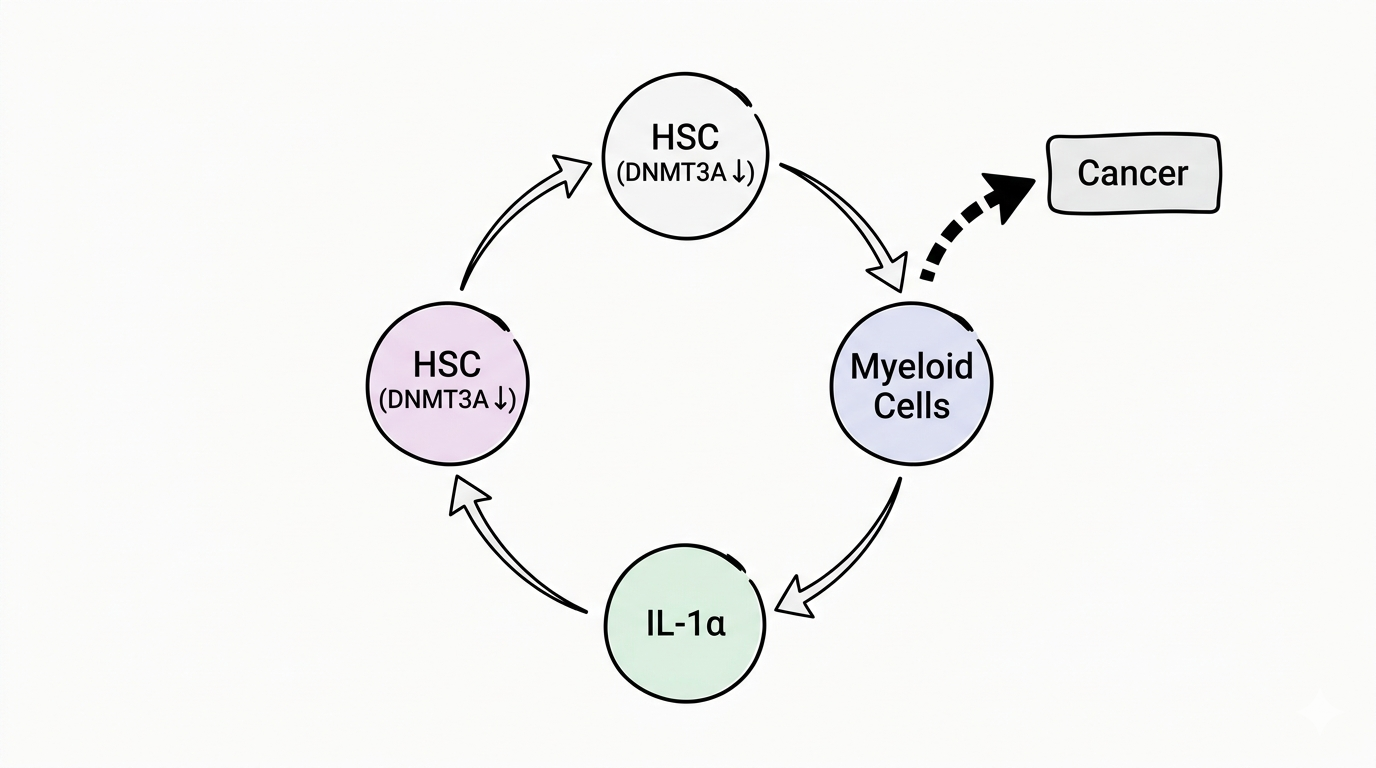 Figure 1: IL-1-driven emergency myelopoiesis turns bone marrow aging into a self-amplifying inflammatory loop.
Cascade 1: A False Fire Alarm
Park et al. (2024, Science) identified a key driver: aging HSC overproduce IL-1α, a cytokine normally reserved for emergency signaling.
IL-1α is your body's alarm system. Under normal conditions, it tells the bone marrow: "Infection detected — ramp up immune cell production." In aged marrow, the alarm fires constantly, even without any actual threat.
Think of a building where the fire alarm system has malfunctioned. Alarms blare nonstop. People evacuate. Normal operations halt. Over time, the consequences compound: this state of chronic emergency myelopoiesis was shown to actively promote cancer development.
Your immune system thinks it's fighting a war. There is no war.
Cascade 2: Inflammatory Signals Leak Systemwide
In the same year, Hou et al. (Nature Aging, 2024) uncovered a second mechanism. Aged bone marrow macrophages produce excess PGE2 — a prostaglandin-class signaling molecule.
PGE2 isn't unfamiliar. It rises during fever and inflammation. What Hou's team showed is that aged marrow releases PGE2 chronically, and that this molecule enters systemic circulation — arriving at distant organs and inducing what can only be described as synchronized aging.
One stone dropped in the marrow. Ripples spreading across every surface.
Cascade 3: The Inflammaging Gate Loses Its Gatekeeper
If the first two cascades are active offensives, the third is a collapsed defense.
Ramalingam et al. (2025, Science Immunology) focused on TSP-1, a protein that normally restrains HSC overactivation and keeps hematopoiesis orderly. With age, TSP-1 expression declines, and the gate falls open.
When researchers suppressed TSP-1-mediated inflammaging in mouse models, the result was striking: the healthy lifespan of hematopoietic function extended significantly. Fix the gate, and the factory runs better.
What this implies is profound: inflammation may not simply be a consequence of aging. It may be one of its engines.
The Skull's Secret Reservoir
One finding from 2024 rewrites what we thought we knew.
Koh et al. (Nature, 2024) showed that skull bone marrow is not a passive reserve. It is an actively expanding hematopoietic depot, and crucially, its contribution to blood production increases with age.
This is compensatory biology in action. As HSC in long bones age and falter, skull marrow picks up more of the load. But the tradeoff is real: more aged HSC entering production means more inflammatory signaling, amplifying the very problem the body is trying to manage.
Your body is trying to hold the line. The strategy it's using is making things worse.
| Study | Journal | Key Finding |
|---|---|---|
| Koh et al. (2024) | Nature | Skull marrow is an expanding hematopoietic reservoir |
| Park et al. (2024) | Science | IL-1α drives emergency myelopoiesis, promotes cancer |
| Hou et al. (2024) | Nature Aging | Marrow macrophage PGE2 drives systemic aging |
| Caiado et al. (2024) | Blood | IL-1 as a key mediator of HSC aging |
| Ramalingam et al. (2025) | Science Immunology | TSP-1 inhibition extends hematopoietic healthspan |
Why This Matters to You Now
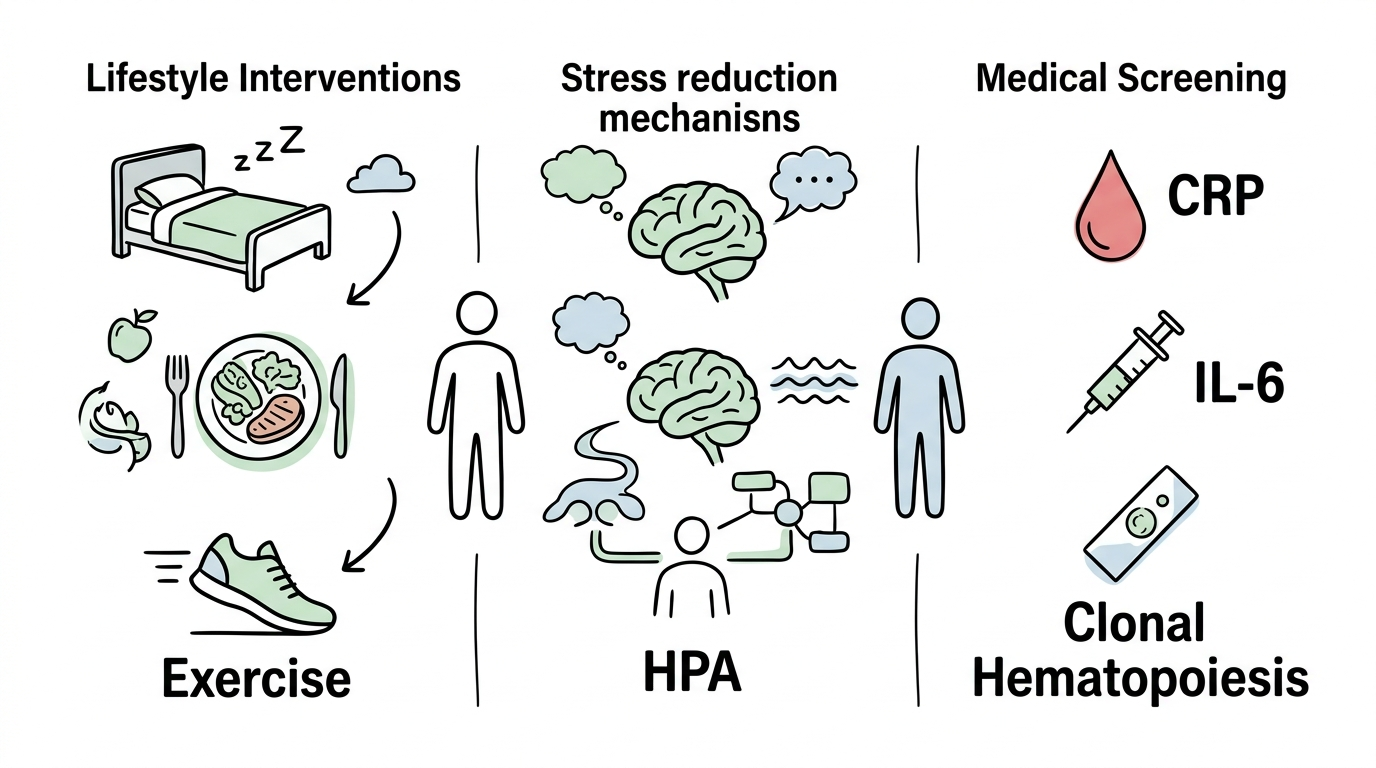 Figure 2: Lowering chronic inflammation may help preserve marrow function before overt disease appears.
You don't need to be elderly for this to be relevant.
The molecular drift begins accumulating in middle age. Inflammaging is a silent process — no symptoms, no obvious signals, but your HSC are already reshuffling their production priorities.
A few practical takeaways worth holding onto:
Inflammation is modifiable. Regular exercise, adequate sleep, and reduced ultra-processed food intake have been consistently shown to lower chronic inflammation markers. The TSP-1 story suggests the gate can be maintained, not just replaced after it breaks.
Your blood count tells a story. A shift toward elevated myeloid cell fractions in a routine differential count may be an early signal worth tracking over time. Not an alarm — an observable trend.
Immune resilience is built in the marrow. Long before a pathogen arrives, the quality of what your bone marrow produces every day is already shaping your immune capacity.
What system in your body would you most want to "reset"? Researchers are now exploring exactly that for HSC — and it may become one of the defining frontiers of longevity medicine.
Can the Factory Be Repaired?
The answer is a cautious but genuine yes — in progress.
Blocking the IL-1 signaling axis, interrupting PGE2's systemic spread, restoring TSP-1-mediated suppression — all three pathways are under active investigation. Some have existing clinical tools (IL-1 blockers like anakinra are already used in inflammatory disease), though the "hematopoietic aging" indication remains in early research phases.
Caiado et al. (2024, Blood) offer the sharpest framing: IL-1 is not just a marker of aging. It is a participant. You can, in principle, intercept it.
Hematopoietic stem cell aging is not a predetermined one-way road. It is a system with entry points. And those entry points are being mapped, one paper at a time.
Your blood doesn't have to age at the same rate you do.