The Short Version
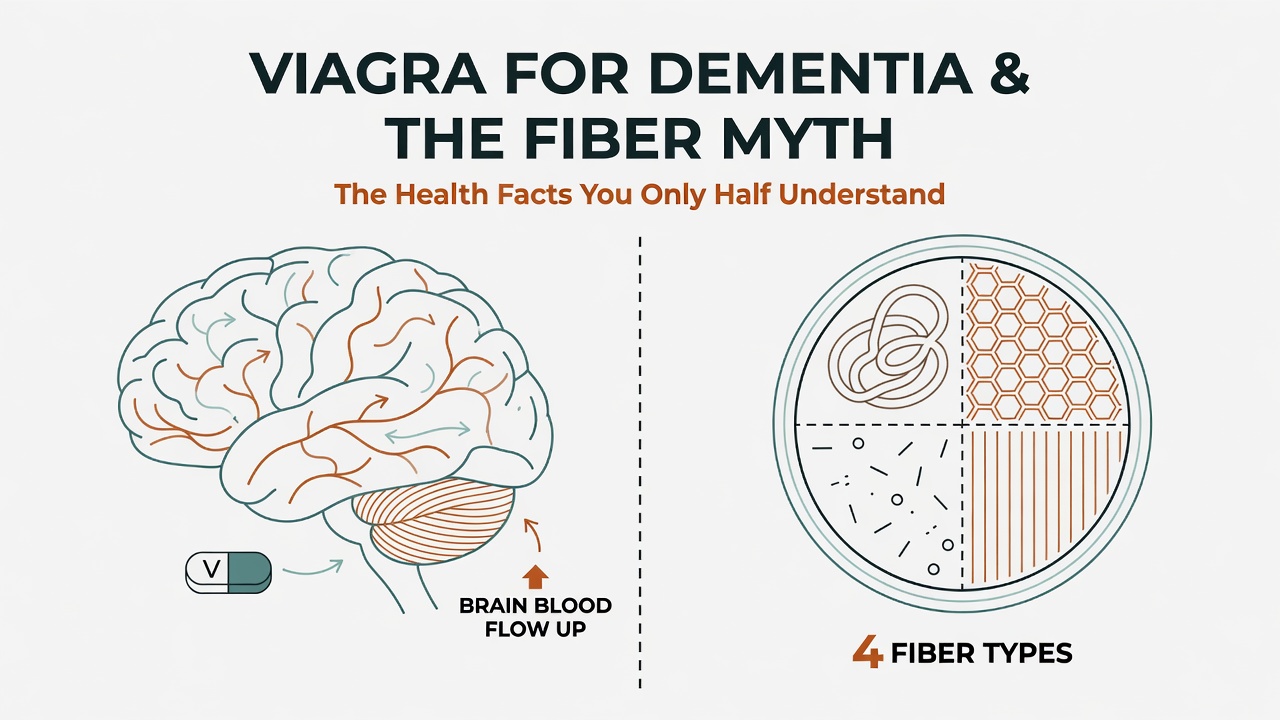
Sildenafil — yes, that sildenafil — may protect your brain from dementia by boosting cerebral blood flow. Meanwhile, the "soluble vs. insoluble" fiber labels on your cereal box are so oversimplified they're practically useless. Both stories share a common thread: we've been misled by categories that are too neat for messy biology.
A Little Blue Pill with a Surprising Side Quest
Mention Viagra at a dinner party and you'll get knowing smiles. But mention it at a neurology conference and you might get something far more interesting: genuine scientific excitement.
In 2024, a team at the University of Oxford published the OxHARP trial in Circulation Research — a double-blind, placebo-controlled study of 75 participants examining whether sildenafil could improve blood flow to the brain. The answer was a clear yes.
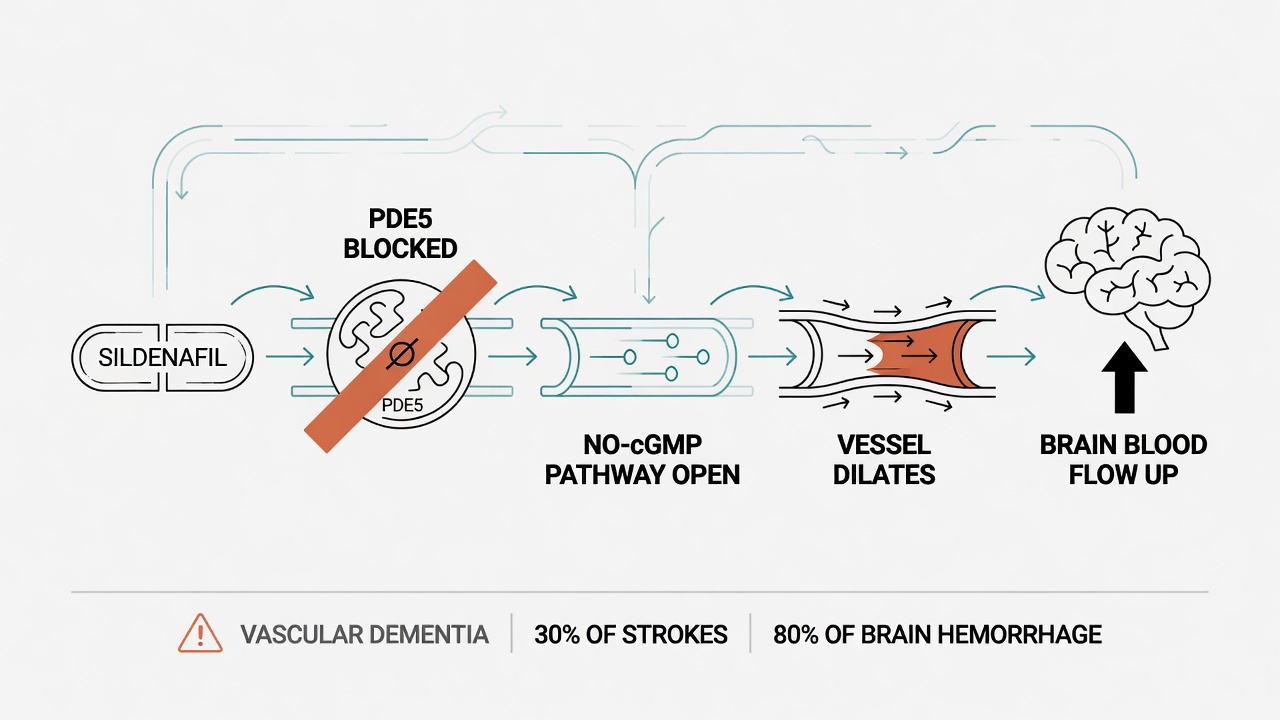
The mechanism is straightforward. Sildenafil inhibits PDE5, an enzyme that breaks down cGMP. With more cGMP available, the NO-cGMP signaling pathway keeps blood vessels relaxed and dilated. This is the same trick it plays elsewhere in the body (you know where), but the Oxford team was the first to confirm — using both ultrasound and MRI — that it works in cerebral vessels too. They documented increased blood flow in both large and small brain arteries, reduced cerebrovascular resistance, and enhanced CO2 reactivity.
Why does this matter? Chronic small vessel damage in the brain is the primary driver of vascular dementia. It also contributes to roughly 30% of strokes and a staggering 80% of intracerebral hemorrhages. If a drug with nearly three decades of safety data can address this damage, that's a lead worth chasing.
"This is the first trial to show that sildenafil gets into the brain's blood vessels and improves their function," said Dr. Alastair Webb, who led the research. But he was also candid: 75 participants is a proof of concept, not a prescription. Larger trials are needed before anyone should reach for the blue pill as a brain supplement.
This is drug repurposing at its most promising — an old molecule revealing new capabilities that were hiding in plain sight, overlooked because we filed it under a single label.
The Fiber Labels That Have Been Lying to You
Now for a different kind of half-truth.
Walk down the health food aisle and you'll see "rich in soluble fiber" or "insoluble fiber for digestive health" plastered across packaging. The implication is simple: soluble fiber lowers cholesterol, insoluble fiber keeps you regular. Pick one. Done.
Except it's not that simple. Not even close.
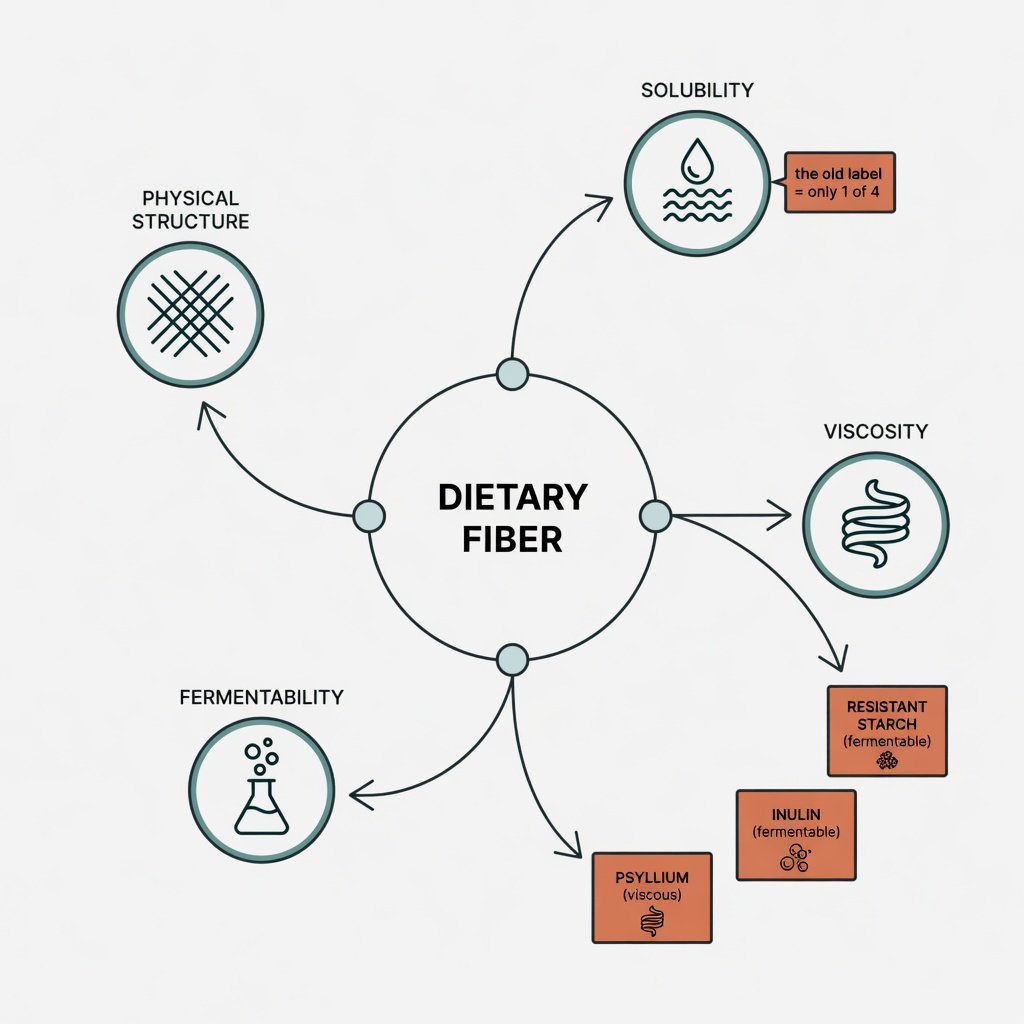
In a landmark 2017 review, McRorie and McKeown argued that dietary fiber has four independent properties that determine its physiological effects: solubility (does it dissolve in water?), viscosity (does it form a gel?), fermentability (can gut bacteria break it down?), and physical structure. The soluble/insoluble binary captures only one of these four dimensions.
Consider two fibers both labeled "soluble": inulin and psyllium. Inulin is completely fermented by gut bacteria, producing short-chain fatty acids (SCFAs) that nourish the microbiome. Psyllium, on the other hand, passes through the gut largely intact. Its superpower is viscosity — it forms a thick gel that physically traps LDL cholesterol and escorts it out of your body. Same label, completely different mechanisms, completely different outcomes.
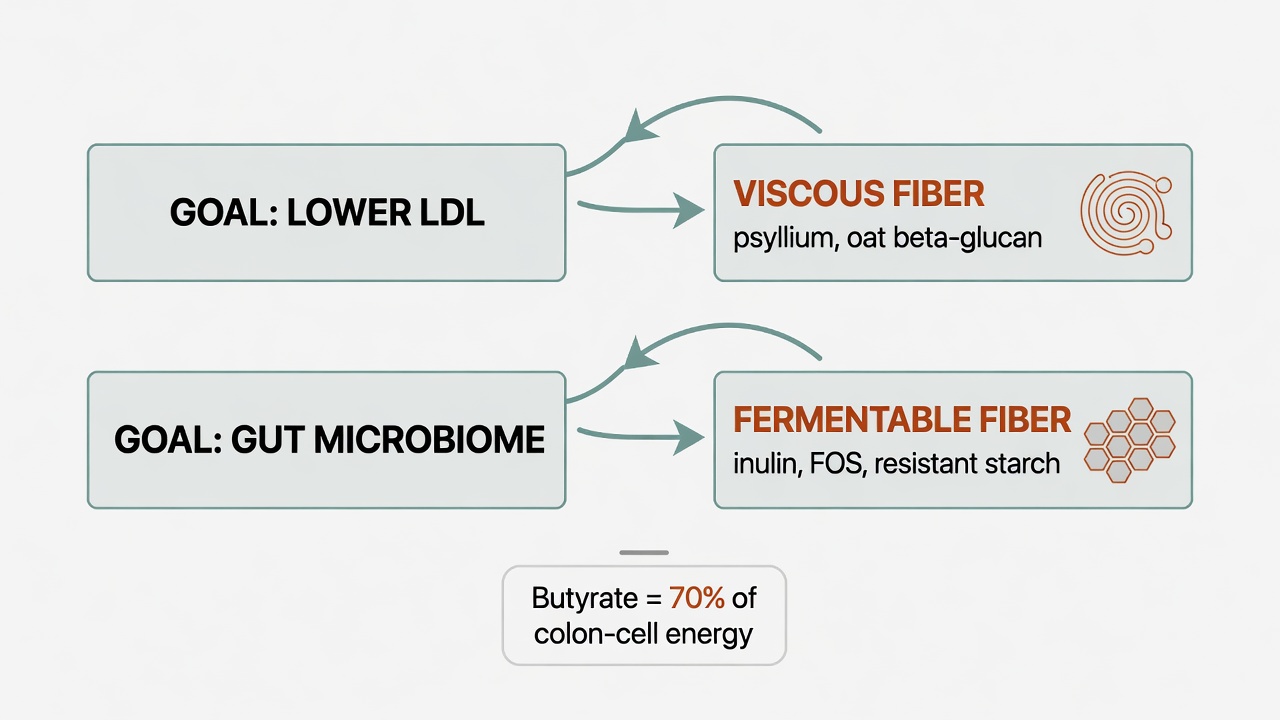
Then there's resistant starch, classified as "insoluble" yet highly fermentable. It produces butyrate, a short-chain fatty acid so important that colonocytes — the cells lining your colon — derive roughly 70% of their ATP from it.
The practical takeaway is refreshingly clear once you look beyond the binary:
- Lower LDL cholesterol? Choose viscous fibers: psyllium husk, oat beta-glucan.
- Feed your microbiome? Choose fermentable fibers: inulin, FOS, resistant starch.
- Stay regular? Either strategy works.
The Common Thread
These two stories are about the same mistake: reducing complex biology to simple categories, then treating those categories as truth.
Sildenafil was filed under "erectile dysfunction drug," so nobody looked at its cerebrovascular potential for over two decades. Dietary fiber was filed under "soluble or insoluble," so consumers have been making dietary choices based on a classification system that tells them almost nothing useful.
The lesson isn't that labels are bad — they're necessary shortcuts. The lesson is that shortcuts expire. Science moves forward by questioning the labels we've inherited, and the best health decisions come from asking one more question before accepting a tidy answer.
This article is for informational purposes only and does not constitute medical advice. Consult a healthcare professional before making changes to medications or diet.