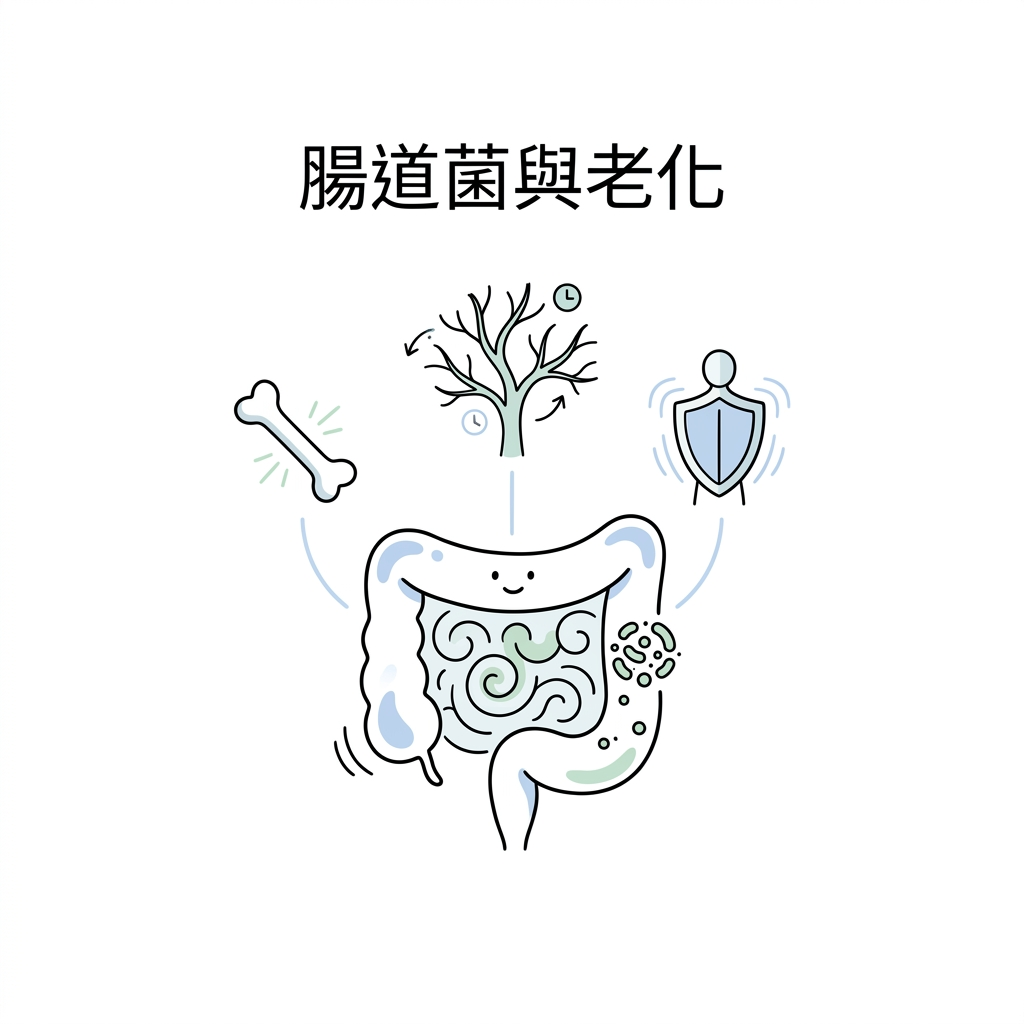
TL;DR: You harbor nearly 38 trillion bacteria in your gut — outnumbering your own human cells. A 2025 Nature Aging study shows a gut-derived metabolite is actively rusting your blood vessels. Nature Immunology reveals your microbiome shapes immune aging differently by sex. The gut is not a passenger in aging. It is the driver.
The Hidden Commander in Your Gut
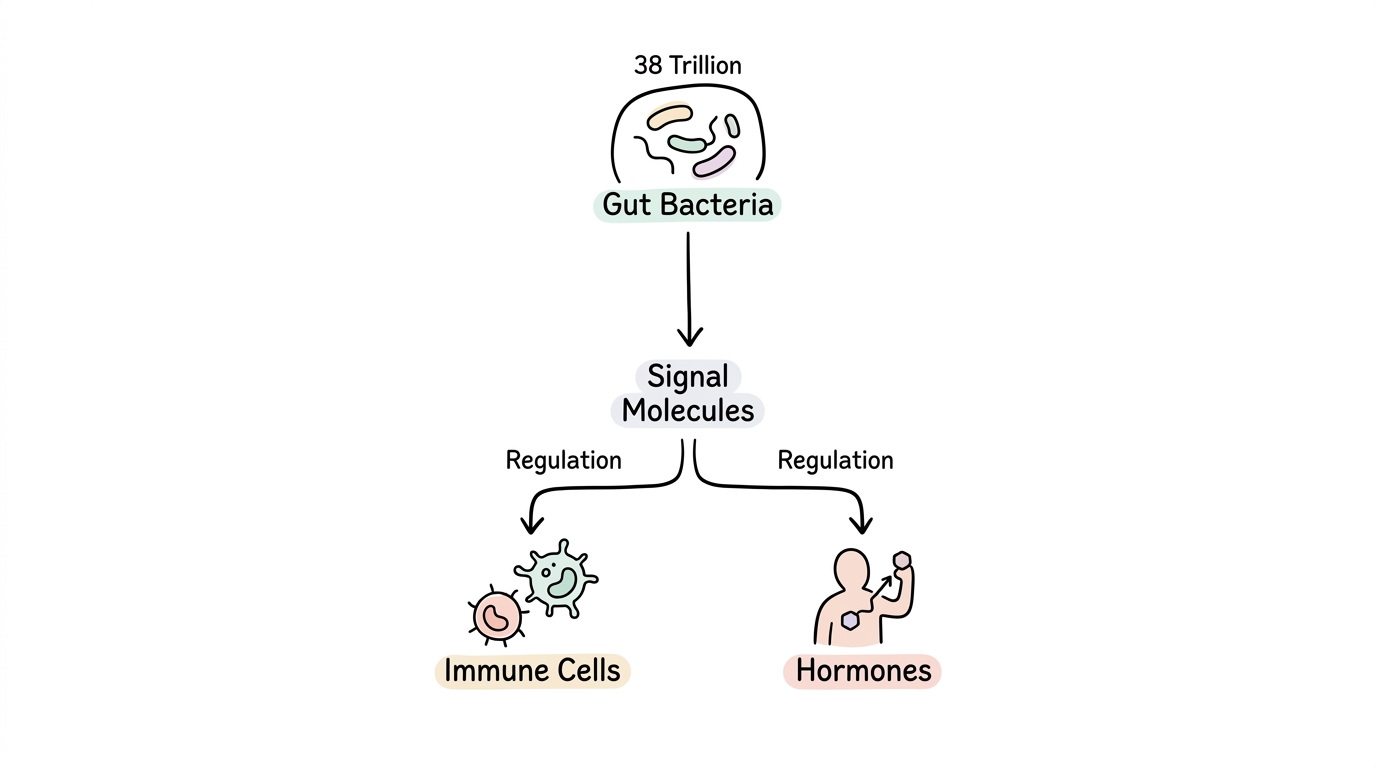 Figure 1: Gut microbes help shape immune tone, vascular health, and the pace of aging.
You have 37 trillion human cells. Your gut holds roughly 38 trillion bacteria.
This is not a hygiene issue. It is a governance issue.
These microbes do not merely digest last night's dinner. They synthesize signaling molecules, modulate immune cells, and regulate hormone metabolism. Two landmark studies published in 2025 placed a long-ignored question on every researcher's desk: your gut microbiome has significant authority over how fast you age.
One Metabolite, One Decade of Premature Vascular Aging
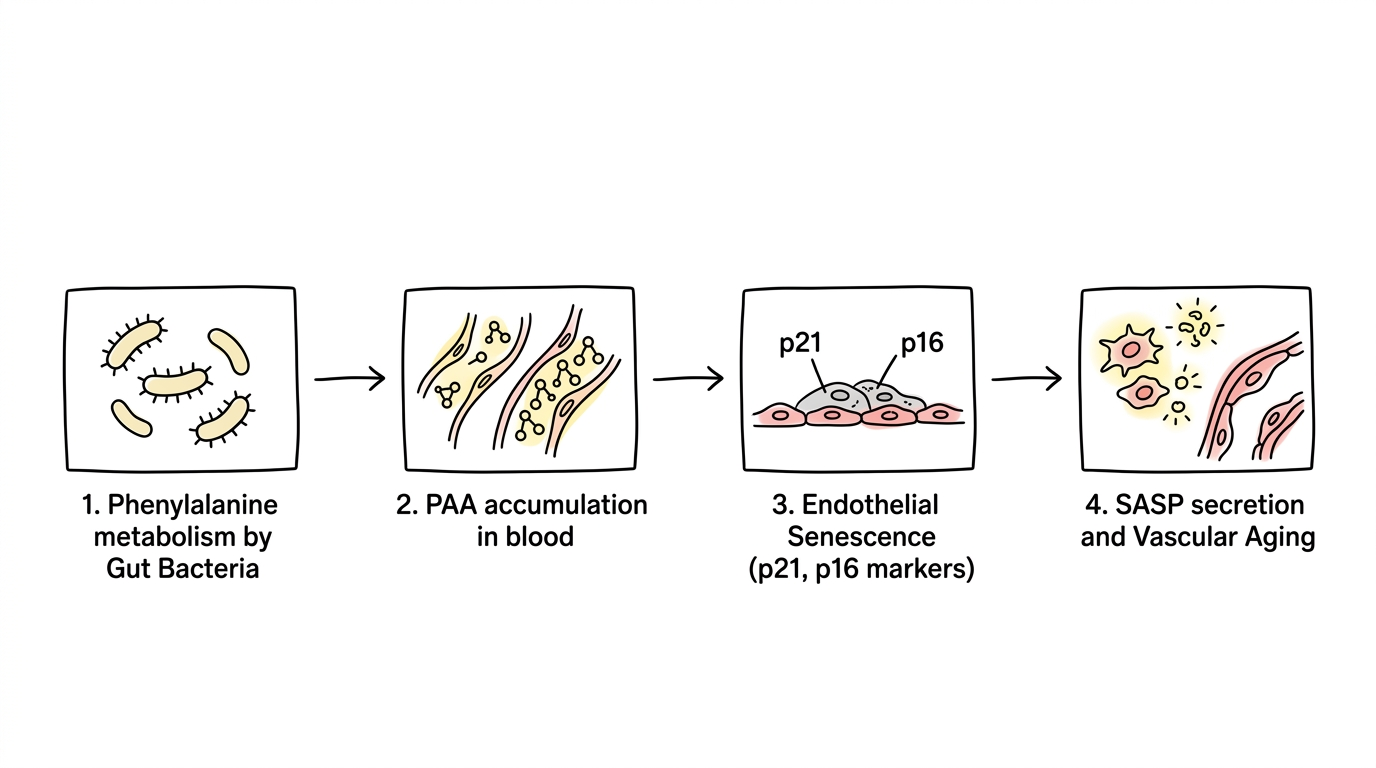 Figure 2: A microbiome-derived metabolite like PAA can push endothelial cells toward premature senescence.
A 2025 Nature Aging paper identified Phenylacetic Acid (PAA) — a bacterial metabolite produced during phenylalanine breakdown — as a direct inducer of endothelial senescence.
When the gut microbiome is dysbiotic, PAA floods the bloodstream. Once inside blood vessels, it pushes endothelial cells into a senescent state. These cells do not die; they persist and secrete the Senescence-Associated Secretory Phenotype (SASP), a chronic inflammatory signal that corrodes surrounding tissue like rust spreading through a pipe.
The downstream consequences — arterial stiffness, hypertension, cardiovascular risk — are routinely attributed to "getting older." The gut microbiome rarely gets the credit it deserves.
Data: Saeedi Saravi et al. (2025, Nature Aging) reported that elevated PAA levels correlated directly with senescence markers p21 and p16 in endothelial cells, and that plasma PAA was significantly higher in elderly versus young human cohorts.
Your Sex Changes How Your Gut Ages You
Zhu et al. (2025, Nature Immunology) demonstrated that the gut microbiome sculpts neutrophil aging in a sex-specific manner — a mechanism that helps explain the striking male predominance in bladder cancer incidence.
Neutrophils are the frontline soldiers of innate immunity. When gut dysbiosis disrupts their aging clock, male microbiomes tend to accelerate neutrophil senescence and functional decline. Female microbiomes interact with estrogen to create a distinct immune microenvironment with different aging trajectories.
Immune aging is not merely a function of chronological time. It is a joint product of gut microbiome composition and sex hormone biology.
The Gut-X Axis: Bone, Hormones, and the Triangle No One Talks About
The "Gut-X axis" framework — where X substitutes bone, brain, or endocrine system — is reshaping how researchers think about systemic aging. A 2026 Journal of Orthopaedic Translation review consolidated the gut-bone evidence into three mechanistic channels.
The immune channel: gut bacteria modulate T and B cell activation, indirectly governing osteoclast differentiation. The metabolic channel: Short-Chain Fatty Acids (SCFAs) promote osteoblast activity. The hormonal channel: gut bacteria regulate estrogen enterohepatic circulation, and estrogen is the primary guardian of bone mineral density.
Kverka (2024, Current Osteoporosis Reports) reframes postmenopausal osteoporosis not as an inevitable consequence of estrogen loss, but potentially as a downstream consequence of gut microbiome disruption. Estrogen, gut microbiome, and bone loss form a triangle, not a one-way arrow.
Your Microbiome Is Not Destiny
The gut microbiome is highly plastic. Antibiotic overuse, ultra-processed diets, chronic sleep deprivation, and physical inactivity are established drivers of dysbiosis.
The research horizon is moving from correlation toward mechanistic intervention: targeted probiotics, Fecal Microbiota Transplantation (FMT), and drugs targeting PAA biosynthesis pathways are all in active development.
Until those interventions reach the clinic, the most evidence-supported strategy remains the oldest one: dietary diversity, adequate fiber, and consistent physical activity. These are not platitudes. They are the fuel your 38 trillion residents need to do their job.
Aging Is a Conversation, Not a Countdown
From PAA-driven vascular corrosion to sex-specific immune aging to the gut-bone triangle — these studies converge on one conclusion: aging is not a fixed program. It is an ongoing biochemical conversation.
Your gut microbiome is the loudest, most neglected voice in that conversation.
The next time you choose what to eat, remember — you are not just feeding yourself. You are deciding what your 38 trillion residents will produce tomorrow.
Sources: Saeedi Saravi et al. (2025) Nat Aging; Zhu et al. (2025) Nat Immunol; Zhang et al. (2026) J Orthop Transl; Kverka et al. (2024) Curr Osteoporos Rep