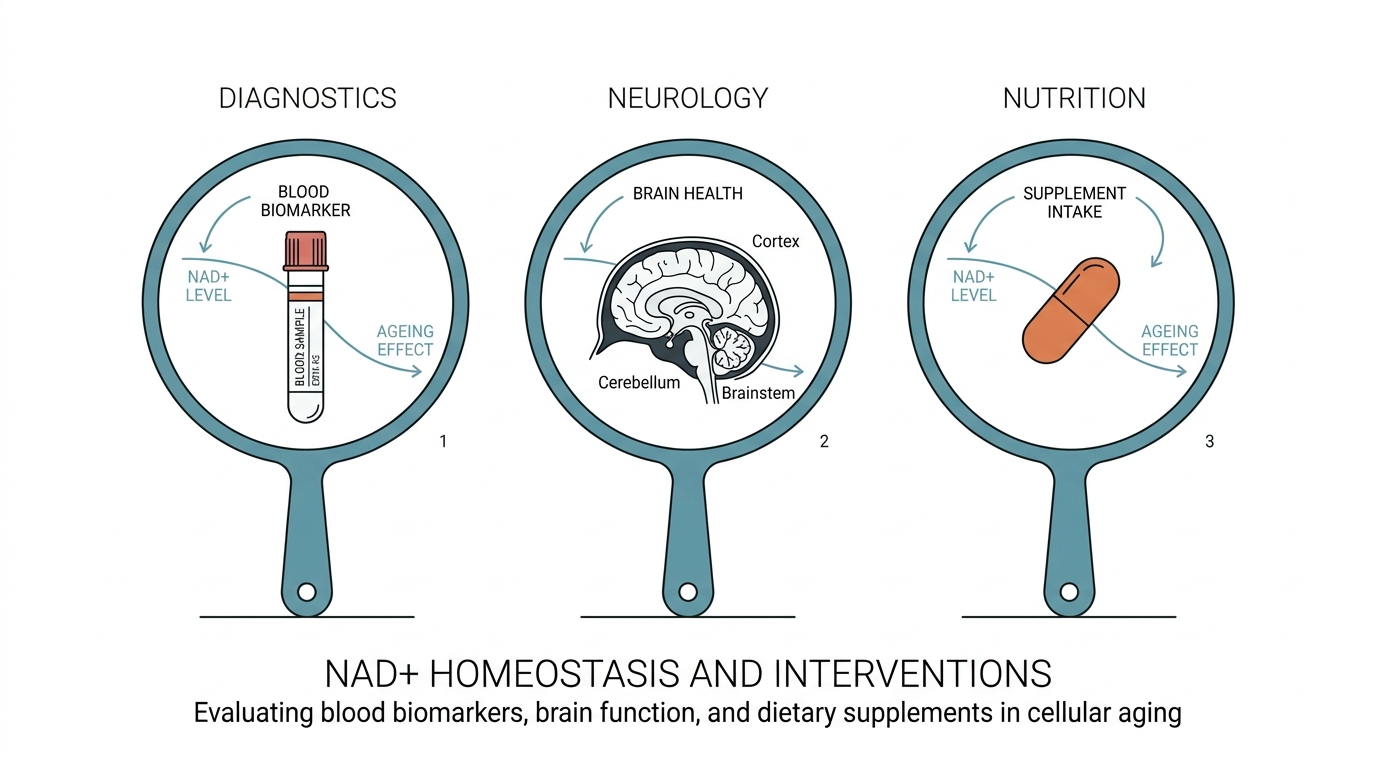
Picture this: every second, over 500 enzymatic reactions inside your body burn the same fuel — NAD⁺. That it declines with age? Mice proved it long ago. But what about you? In your blood, in your brain — can we actually measure it dropping?
Three studies. Three methods. Same question. Here are the answers.
Mirror One: You Can See It in a Single Tube of Blood
A 2019 study confirmed that one tube of plasma is enough to reveal the full picture of the NAD⁺ system crumbling with age.
Draw blood. Run the mass spec. Done. The team analyzed plasma from 29 healthy adults aged 20 to 87. The pattern was unmistakable: "fully charged" forms — NAD⁺ and NADP⁺ — slid downward with age, while "spent byproduct" molecules piled up. Like a battery you've used for ten years: the voltage drops, corrosion eats the insides, but the casing still looks fine. The plasma NAD⁺ profile is becoming a candidate biomarker for aging.
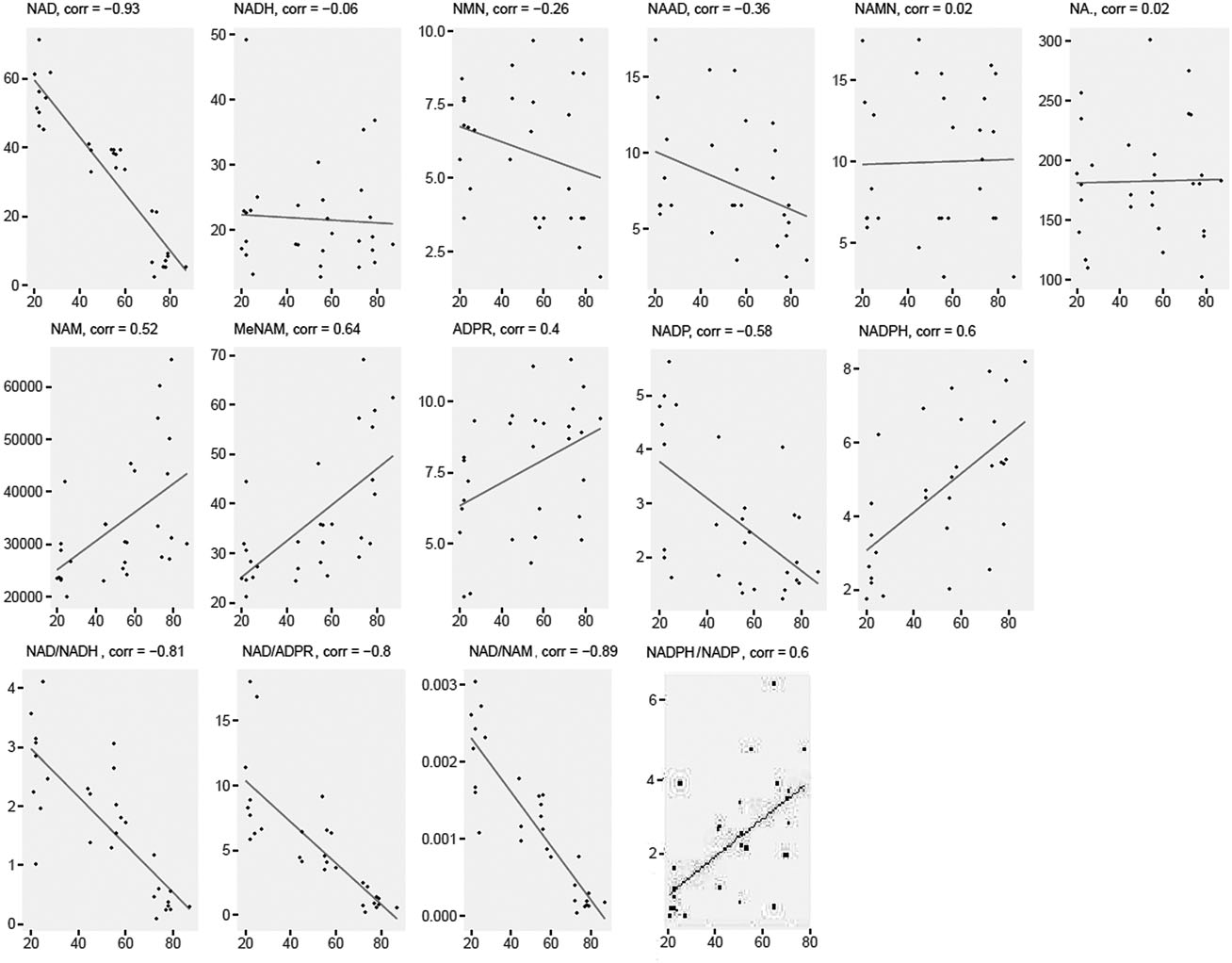 Plasma NAD⁺ metabolome changes with age (20-87 years, N=29). Source: Clement et al. (2019), Rejuvenation Research.
Mirror Two: Scanning Straight Into a Living Brain
A 2015 study was the first to measure NAD⁺ noninvasively inside a living human brain, confirming it declines with age.
Blood is just the periphery. What about the brain? NAD⁺ doesn't glow, and you can't carve out a chunk of living brain to assay. The researchers slid subjects into a 7 Tesla MR scanner — like tuning a radio dial to pick up a specific frequency — and read out NAD⁺ and NADH separately. The result was clear. The older the person, the lower the NAD⁺, the more skewed the redox balance. That cellular power plant was going dark, and for the first time you could watch it happen.
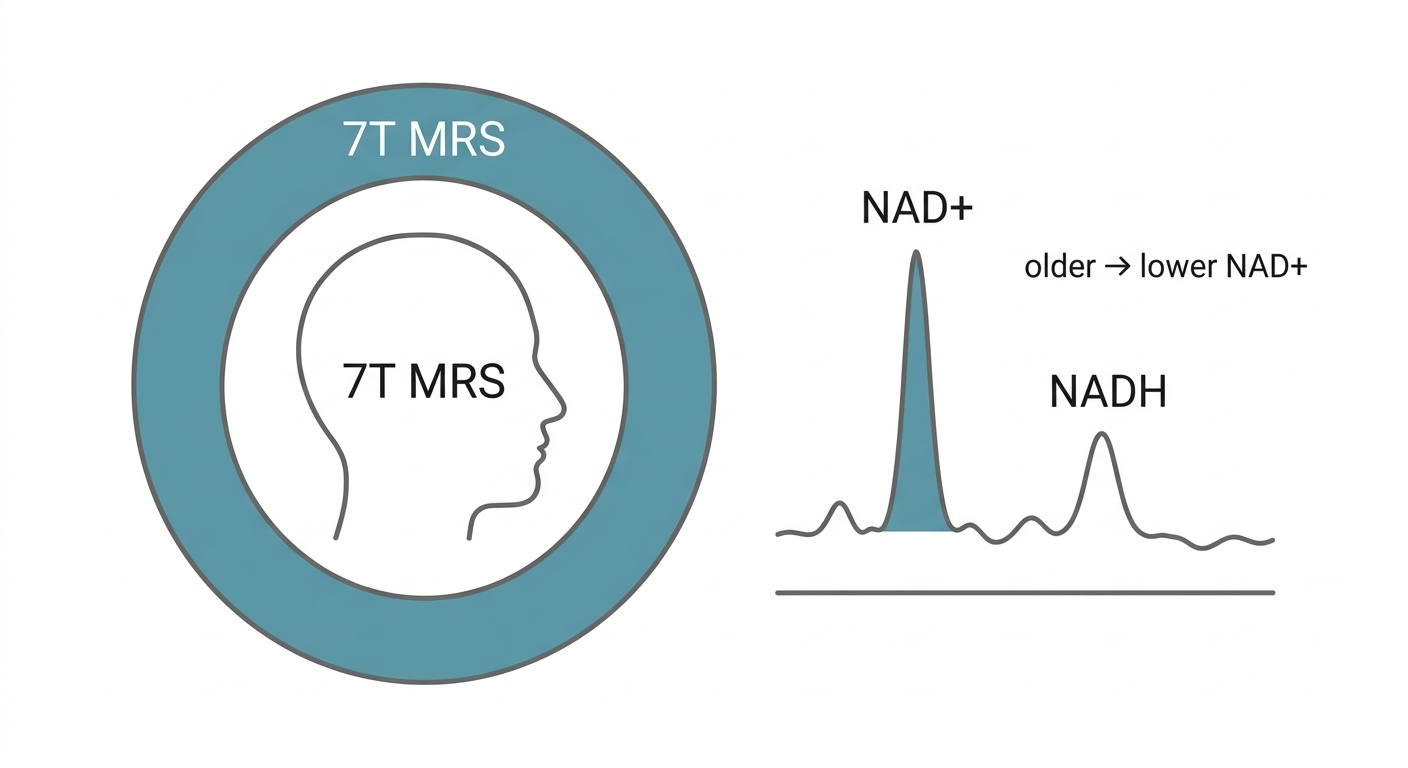 7T ³¹P MR spectroscopy reads out NAD⁺ and NADH in a living human brain. Adapted from Zhu et al. (2015), PNAS.
Mirror Three: Top It Back Up and See If the Body Buys In
A 2018 randomized double-blind crossover trial confirmed that oral NR effectively raises blood NAD⁺, but clinical benefits remain unproven.
So we can see the problem. Can we fix it? Healthy adults aged 55 to 79 took 1000 milligrams a day of NAD⁺ precursor NR for 6 weeks. The verdict came in two halves. The good: well tolerated, few side effects, blood NAD⁺ did go up. The cautious: blood pressure and arterial stiffness barely budged. Like filling a gas tank to the brim while the engine still won't speed up. The numbers moved; the body didn't buy in.
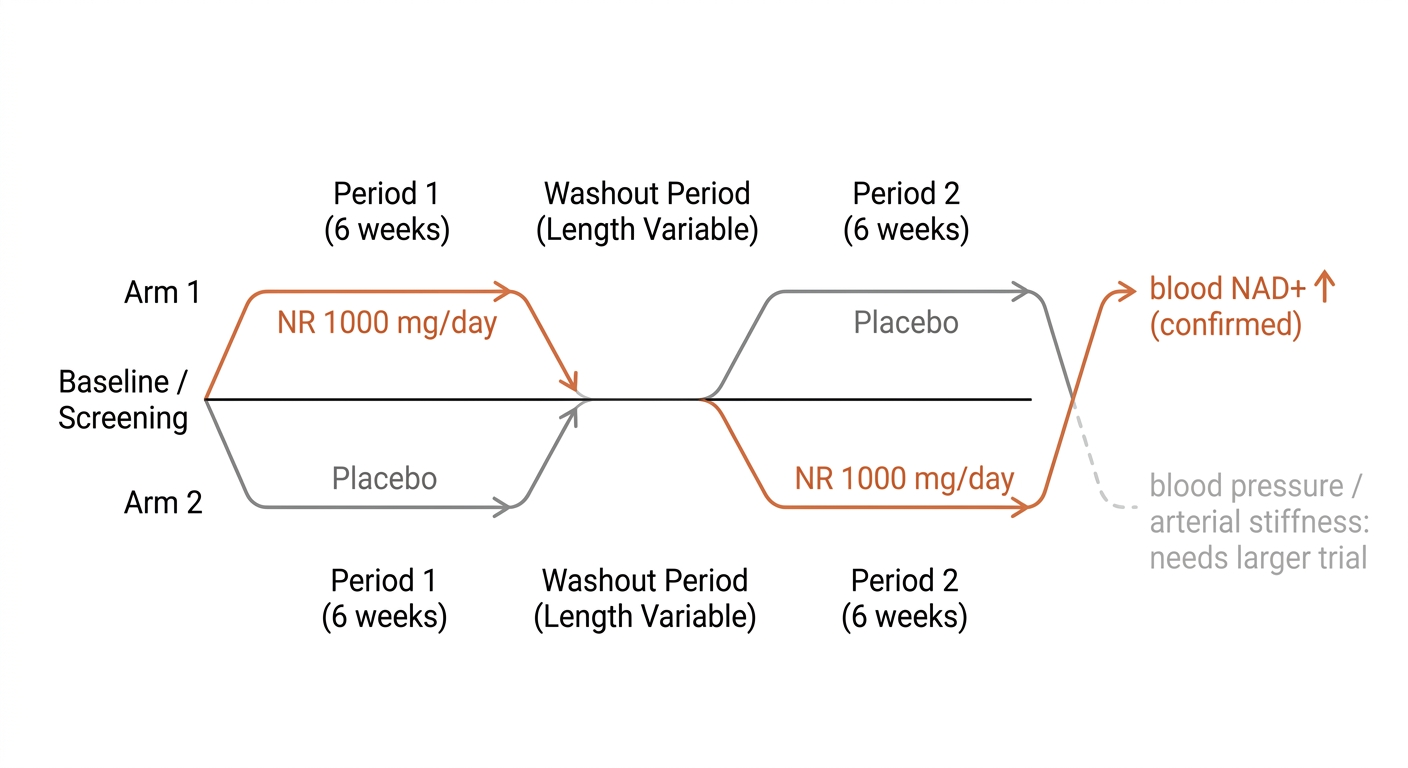 Randomized double-blind crossover trial: NR raises blood NAD⁺; clinical benefits pending. Adapted from Martens et al. (2018), Nature Communications.
Seeing It Isn't the Same as Fixing It
All three studies share the same crack: small samples, cross-sectional design, and supplements that raise blood numbers without translating into functional improvement.
Pump the brakes. Cross-sectional means these studies compare different people of different ages — not the same person growing older. The more damning gap: blood NAD⁺ went up after 6 weeks of NR, but body function didn't follow. The blood is full. What about the brain? The muscles? Between seeing a problem and solving it, there's still a long road.
So What Are These Findings Good For?
The biggest payoff is turning NAD⁺ from a mouse-lab noun into something trackable in your own body.
A tube of blood, a single scan — one day these may help doctors catch metabolic or neurodegenerative trouble earlier, and give supplements an objective yardstick. But don't rush to get your NAD⁺ tested. These methods are still research tools, not clinic offerings. What can you do right now? Get your exercise and sleep right. That's the anti-aging opener proven again and again, and least likely to backfire.
References
- Clement, J., et al. (2019). The Plasma NAD⁺ Metabolome Is Dysregulated in "Normal" Aging. Rejuvenation Research, 22(2), 121-130. doi: 10.1089/rej.2018.2077
- Zhu, X.-H., et al. (2015). In vivo NAD assay reveals the intracellular NAD contents and redox state in healthy human brain and their age dependences. PNAS, 112(9), 2876-2881. doi: 10.1073/pnas.1417921112
- Martens, C. R., et al. (2018). Chronic nicotinamide riboside supplementation is well-tolerated and elevates NAD⁺ in healthy middle-aged and older adults. Nature Communications, 9, 1286. doi: 10.1038/s41467-018-03421-7