In short: Your AI answers correctly but doesn't sound like anyone you'd trust? A few dozen examples can change that.
A Biotech Company Turned 76 Conversations Into a Jump From 55% to 91%
Have you ever worked with someone brilliant who just can't communicate? Every answer is technically correct, but the tone is flat and the wording sounds read off a manual, and something about it never quite sits right. That was the problem with a biotech company's LINE customer service bot: 55% accuracy, correct content, but reading it felt like listening to a script.
The engineer in charge first tried the obvious shortcut, adding a line like "please answer warmly" to the prompt. It didn't hold. Sometimes the model complied, sometimes it slipped back into its academic tone, and every time he fixed one scenario, another broke. Three days went by like whack-a-mole, because a prompt only tells a model what to say this one time. It can't change the habit underneath.
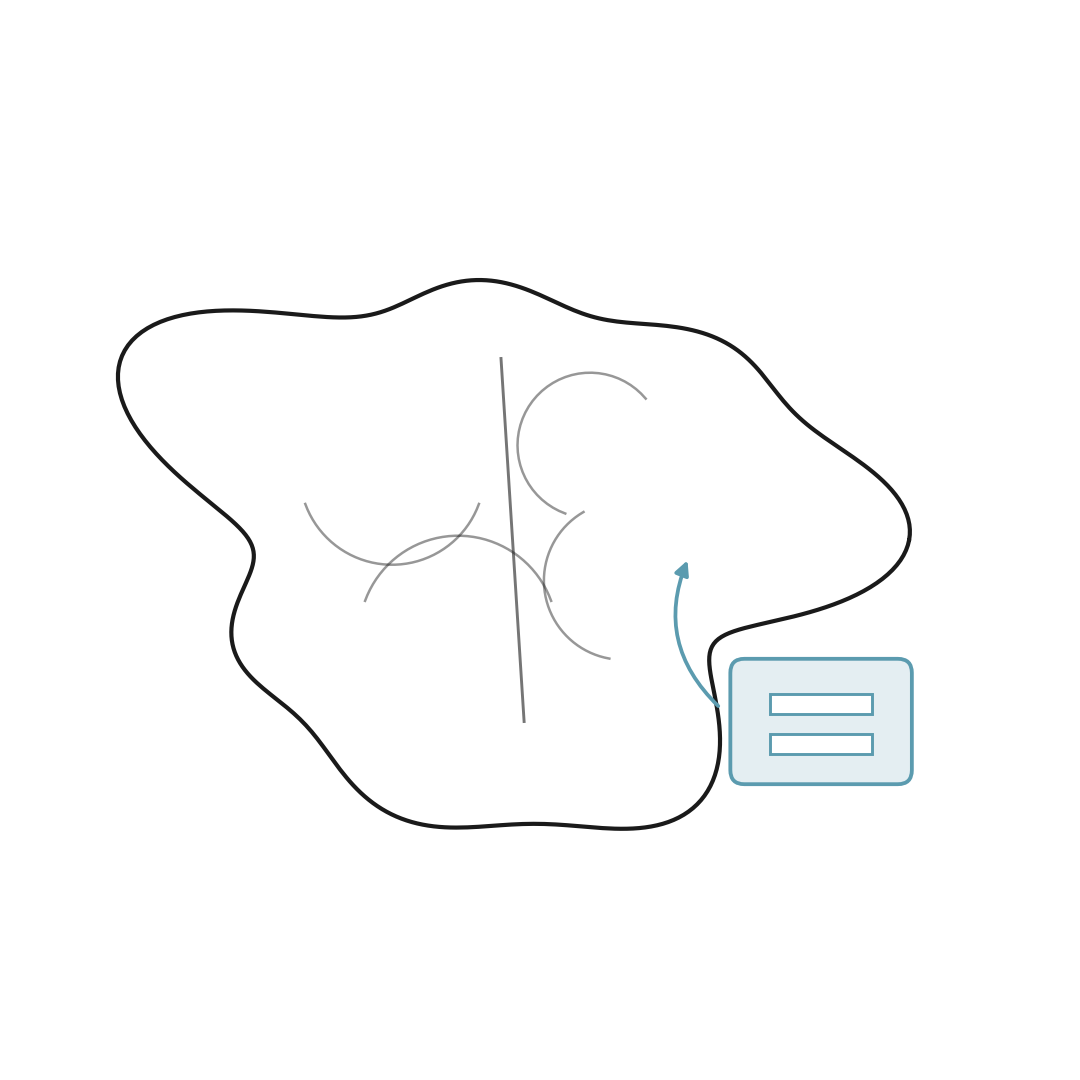
So the team changed direction. Instead of lecturing the AI on how to speak, they showed it how they actually spoke: 76 carefully selected conversation examples, about three hours of training, and accuracy climbed from 55% to 91%. The tone shifted too, from a stiff robotic voice to something closer to a real person behind the counter. The technique is called LoRA. It doesn't rebuild the AI's brain, it fits the existing model with a corrective lens.
LoRA Reaches Near Full Fine-Tuning Results With Less Than 1% of the Parameters
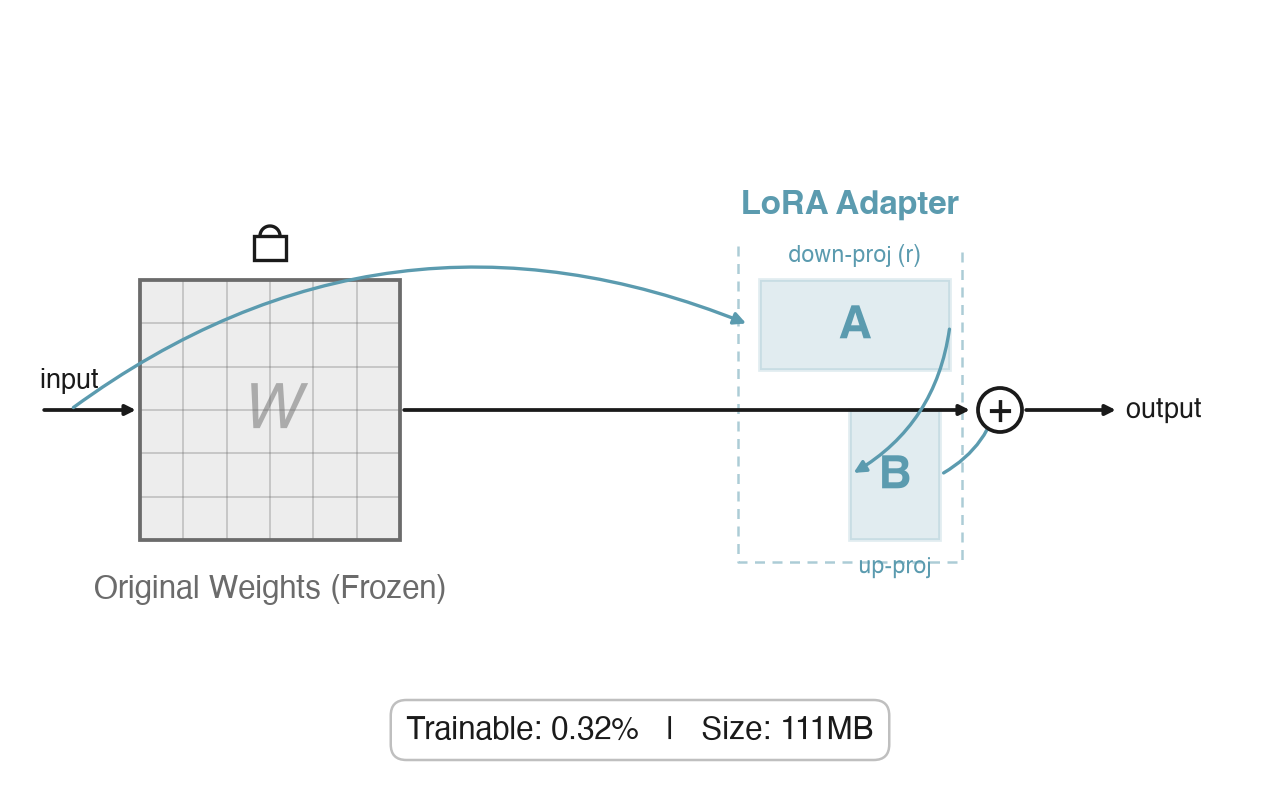
Traditional full fine-tuning is like taking the whole pair of glasses apart and regrinding every lens: billions of parameters recalculated, expensive, slow, and hard to undo if it goes wrong. LoRA takes a cheaper route, leaving the lens untouched and adding a thin corrective film on the side instead, because a bit of nearsightedness and astigmatism doesn't call for remaking the whole pair. Microsoft proposed the idea in 2021 (Hu et al., arXiv:2106.09685), and it has since drawn over 10,000 citations.
That film is really two small matrices, a technique called low-rank decomposition. The name sounds intimidating, but the idea is simple: the space a model's behavior needs to move through is narrower than we assume, so adjusting a few key dimensions is often enough. A 9-billion-parameter model, for instance, gets a LoRA adapter with only 29 million trainable parameters, just 0.32% of the total, saved to disk at 111MB, about the size of one high-quality song.
QLoRA pushed this further in 2023 (Dettmers et al., arXiv:2305.14314, cited over 7,000 times), compressing the model from 16-bit to 4-bit before layering LoRA on top, so a model that once needed 32GB now trains in 16GB, well within reach of an everyday gaming GPU. Compression isn't free, though. Like saving a photo at a smaller file size, 4-bit quantization loses a little precision on tasks that need fine numerical reasoning; the QLoRA paper reports NF4 scoring 1 to 2% lower than FP16 on some benchmarks. Safe to ignore for most uses, worth planning around if your task is sensitive down to the third decimal.
Windows and Mac Can Both Run LoRA, Just by Different Roads
Whether you have an NVIDIA GPU or Apple Silicon, running LoRA on consumer hardware is no longer news. The difference is how smooth the setup feels.
Windows + NVIDIA: plenty of compute, but the environment fights back
The same company trained Qwen3.5-9B into a branded chatbot on an RTX 4060 Ti (16GB VRAM), loaded through QLoRA's 4-bit quantization. With 76 examples across 13 scenario types and 3 epochs, about three hours brought the training loss from 2.14 to 0.39, ending with the same 111MB adapter.
What actually hurt wasn't training but everything before it: CUDA drivers conflicting, pip quietly overwriting a carefully installed GPU build of PyTorch, and Windows' DLL loading order crashing programs without so much as an error message. Just getting the code to run took two more full days. Tutorials and community support are everywhere on this road, but you clear a fair amount of ground before you can start.
Mac + MLX: simpler to set up, but the ecosystem is still young
The same team then tried Apple's MLX framework on an M4 Pro MacBook, this time for biomedical named entity recognition. With only 45 examples and 60 steps, the run finished in 33 seconds, about as long as it takes to pour a glass of water. Loss dropped from 1.06 to 0.17, peak memory stayed under 7GB, and the model went from wrapping JSON in stray markdown fences to producing clean single-line JSON, with 3 out of 4 validation cases matching the reference exactly.
The speed comes from Apple Silicon's unified memory, letting CPU and GPU share the same pool instead of shuffling data back and forth. The tradeoff is a younger ecosystem: hit a bug in the framework itself and there's often no ready answer to borrow. Which road to take just comes down to the hardware on your desk, since both lead to the same place: a model that starts speaking your language.
LoRA Changes How a Model Talks, Not How Smart It Is
Fine-tuning won't make a model smarter, only more in tune with you, and that's the most common, most dangerous misunderstanding about it. Many assume 76 examples also lift a model's reasoning, but they don't, because what you're teaching is tone, format, and terminology, fitting it to your needs rather than raising its ceiling. It's like teaching someone a regional accent: their vocabulary doesn't grow, they just sound more like your neighbor.
Real factual knowledge belongs to RAG instead, connecting the model to your product database, test reports, or literature so it can look things up as it answers. Fine-tuning handles sounding like you, RAG handles getting the facts right, and mixing up the two jobs is where things go wrong.
The bigger risk is that poor-quality data is worse than no training at all, since bad examples make a model lazy and can erase skills it already had, a phenomenon known as catastrophic forgetting. The 76 examples worked because every one was hand-picked, checked, and validated. Quantity was never the point, quality was. That also answers whether LoRA can replace full fine-tuning: for narrow tasks like format compliance and tone, the gap is close to negligible, a conclusion Hu et al.'s own experiments support. But for wholesale behavior rewrites, say forcing an English-only model to speak fluent Taiwanese Hokkien, adjusting just 0.3% of parameters clearly isn't enough. LoRA nudges, it doesn't rebuild, a limitation the QLoRA paper also discusses, especially at low rank settings (r≤8), where the gap widens further.
For Healthcare and Biotech, Privacy May Matter More Than Speed
LoRA fine-tuning runs entirely on your own machine, so sensitive data never has to leave it. For teams handling patient records, experimental data, or trade secrets, that's a reassurance cloud fine-tuning services can't offer. Because training runs on your own hardware, patient reports, unpublished results, and pricing strategy all stay on your own drive, and the trained adapter lives locally too, ready to swap in, take out, or retrain whenever you want.
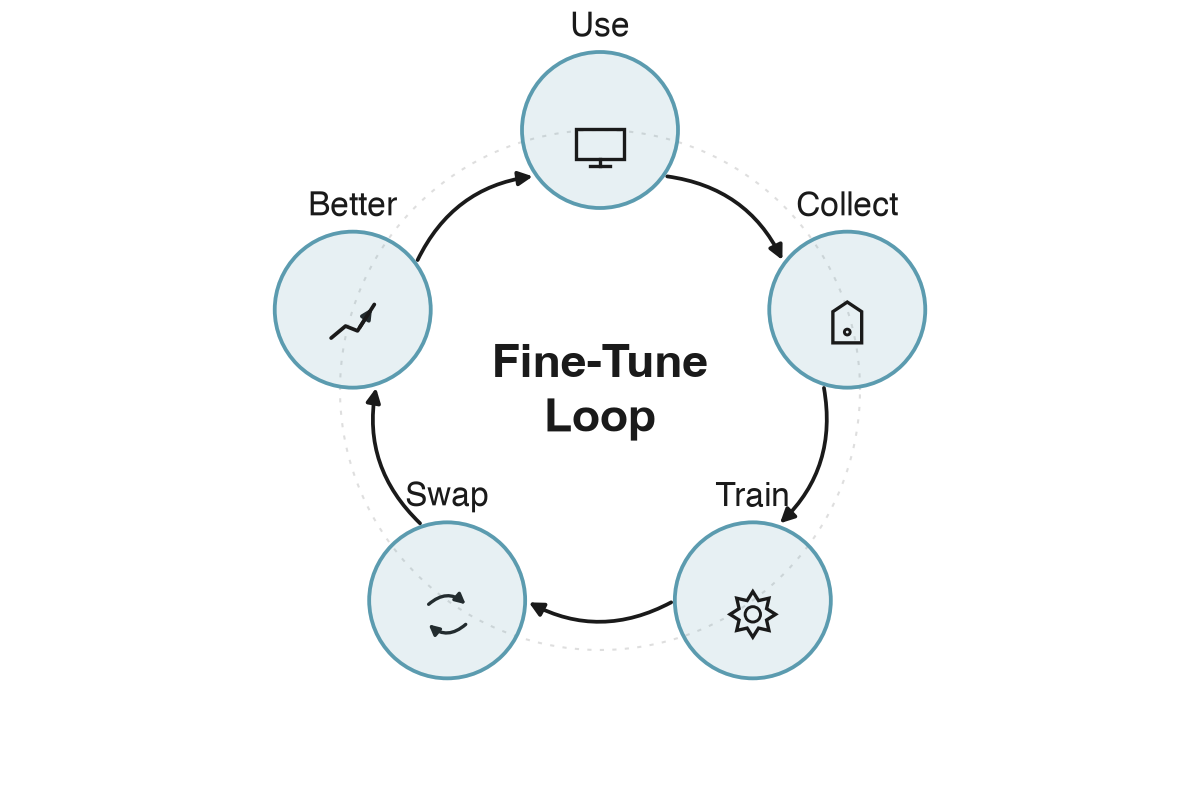
The loop is fairly intuitive: flag good outputs during everyday use, let them accumulate into a dataset, spend 33 seconds to 3 hours retraining, swap in the new adapter, and the model gets a little more attuned before you keep using it. Nothing exotic, no real-time learning trick, just something closer to a routine car tune-up on your own schedule.
Is there something your AI keeps doing that you've wanted to "teach" it out of? Its tone, its formatting, or the way it keeps forgetting your field's terms?
One Thin Corrective Lens Changes How You Work With AI
When LoRA was published in 2021, fine-tuning on your own hardware was still a researcher's privilege. Today it takes a Mac and 33 seconds, or a graphics card and three hours, and the barrier has dropped low enough that the real question is no longer the technology, but whether you've put together those few dozen examples. The model doesn't need to get smarter. It just needs one thin corrective lens to start speaking your language.
References
- Hu, E. et al. (2021). LoRA: Low-Rank Adaptation of Large Language Models. arXiv. arXiv:2106.09685
- Dettmers, T. et al. (2023). QLoRA: Efficient Finetuning of Quantized LLMs. arXiv. arXiv:2305.14314
- Apple Inc. (2025). Explore large language models on Apple silicon with MLX. WWDC 2025.