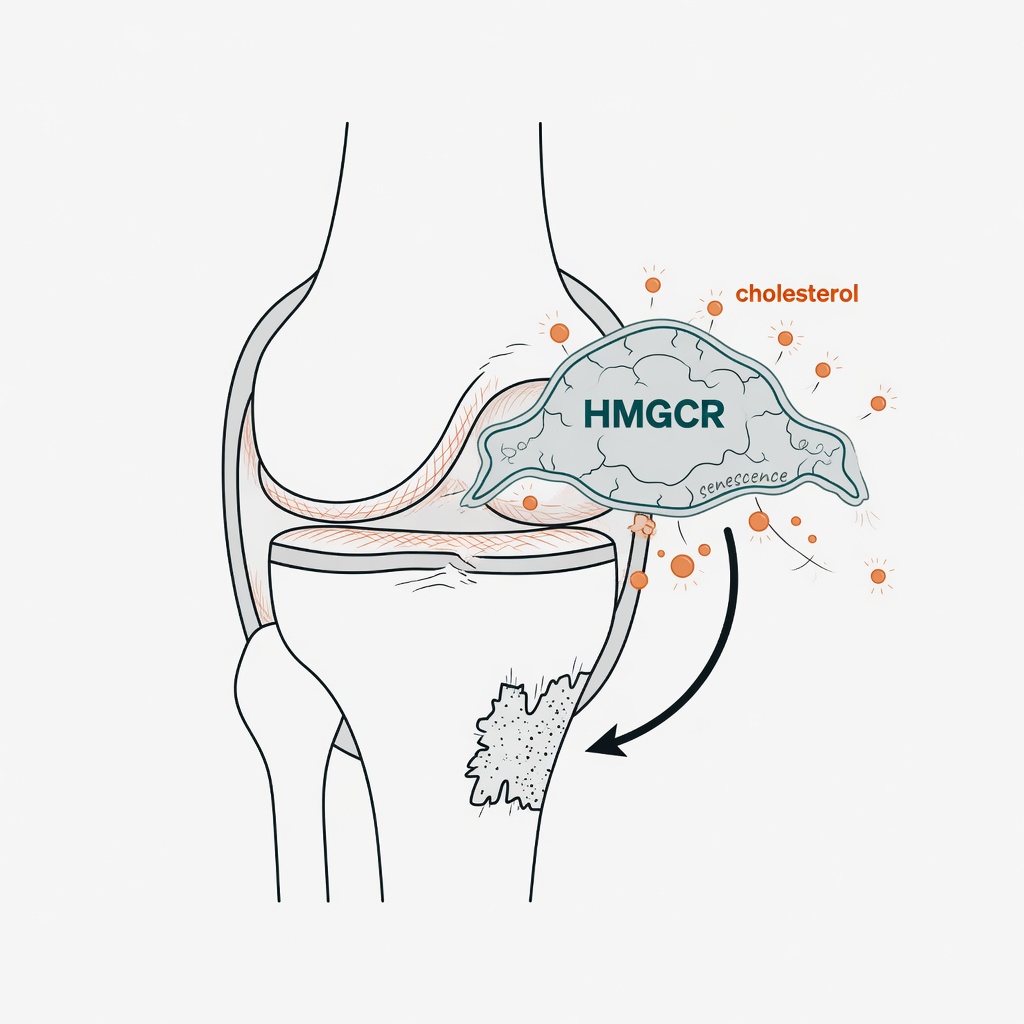
When your knee catches on the stairs, the usual story is simple: the joint got old, the cartilage wore down. We often treat osteoarthritis as pure mechanical wear. Yet the joint is rarely that quiet. More than 89% of people with knee osteoarthritis show inflammation in the synovium, the thin lining that bathes the joint. A study in Advanced Science points to cholesterol as a driver of that lingering inflammation, and more precisely to the synovial cells' own overproduction of it.
HMGCR: the enzyme that ages the lining
The central player is a rate-limiting enzyme that makes cholesterol.
That enzyme is HMGCR, the control point of cellular cholesterol synthesis and the target of statins, the most widely prescribed cholesterol-lowering drugs. When researchers compared synovium from osteoarthritis patients with tissue from healthy people, they found a striking enrichment of HMGCR-rich fibroblasts in the diseased joint. Those cells were not dying. They had entered a senescent state: stalled in place, yet still secreting inflammatory signals. That is the classic picture of a feedback brake that has come loose.
Higher HMGCR meant more senescence and worse joint damage. In culture, the team aged cells with TNF-alpha and then inhibited HMGCR. Senescence reversed. Cholesterol metabolism is not sitting on the sidelines. It actively pushes synovial cells toward aging, and the joint lining pays for that push in persistent inflammation.
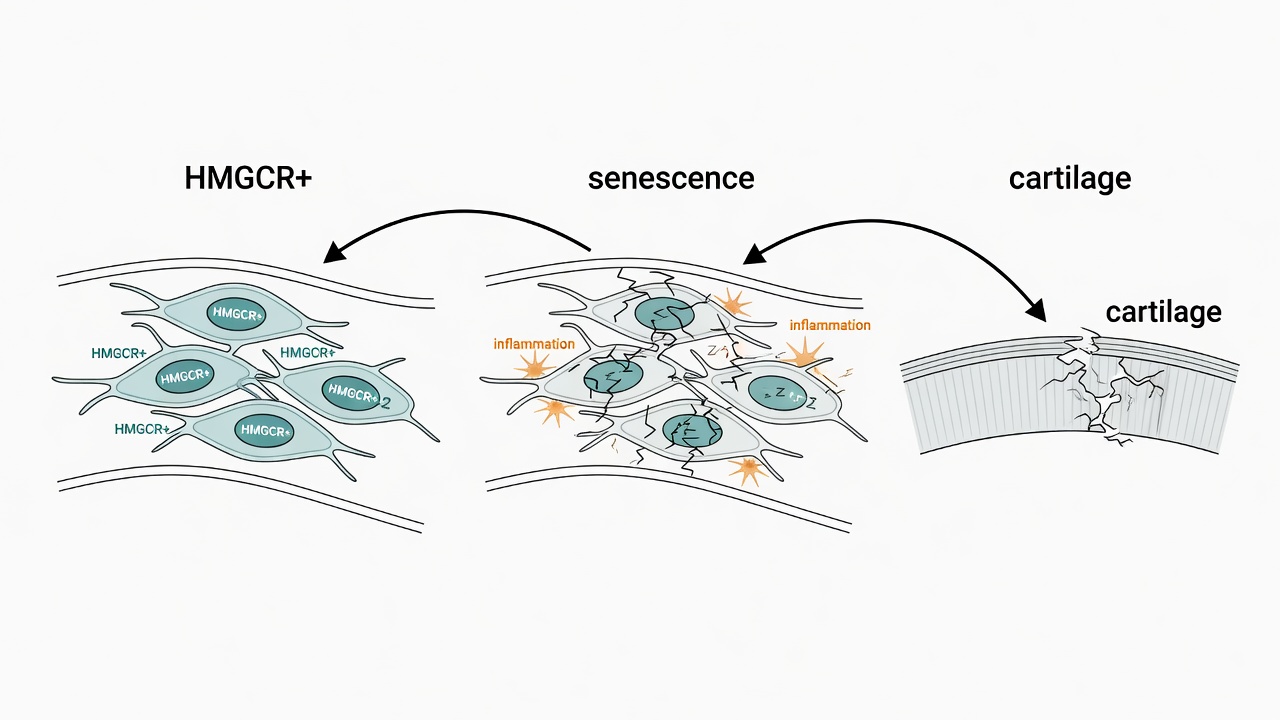
Figure 1: An aging axis. In osteoarthritic synovium, HMGCR-laden fibroblasts proliferate and become senescent, releasing inflammatory signals that keep the joint inflamed and cartilage degraded.
A feedback brake that came off
Healthy cells put the brake on themselves.
When cholesterol rises inside the cell, it normally feeds back to suppress HMGCR. That is the "stop overproducing" brake. In senescent synovial cells, the study found that this brake had been quietly released. The enzyme that builds cholesterol no longer got a reliable stop signal.
The process unfolds in 3 steps. First, AKT1 is phosphorylated and activated. Next, active AKT1 phosphorylates Insig-1, a key part of the brake. Then phosphorylated Insig-1 detaches from SCAP, and the restraint lifts. With the brake off, HMGCR ramps up, cholesterol builds, and senescence deepens into a cycle of aging, brake release, and still more cholesterol.
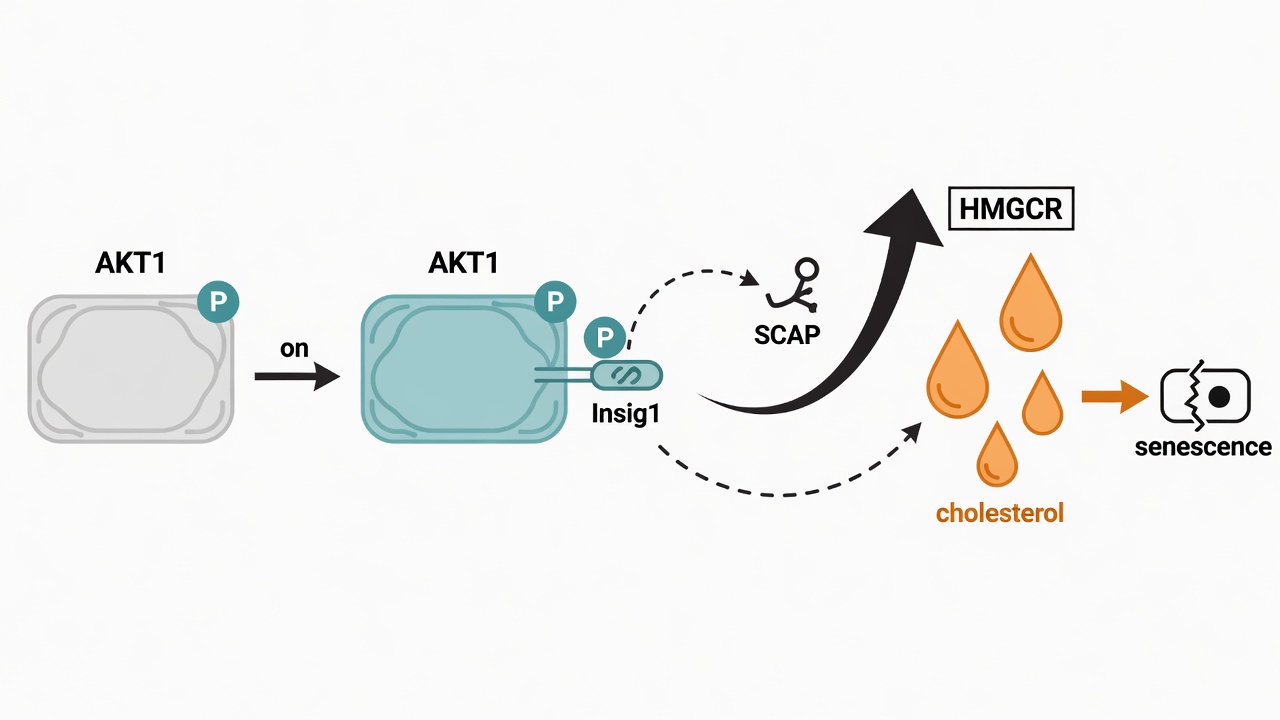
Figure 2: The released brake. Once activated, AKT1 phosphorylates Insig-1, freeing it from SCAP and removing cholesterol's feedback inhibition of HMGCR. The result is increased cholesterol production and accelerated cellular aging.
The team then tried to put the brake back on. Using an adeno-associated virus (AAV) to knock down HMGCR locally in mouse joints, and targeting synovial fibroblasts, the researchers reversed senescence and eased inflammation, cartilage loss, and pain. The strongest part of the animal work is here: the team does not only name a culprit. It shows that hitting HMGCR can improve joint health in the model.
Still, the limits are clear. This is a mouse model plus synovial samples from only 6 human patients. It sits at preclinical mechanism, not clinical proof. The genetic knockdown was local. The authors note that it does not lower systemic blood lipids. The effect lives in joint-level cholesterol metabolism. It does not show that swallowing a statin will cure arthritis. It also does not prove that a high blood-cholesterol number alone wrecks your knee. Those two misreadings are easy to make, and both go beyond what the paper tested. If you already take a statin for heart risk, that decision still belongs with your clinician and your cardiovascular indications. This joint study does not rewrite that conversation.
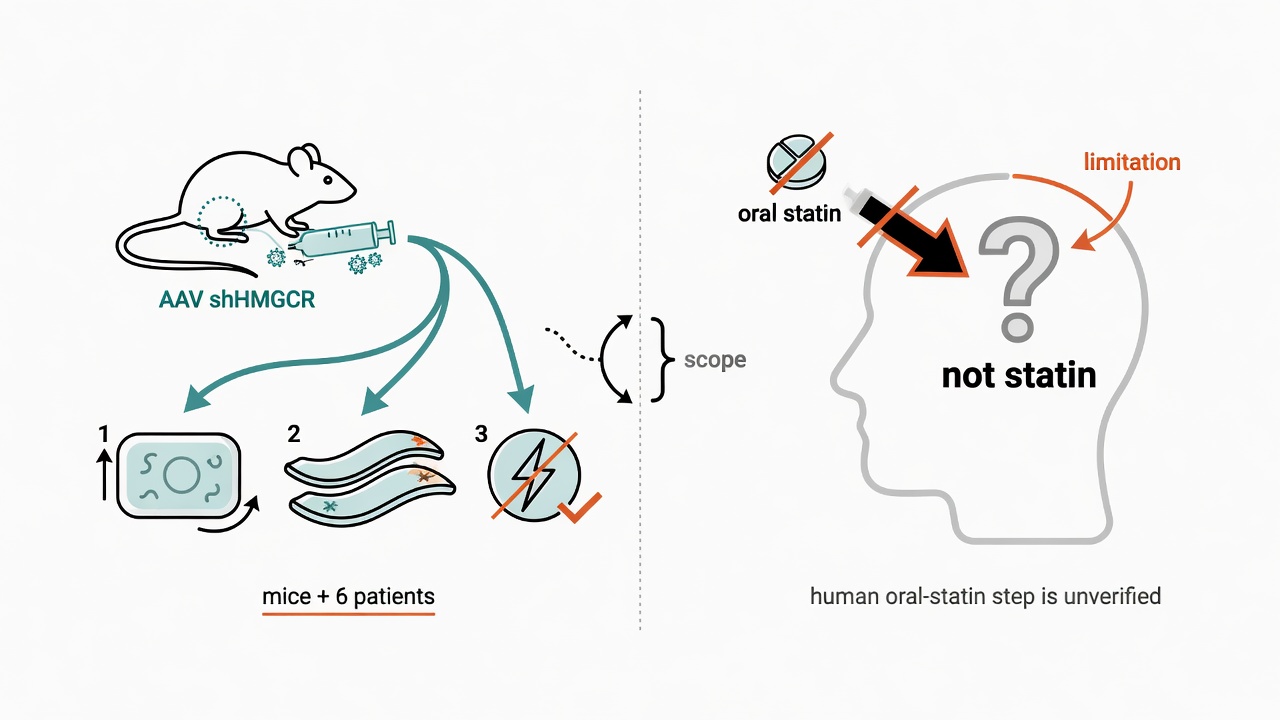
Figure 3: Study boundaries. Local HMGCR knockdown in mouse joints works, but it is not yet evidence that oral statins will treat human osteoarthritis.
What we can say, and what we cannot
Start with what the evidence can carry.
In both mice and human synovium, excess cholesterol production by synovial cells can release its own feedback brake, drive senescence, and sustain chronic inflammation that erodes cartilage. Suppressing HMGCR blocks this path in mice. The authors suggest related cholesterol-and-aging logic may show up in other age-related diseases.
What remains open is whether statins protect joints, whether high systemic cholesterol directly harms cartilage, and whether HMGCR can become a safe human therapy. Local gene knockdown is not an oral pill. Cellular overproduction is not the same as the number on your lipid panel. Framing the paper as a mechanistic clue is far more honest than selling statins as joint medicine. The human data are still limited to a small synovial sample set. The functional rescue has been shown in mice. The distance from an intra-articular gene tool in animals to a drug people can take is still long, with safety, dose, and delivery still to be rebuilt for the clinic.
Osteoarthritis affects millions. Mechanical wear is still the story most of us reach for first. The study asks you to look one layer deeper. Inside the lining of the joint, a metabolic brake can come loose at the very enzyme that makes cholesterol. The tissue can age quietly before the damage feels inevitable. The work has not reached a human therapy. But it does force a second look at a disease we too often treat as pure mechanical wear.
References
- Zhang et al. (2026). HMGCR-Driven Cholesterol Metabolism Promotes Osteoarthritis Progression by Accelerating Synovial Fibroblast Senescence. Advanced Science. doi: 10.1002/advs.76498