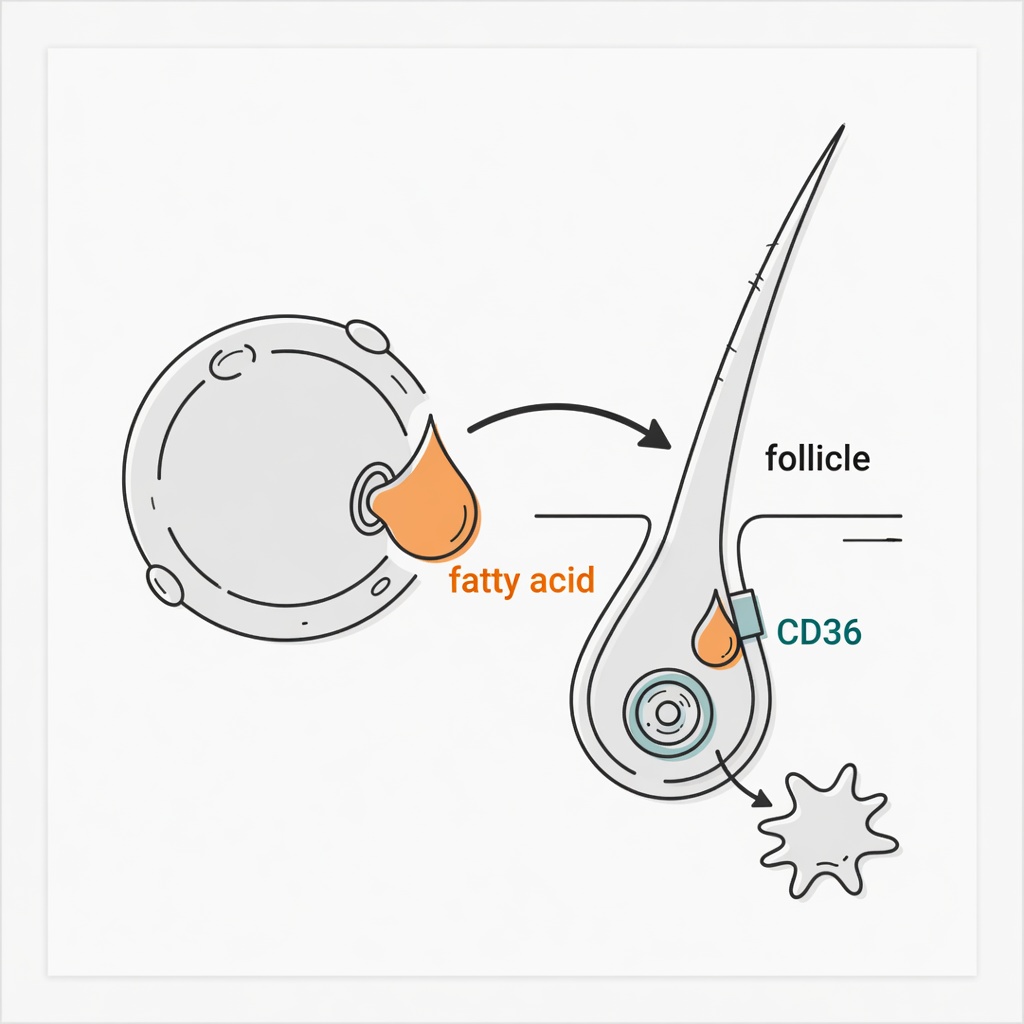
You rarely think about it, but under every hair sits a small band of stem cells. Most of the time they sleep, stirring only at the right moment to push a strand outward. What wakes them? One unexpected answer is the fat buried in your skin, the soft layer you usually want gone.
We have long treated subcutaneous fat as a plain storage tank, something to trim away if we can. Yet a mouse study in Cell Metabolism finds something else: when skin is injured, fat cells get "squeezed" for their oil, and that oil turns out to be the fuel that wakes hair follicle stem cells.
A three-leg relay
After skin injury, macrophages burrow into the fat and order it to release fatty acids; hair follicle stem cells then take up those fatty acids as fuel and wake from sleep to grow hair. The whole path is a macrophage-to-adipocyte-to-follicle metabolic relay.
It runs in three legs. First, the moment skin is wounded, macrophages from the immune corps dive into the fat tissue of the dermis. Second, through a signal called serum amyloid A3 (SAA3), they push the fat cells into "lipolysis," breaking stored fat into free fatty acids and letting them out. Third, the epithelial stem cells at the base of each follicle draw these monounsaturated fatty acids inside through a gate called CD36.
The molecules chosen are monounsaturated fatty acids specifically, not just any oil. That selectivity is a clue: follicles are picky about fuel, and not every fat will strike the match. What sets the whole relay in motion is the brief bout of fat inflammation a wound draws in, as the body reads injury as a signal to get to work.
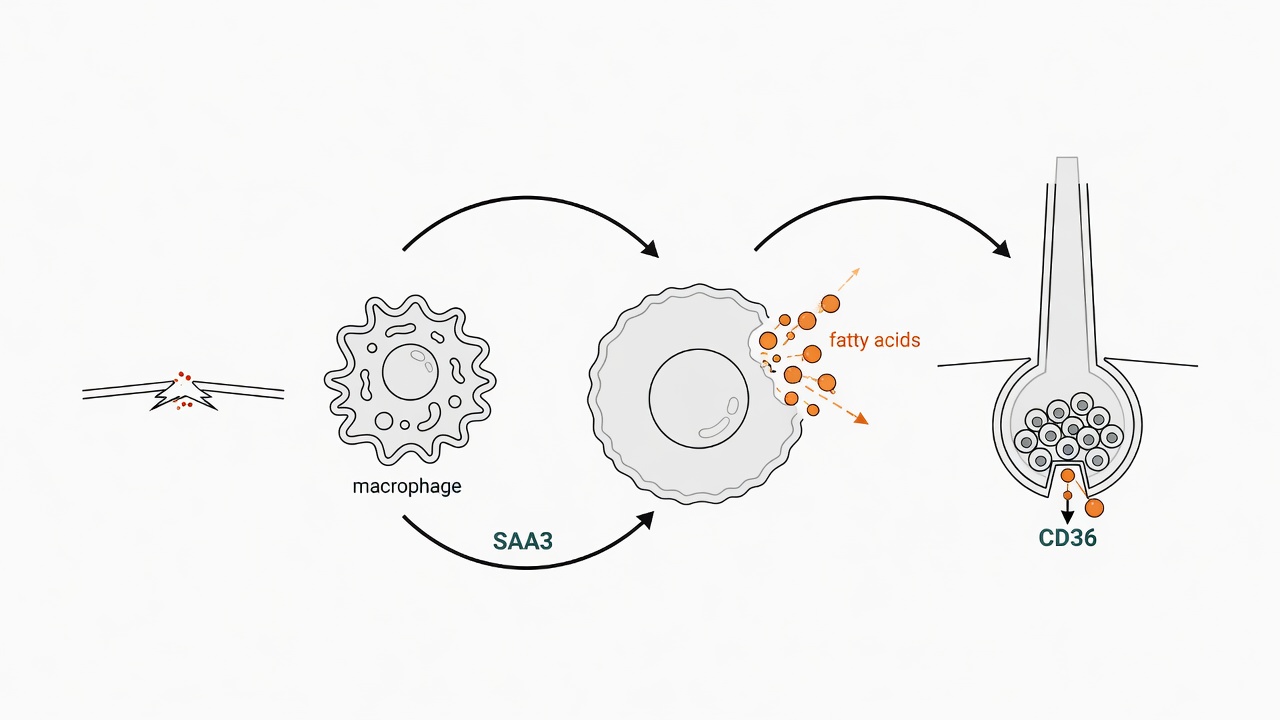
Figure 1: A three-leg relay. Injury recruits macrophages (leg one); they order fat cells to break down and release fatty acids (leg two); follicle stem cells take those fatty acids in (leg three).
What do the stem cells do with the oil? They flip on an energy switch called Pgc1-alpha, which spins up more mitochondria and speeds fatty acid oxidation. In plain terms, the cell builds more "power plants" and burns the oil into energy. With energy in hand, stem cells that were dozing in a resting phase finally have the strength to wake and start the hair-growth program.
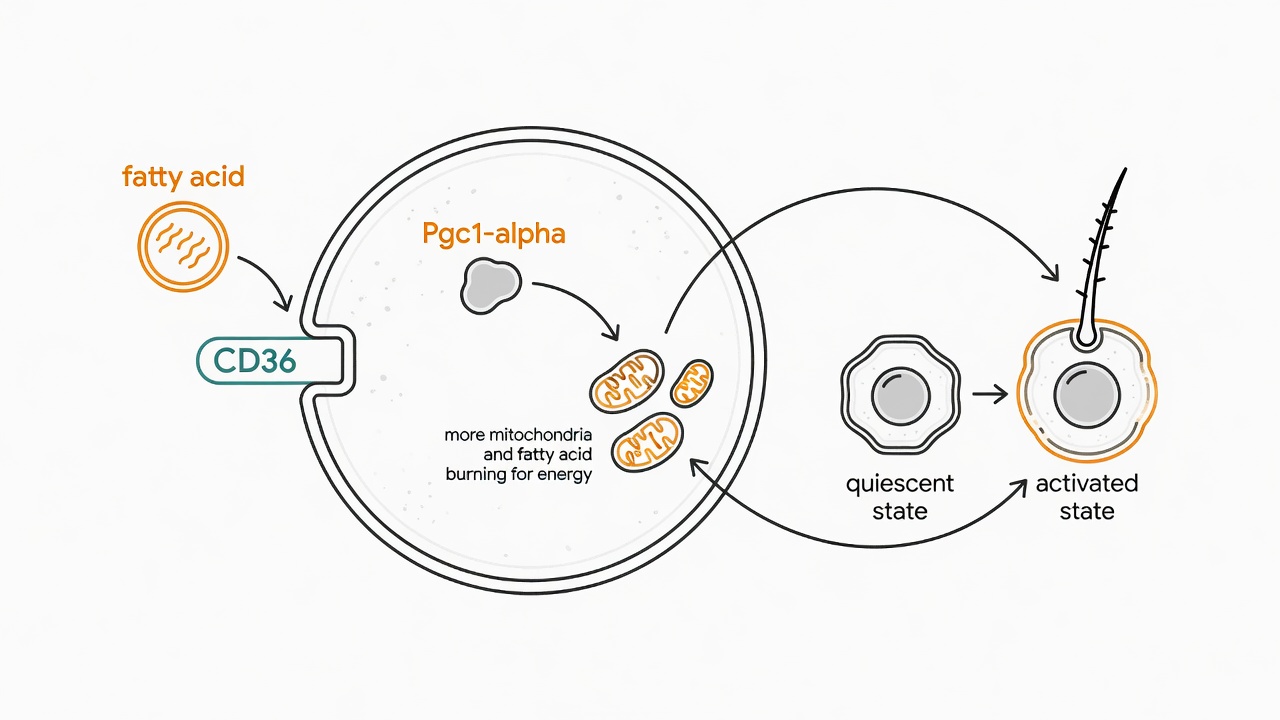
Figure 2: How oil becomes drive. Fatty acids enter the stem cell via CD36, open Pgc1-alpha, spin up mitochondria and burn the oil for energy, moving the cell from rest to action.
The researchers also found the full cascade is not required. Simply applying monounsaturated fatty acids to the skin was enough to wake the stem cells and promote hair growth in their model. That shows the fuel itself can act as a signal, not only as a side product of the immune response.
But do not pour oil on your head just yet. This is in mice, and in an "injury-triggered regeneration" setting, not the male-pattern or everyday hair loss we know. Those common forms of thinning are driven more by hormones and genetics over years, not by a short wound-repair window. Accelerated models also run faster than real life, so the size of the effect may be inflated; whether it works on a human scalp, and with which fatty acid at what dose, remains open. Kitchen oils are not the same as a controlled monounsaturated fatty acid in a lab model. This is also a single research team's finding, still waiting for independent labs to reproduce the core results.
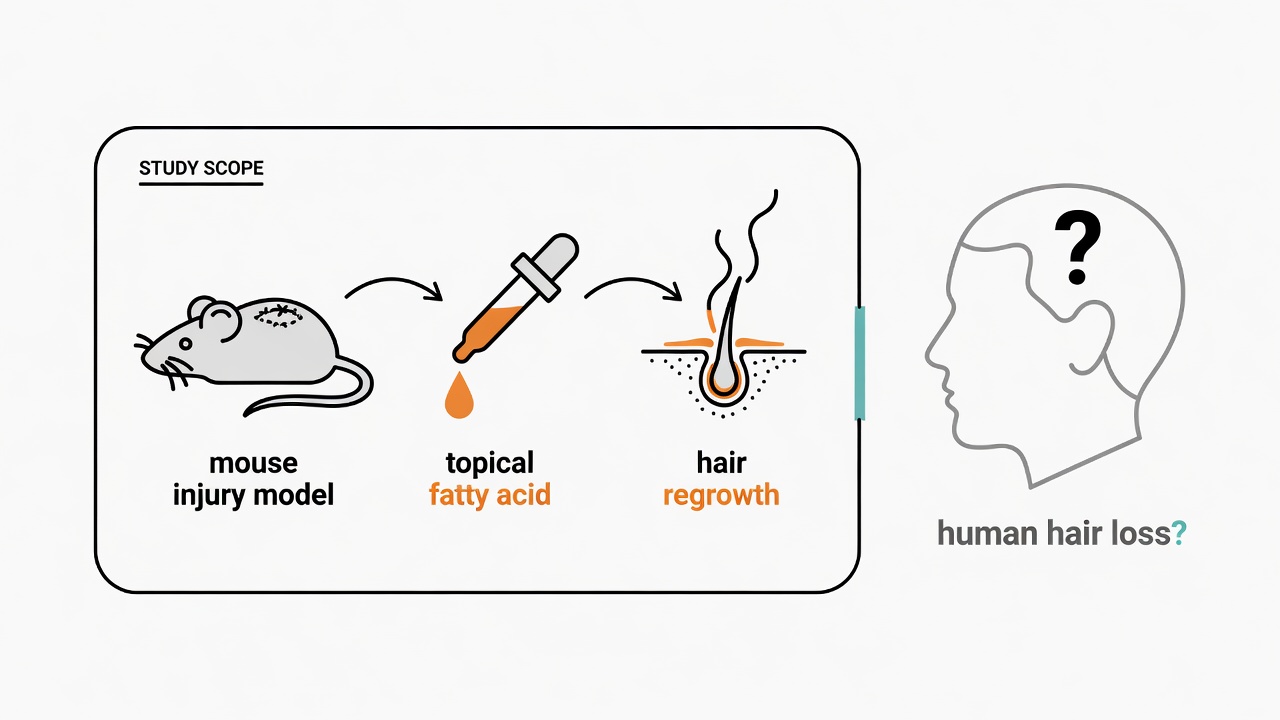
Figure 3: This study's borders sit around a mouse skin-injury model and topical fatty acids. It has not yet stepped into human hair loss or male-pattern baldness.
What we can say, and what we cannot
In mice, subcutaneous fat is not just a storage tank. On injury it is mobilized as fuel for follicle stem cells, and the same relay can be kick-started with a single fatty acid applied to the skin.
That much we can say: fat is not a bystander in regeneration but an active supplier of raw material. The researchers even suspect this "injury, fat mobilization, tissue regeneration" logic may operate in other fat-rich organs; if so, fat's contribution to repair may have been quietly underrated for a long time.
What we cannot yet say is whether it treats human hair loss, whether it helps male-pattern baldness, and what concentration is safe and effective. Treating it as a mechanistic clue is far more honest than treating it as a ready-made hair-growth remedy. It also does not mean less body fat equals more hair loss, or that liposuction would doom a follicle; the paper tested mobilization after injury, not fat mass in daily life.
Next time you notice that soft layer under your jaw or at your waist, you might give it a second look. Given the right signal, it may not be only excess you want to lose; it may also be fuel the body can call on for a short stretch of repair. This study has not reached the human scalp, but it does at least ask us to look again at a tissue we routinely dismiss.
References
- Tai et al. (2025). Adipocyte lipolysis activates epithelial stem cells for hair regeneration through fatty acid metabolic signaling. Cell Metabolism. doi: 10.1016/j.cmet.2025.09.012