Best For
notebooklm-py is only worth considering for people who have a very specific need to automate NotebookLM and are willing to treat the whole setup as an experiment.
How I Actually Use It
What makes notebooklm-py tempting is obvious: it opens a door that Google does not officially open. If you want programmatic control over NotebookLM workflows, this is one of the few tools that even attempts it.
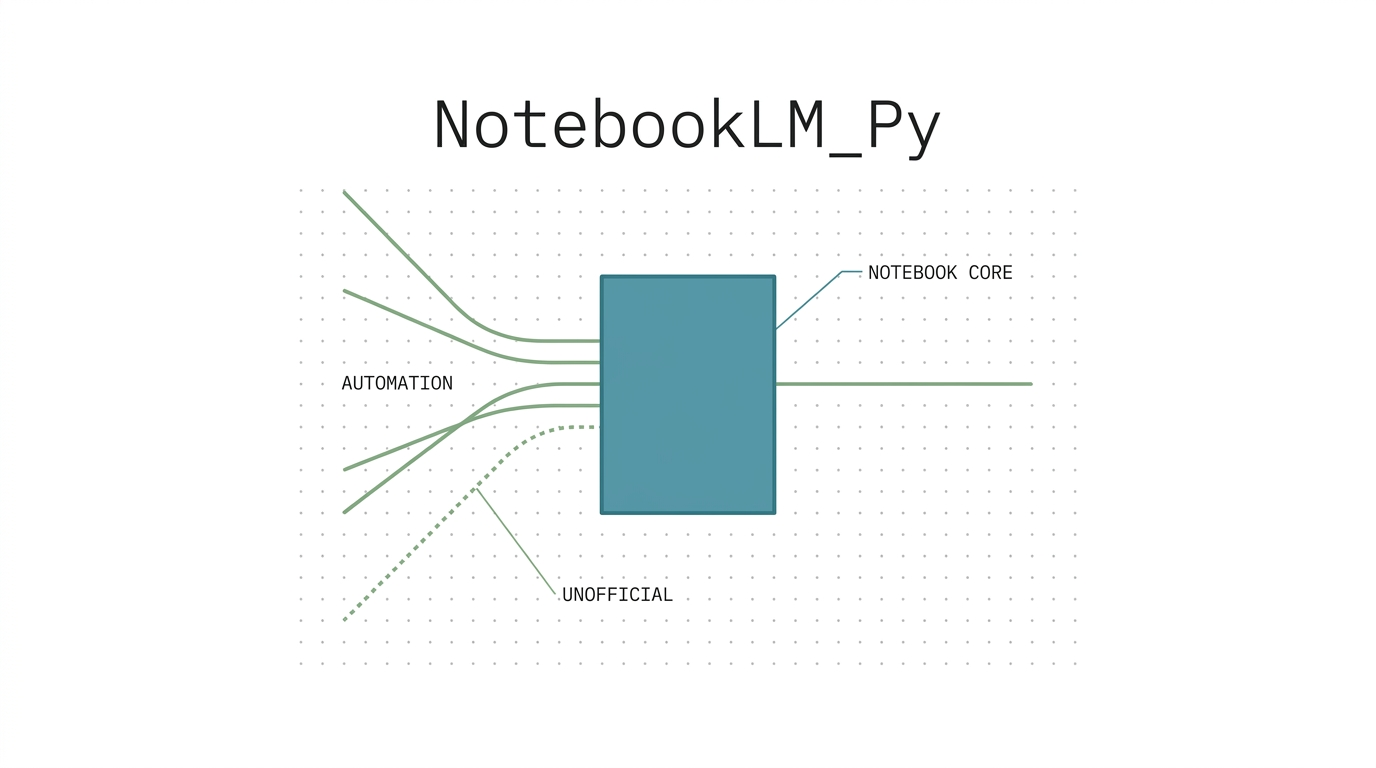
That is also exactly why I would not treat it like a normal integration. It relies on cookies and an unofficial reverse-engineered API boundary. So even if the functionality is impressive, the trust model is not something I would casually normalize.
Where It Is Strong
- It addresses a real automation gap around NotebookLM
- The feature surface is broad enough to feel useful, not trivial
- It is relevant for batch-oriented experimental workflows
Where It Fails
- Cookie-based authentication raises obvious account and session risk
- The API boundary is unofficial and can break
- Terms-of-service and account-safety questions are part of the decision
- It is not something I would frame as production-safe
Pricing, Difficulty, and Risk
It is open-source, but that does not make it low-risk. The difficulty is advanced because the real challenge is governance, not syntax. The main risk is the combination of unofficial access, account exposure, and long-term instability.
Verdict
Only consider it for tightly scoped sandbox experiments with a high tolerance for breakage and boundary risk. For most people, especially on primary accounts or sensitive workflows, the right answer is no.