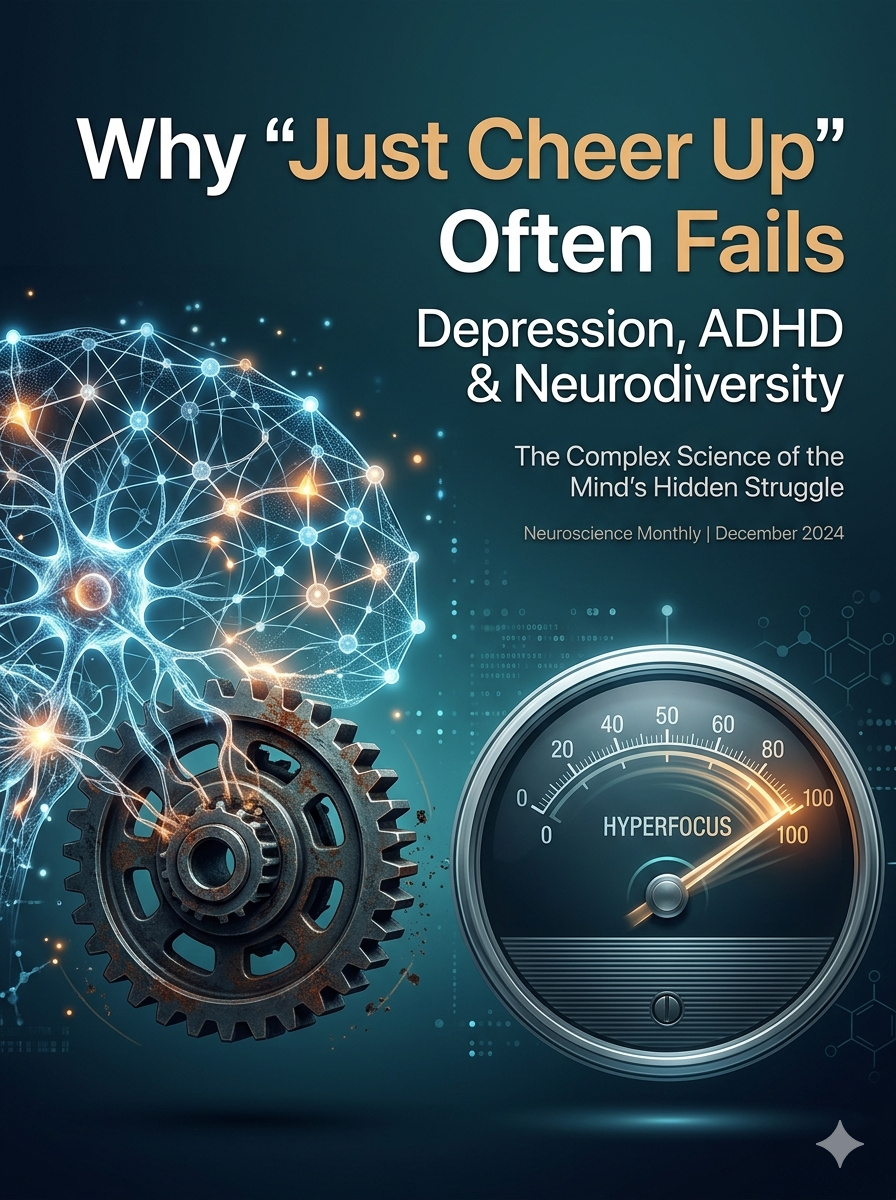
Why “Just Cheer Up” Often Fails: Depression, ADHD, Neurodiversity, and What Still Can Change
Have you ever heard someone say, “Don’t think so much. Just cheer up”? It sounds light. To a person who is truly stuck, it can land like a blunt blade. It does not cut through pain. It pushes shame deeper.
Lead: When we talk about depression, ADHD, and childhood adversity, the easiest mistake is to read a struggling brain as a bad attitude. Once you name the mechanism more accurately, the way you respond changes too.
Telling someone to “snap out of it” can hurt more
A depressed person is not missing advice. Their brain may be losing the ability to shift gears.
In the interview, psychiatrist Dr. Chen compares depression to jammed gears. That is not a formal diagnostic term, but it captures the feeling well: you can still see the road, yet the gearbox refuses to move. The part of the brain that helps with planning and switching can feel half asleep, while rumination keeps spinning in the background.
That is why “just cheer up” can sound like shouting at a drowning person to “just swim.” They are not refusing to understand. They may simply be unable to do what you are asking. A more useful response is often much shorter: “I know this hurts. I’m here.”
When emotion will not move, let the body move first
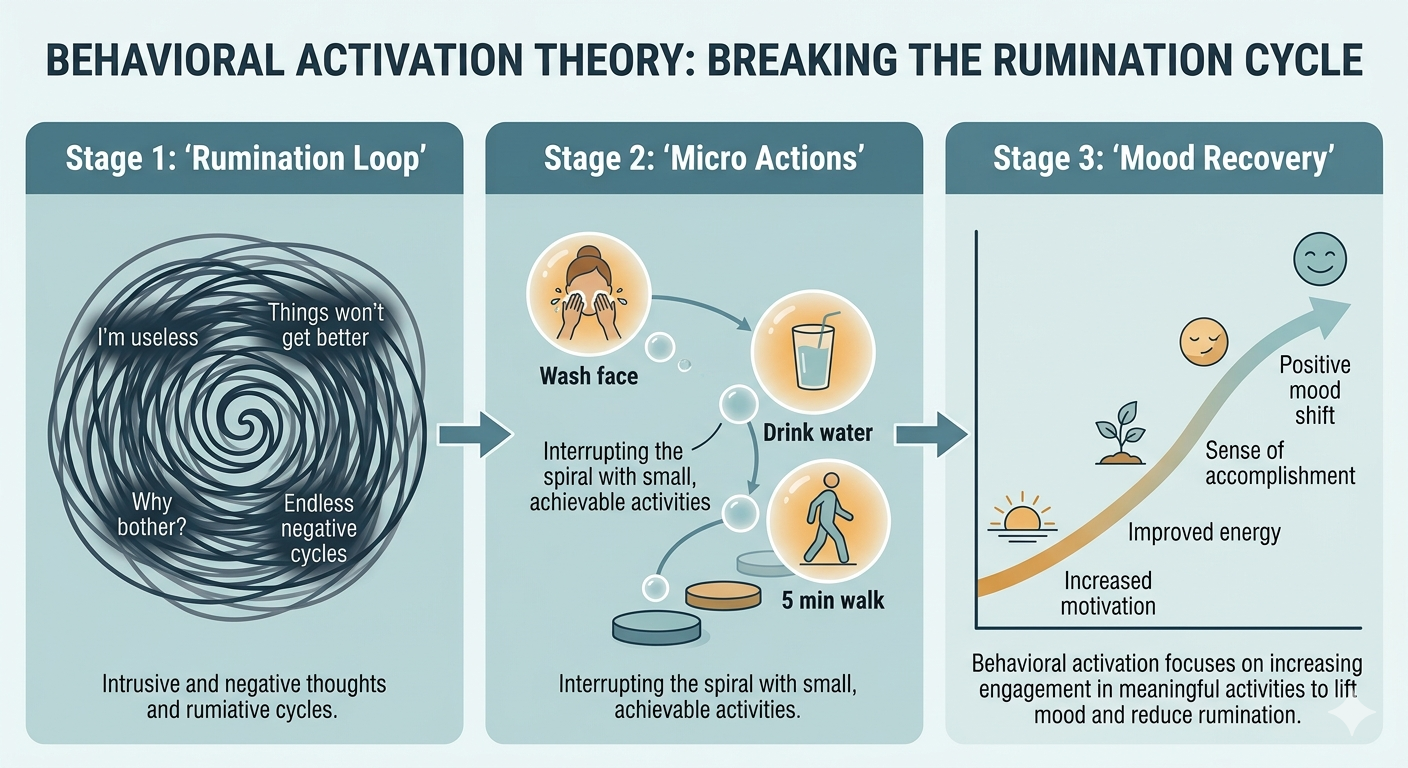
Behavioral activation starts with one small action, so mood has a chance to follow later.
This is the logic behind behavioral activation. A 2007 meta-analysis pooled 16 studies with about 780 participants and found consistent benefits for depressive symptoms. The idea is not to wait until you feel motivated. It is to turn the rusty doorknob first: wash your face, answer one message, step outside for five minutes, wash one dish.
Still, this is not a universal wrench. It can help someone get started, but it does not replace a full assessment. If depression is already taking away sleep, work, appetite, or safety, people need broader treatment and professional care, not a slogan about trying harder.
ADHD can feel less like distraction and more like a missing middle gear
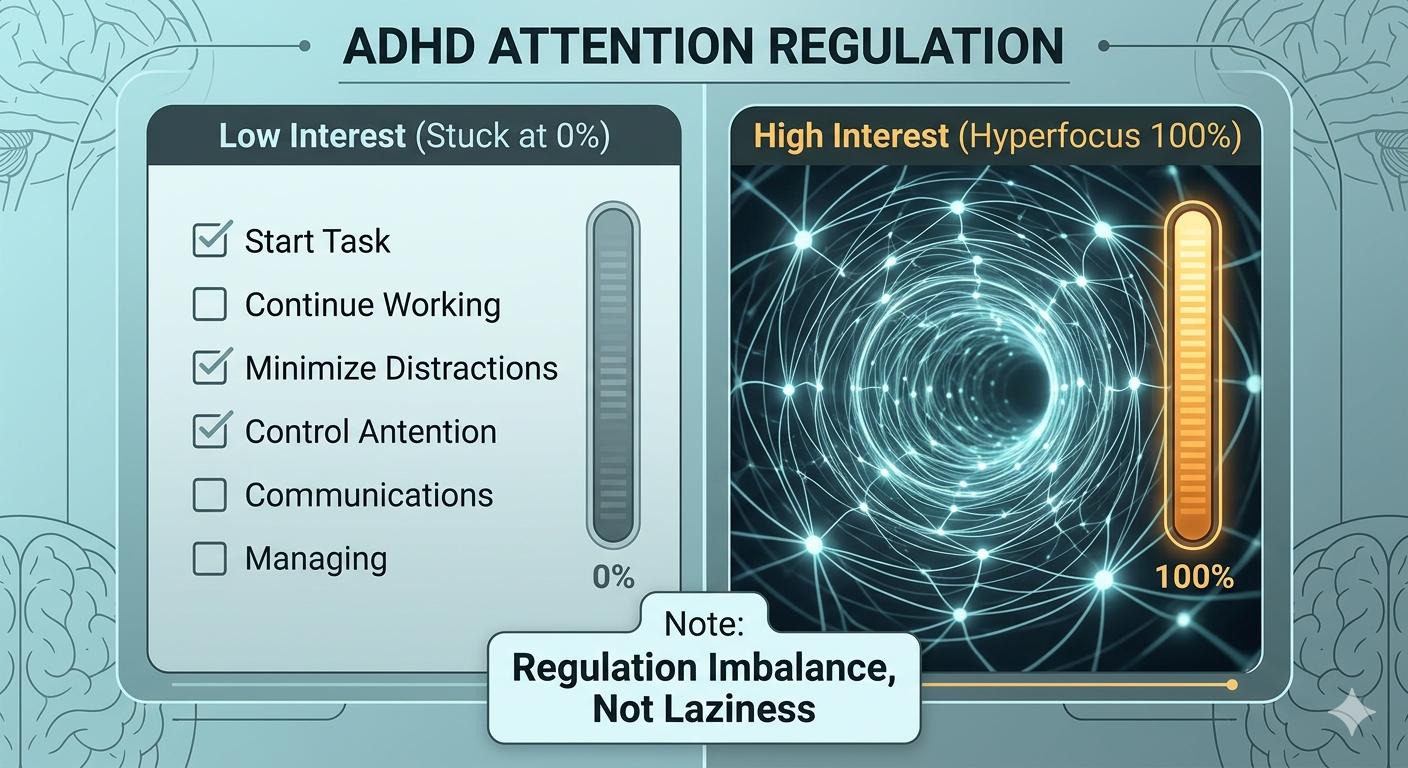
ADHD often means unstable attention control and task initiation, not laziness or weak character.
Many people imagine ADHD as permanent inattention. A better description is that attention has no middle setting. Uninteresting tasks feel impossible to start, even when they matter. Highly engaging tasks can trigger intense focus that makes time disappear. The problem is not always “I do not care.” Very often it is “I care, but I cannot get my system to start.”
The 2021 international consensus statement on ADHD explicitly summarized 208 evidence-based conclusions. It reinforces that ADHD is a recognizable neurodevelopmental condition affecting attention, inhibition, time management, and executive function. At the same time, many advocates frame ADHD through neurodiversity as well: a difference that needs understanding and adaptation, not immediate shame.
However, not every delay, forgetful moment, or hyperfocused stretch is ADHD. Sleep loss, anxiety, trauma responses, and stress can look similar. Proper evaluation still depends on long-term patterns across settings and clear functional impact.
Childhood adversity leaves marks, but it does not finish the story
ACE research points to risk. It does not hand out a final sentence.
The ACE literature is widely cited because it shows something many people feel in their bodies already: being ignored, shamed, or frightened early in life can tune the alarm system too high for too long. That is not “being too sensitive.” It is wear and tear after chronic threat.
But ACE findings describe increased risk, not fate. They tell us the floor may be slippery. They do not prove that everyone will fall. Supportive relationships, treatment, medication, sleep, movement, and daily stability can all change what happens next.
What parents model matters more than what they preach
Children learn emotional regulation from how adults repair conflict, not only from what adults say.
When a child explodes, adults often want to shut the scene down first. A more useful order is often this: name the feeling, set the boundary, then show repair. “You are really angry. I hear that. We will talk about what happened in a moment.” That response does not mean permissiveness. It means separating emotion from behavior.
And if the adult also gets it wrong, apology matters. An apology is not surrender. It shows a child that relationships can be repaired, that conflict does not automatically erase love.
The main takeaway is not a quote. It is an order of action
See the pain first, stay with the person second, and seek help early.
If the person in front of you is emotionally stuck, do not rush into judgment. First check safety. Then make sure they know they are not alone. Then look for the next step together. If you are the one who is stuck, lower the bar: drink water, wash your face, step onto the balcony, text someone you trust. One small move is still a move.
If low mood, insomnia, attention collapse, or self-blame has lasted for weeks, or if suicidal thoughts appear, this is not something to outlast with grit alone. Please reach out for professional help early.
References
- Interview with Dr. Chen Hsuan-Cheng and Dr. Sung Yen-Jen (2026). Episode summary on depression, ADHD, and emotional education. Original link pending.
- Cuijpers P, van Straten A, Warmerdam L. (2007). Behavioral activation treatments of depression: A meta-analysis. Clinical Psychology Review. doi: 10.1016/j.cpr.2006.11.001
- Faraone SV, et al. (2021). The World Federation of ADHD International Consensus Statement: 208 evidence-based conclusions about the disorder. Neuroscience & Biobehavioral Reviews. doi: 10.1016/j.neubiorev.2021.01.022
- Felitti VJ, et al. (1998). Relationship of childhood abuse and household dysfunction to many of the leading causes of death in adults: The Adverse Childhood Experiences Study. American Journal of Preventive Medicine. doi: 10.1016/S0749-3797(98)00017-8