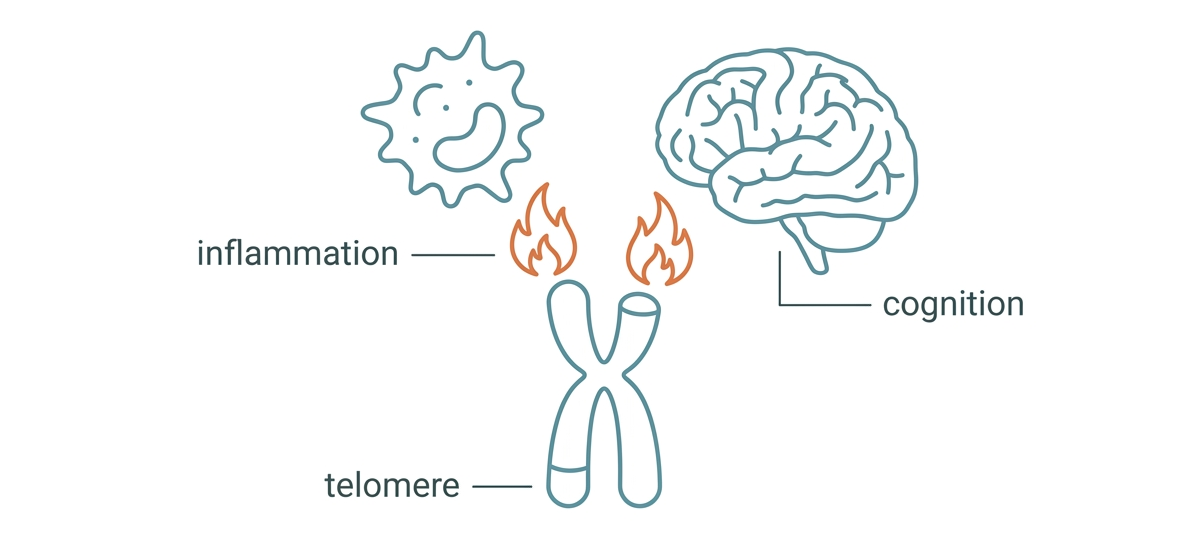
You've probably heard of telomeres, the little caps protecting the ends of chromosomes, like the plastic tips on a shoelace. Every time a cell divides they shorten a notch, and once they're too short, the cell ages. Sounds like a quiet countdown timer. But is it really just passively counting down? Two studies show this clock actively causes trouble.
What Is a Telomere? A Clock That Picks Fights
A telomere is a protective cap at the chromosome's end that shortens with each cell division, like a countdown timer for life. We used to think it only kept time: when it ran out, the cell stopped dividing, and that was that. But when scientists actually dissected what happens after telomeres shorten, the picture changed. It doesn't just stop. It starts lighting fires in two places: the immune system and the brain.
Fire One: Short Telomeres Make Inflammation Run Wild
A 2018 Cell Reports study found that when telomere function breaks, immune cells turn from guards into arsonists. Researchers used mice with severely damaged telomeres to watch their immune cells. Faced with bacterial pneumonia, the response wasn't too weak; it was too strong. Inside their macrophages, mitochondria faltered, oxidative stress built up, and an inflammasome called NLRP3 got over-ignited, like a jammed fire alarm that won't stop ringing. The inflammatory molecule IL-1β poured out, the lungs were trashed by friendly fire, and mortality rose. Tellingly, the cells' ability to clear the bacteria was intact; what broke was their brakes.
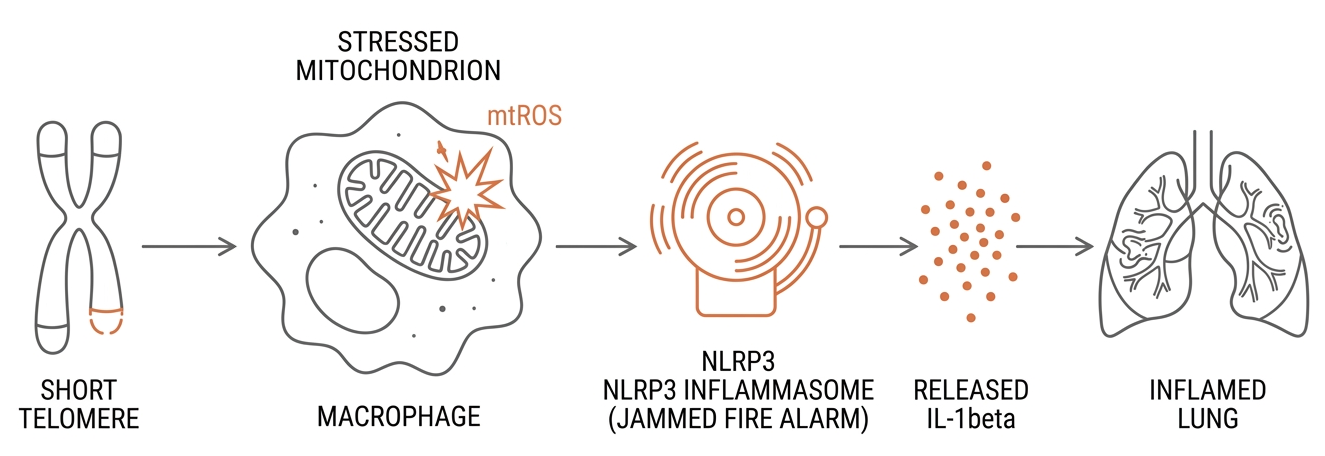 Figure 1. The inflammatory cascade after telomere dysfunction: shortened telomeres cause macrophage mitochondria to produce excess mtROS, over-igniting the NLRP3 inflammasome (like a jammed fire alarm) and releasing IL-1β, ultimately driving lung inflammation.
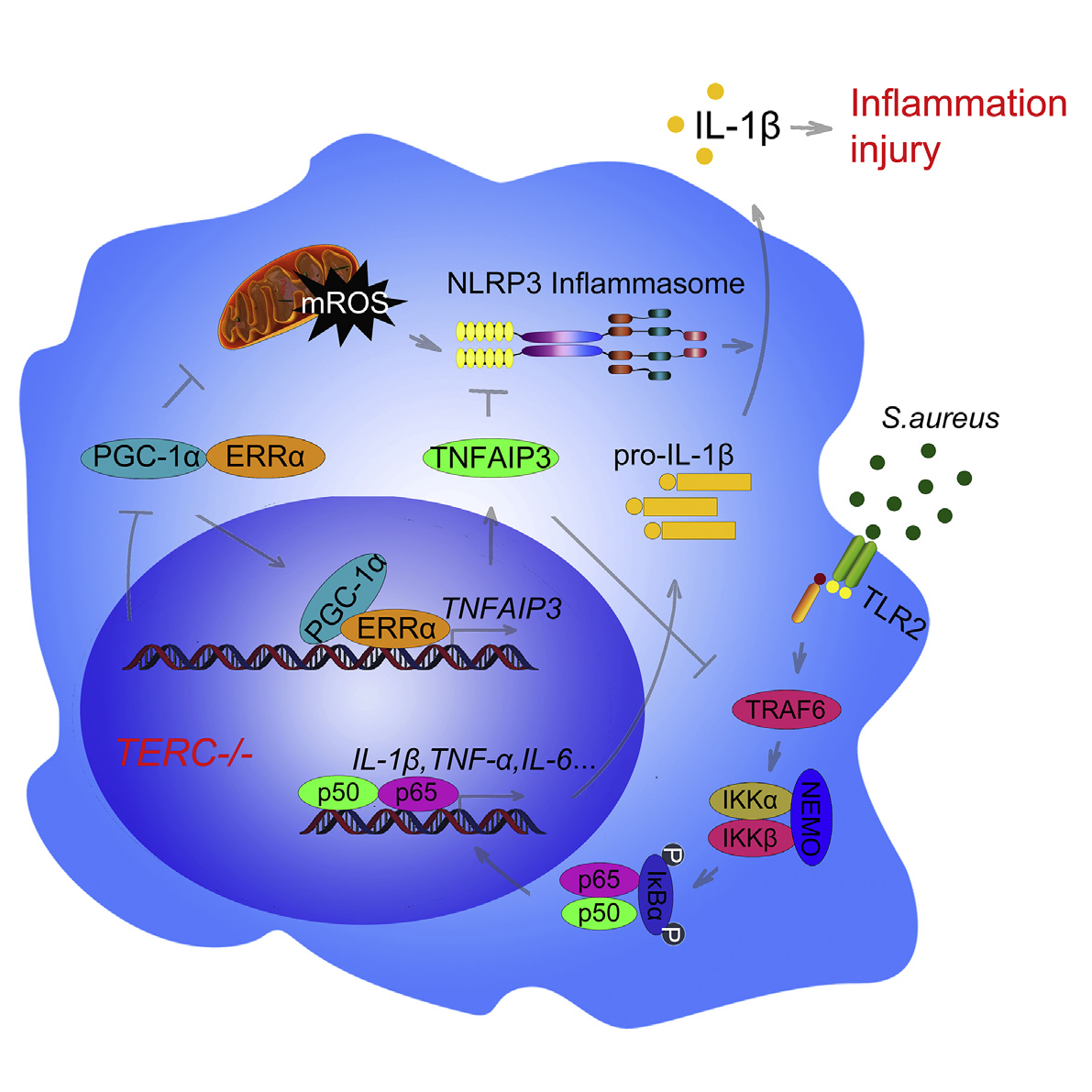 Figure 2. Full molecular mechanism: in TERC-/- mice, telomere collapse disrupts both mitochondrial metabolism and NF-κB inflammatory signaling through the PGC-1α/TNFAIP3 axis, leading to mROS accumulation and NLRP3 inflammasome over-activation. The right side shows S. aureus triggering innate immunity via TLR2. Adapted from Kang et al. (2018), Cell Reports.
Fire Two: Short Telomeres, Sinking Brainpower
A 2017 large-scale study showed that people with shorter telomeres tend to perform worse on cognition. This wasn't a small-sample fluke. The work pooled 12 European cohorts, 17052 people in total, average age about 59. Those with longer telomeres scored better on processing speed and overall cognition. More importantly, the researchers used Mendelian randomization, borrowing genes as a natural experiment, and found this was more than correlation; it carried a causal flavor: longer telomeres genuinely nudged general cognition and processing speed upward.
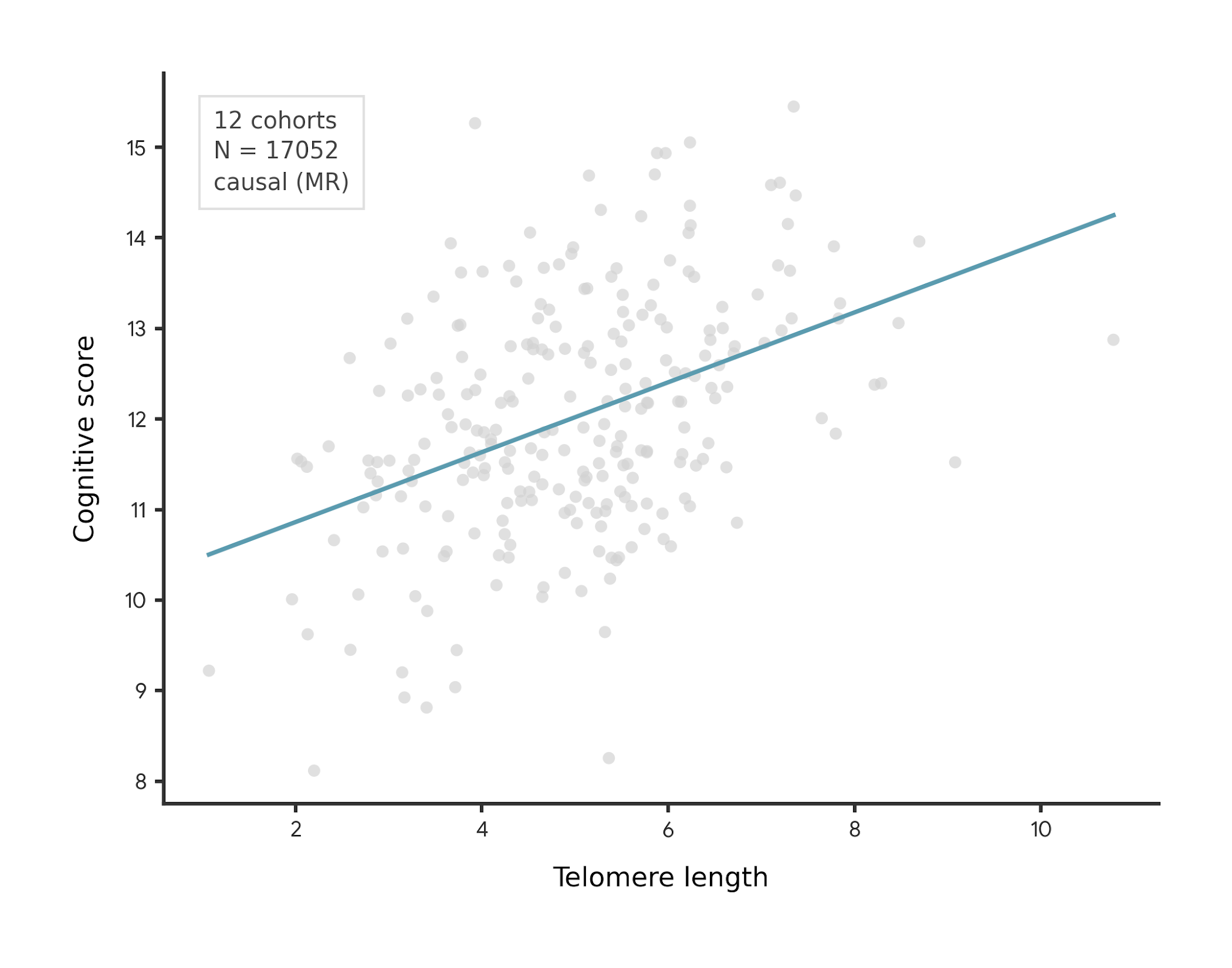 Figure 3. Longer telomeres, higher cognitive scores. Data pooled from 12 European cohorts (N = 17,052), with Mendelian randomization (MR) confirming a causal direction.
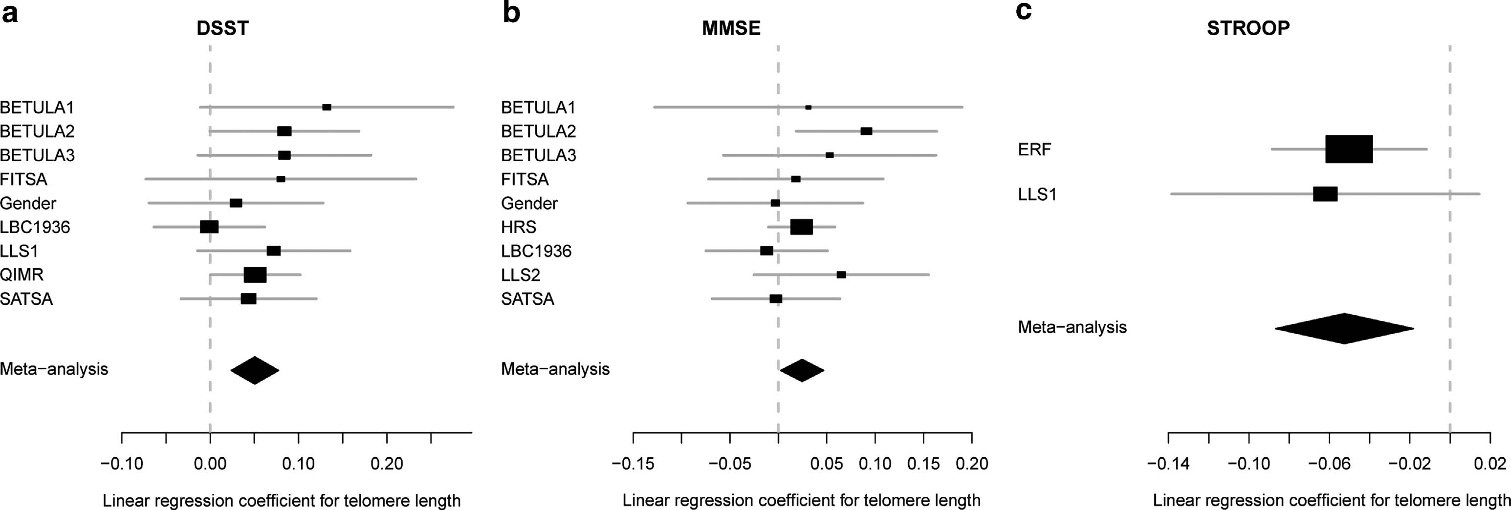 Figure 4. Meta-analysis forest plot (original study data): (a) DSST (processing speed) and (b) MMSE show positive regression coefficients for telomere length, indicating longer telomeres track with better cognition; (c) STROOP shows no significant effect, demonstrating the causal link does not hold across all cognitive domains. Adapted from Hägg et al. (2017), Translational Psychiatry.
Don't Treat Telomeres as Destiny
Time to brake, because this evidence has limits and can't be stretched into "lengthen telomeres and you'll get smarter." The human study's effect size was actually small, and the causal link held only for some cognitive tasks, vanishing on others. The inflammation line came solely from mice with extreme telomere damage, far from natural human aging. And beware an intuitive trap: longer isn't always better. Overactive telomerase, the enzyme that extends telomeres, is linked to cancer risk. The body wants balance, not endless extension.
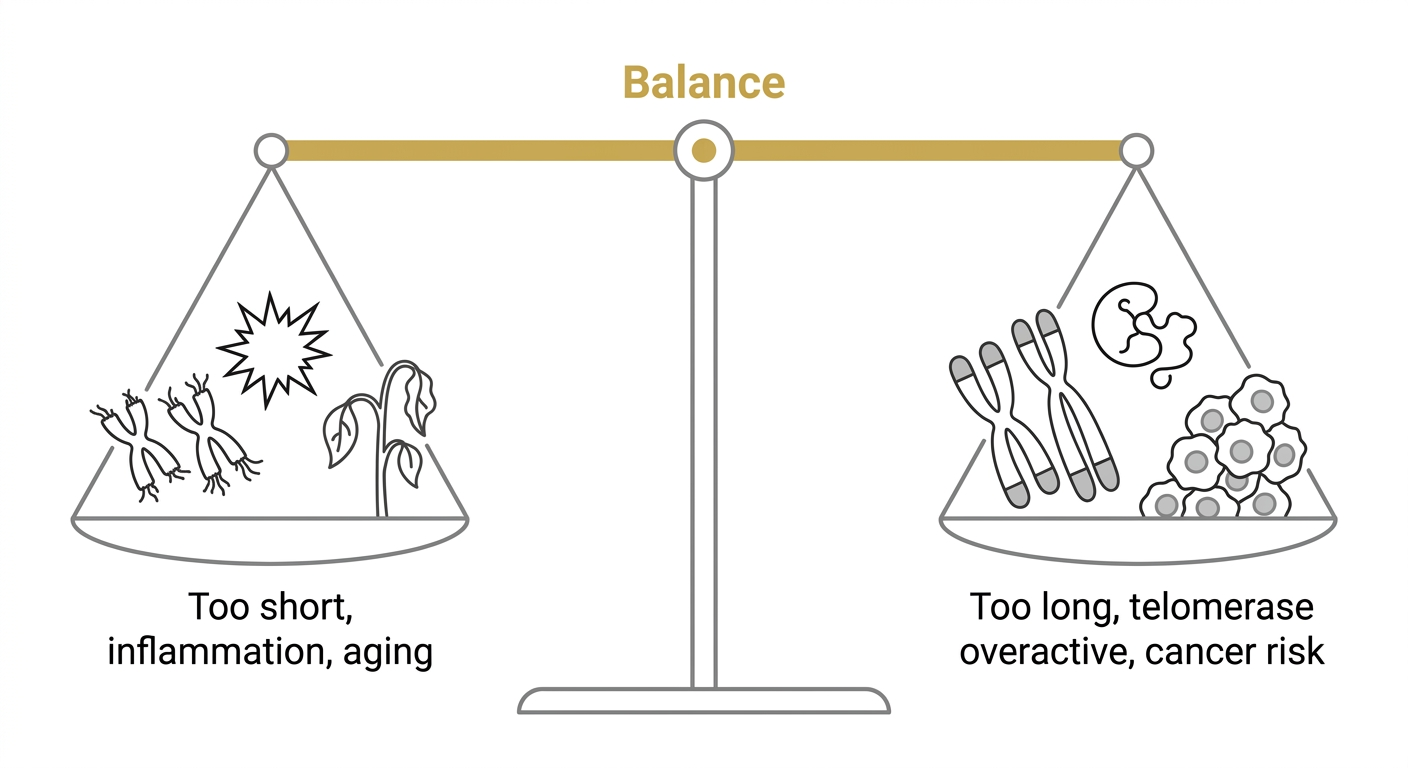 Figure 5. Telomeres aren't better when longer. Too short accelerates inflammation and aging; too long (overactive telomerase) is linked to cancer risk. The body seeks dynamic balance.
So What Does This Tell Us?
The real lesson is that aging's parts are tied together: telomeres, mitochondria, inflammation, and brainpower all move one another. Rather than paying for a one-off telomere test or chasing supplements claiming to lengthen them, return to the habits repeatedly shown to protect both telomeres and the brain: regular exercise, good sleep, and controlling chronic inflammation. The clock may not stop, but you get to decide not to hand it extra matches.
References
- Kang, Y., et al. (2018). Telomere Dysfunction Disturbs Macrophage Mitochondrial Metabolism and the NLRP3 Inflammasome through the PGC-1α/TNFAIP3 Axis. Cell Reports, 22(13), 3493-3506. doi: 10.1016/j.celrep.2018.02.071
- Hägg, S., et al. (2017). Short telomere length is associated with impaired cognitive performance in European ancestry cohorts. Translational Psychiatry, 7, e1100. doi: 10.1038/tp.2017.73