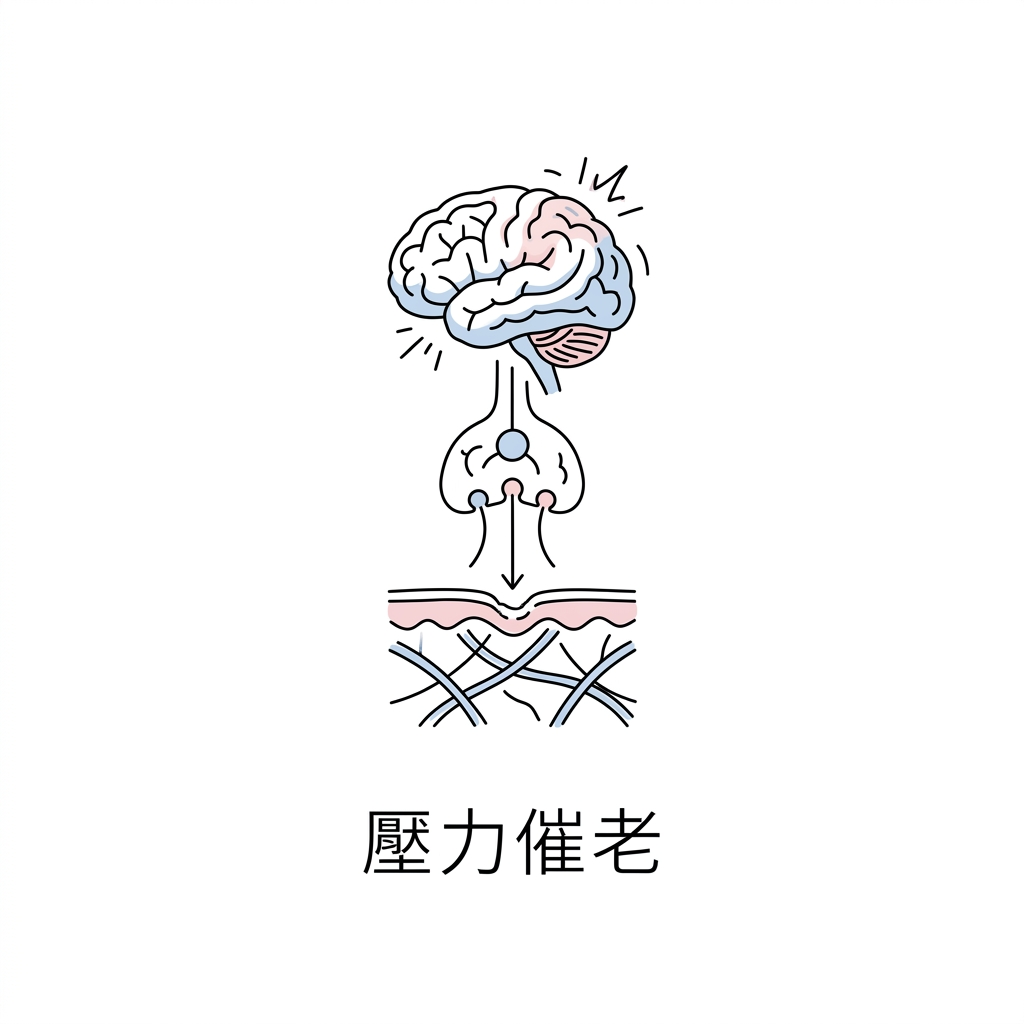
Your boss yells at you, and your skin ages a little. That's not a metaphor. Science just proved it.
The Night You Couldn't Sleep Was Rewriting Your Face
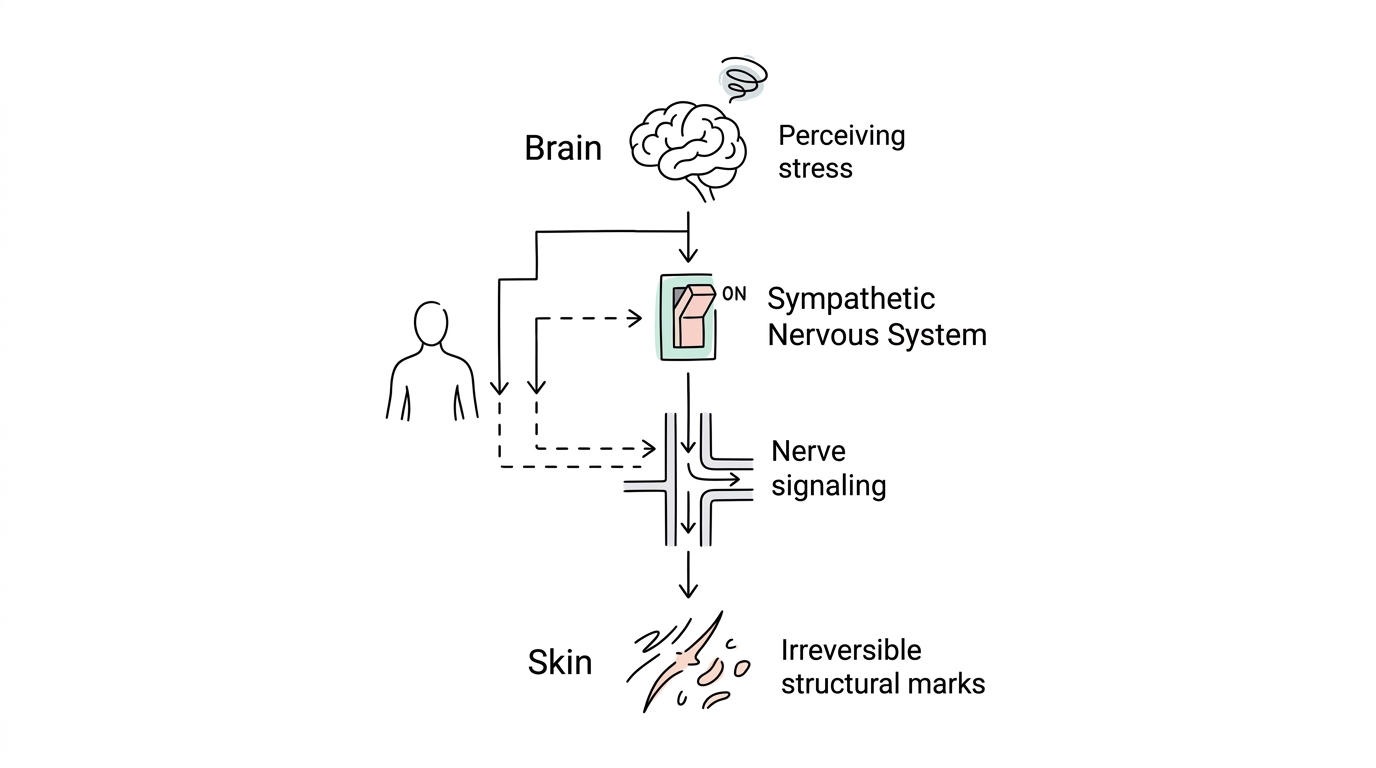 Figure 1: Psychological stress can travel along a defined neuroimmune circuit from the brain to the skin.
You've felt it before: the racing heart, the cold sweat, the body bracing for impact.
What you couldn't feel was your skin accelerating its aging process in real time.
In early 2026, Science published two papers in the same issue — the first to trace, at a molecular level, exactly how psychological stress travels along a fixed neuroimmune circuit to cause direct structural damage in the skin. This isn't "stress is bad, you should relax." It's a named, mapped biological pathway with a start and an end.
Think of it as a circuit. The brain registers stress, a switch flips, and current flows along specific wires to the skin, leaving marks that don't easily disappear.
The First Wire: From Nerves to Eosinophils
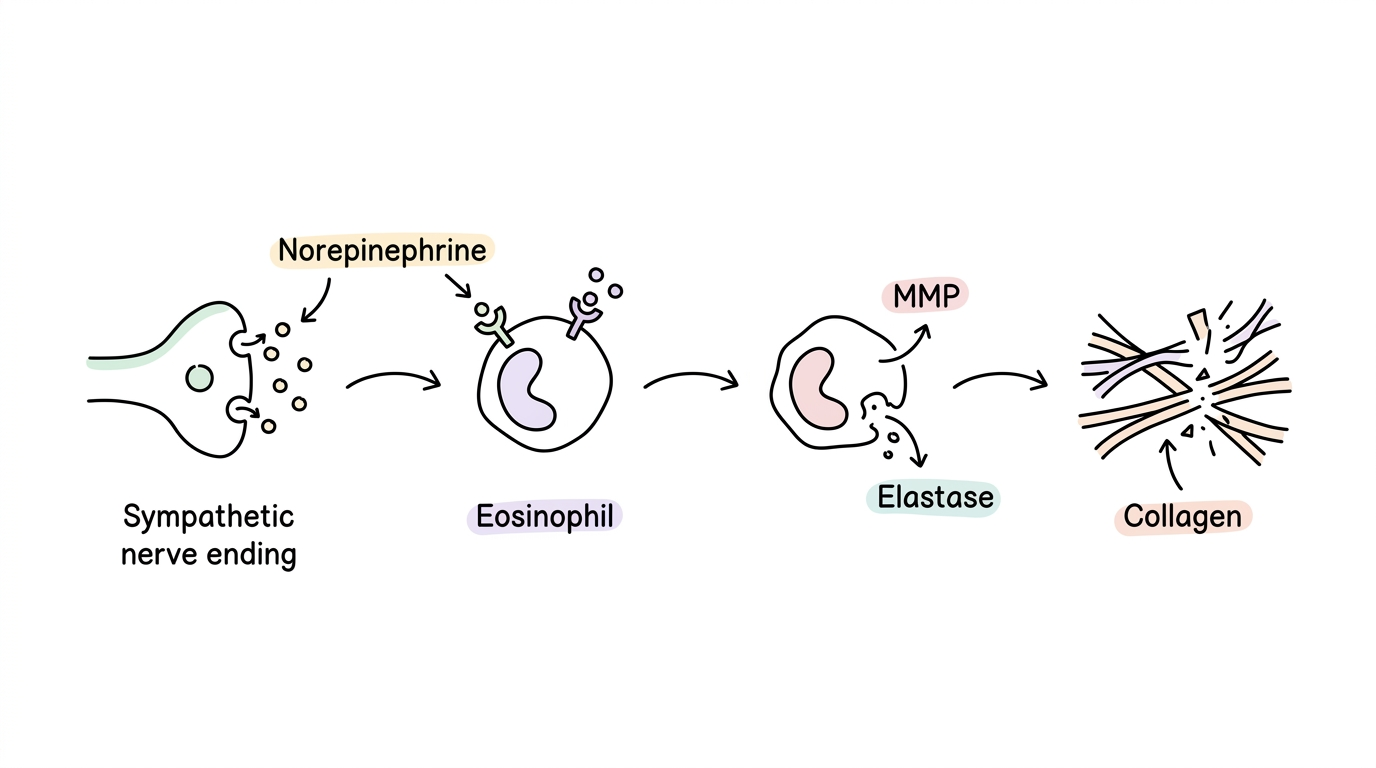 Figure 2: Sympathetic signaling activates eosinophils, which release enzymes that degrade structural skin proteins.
Tian et al. (2026, Science) identified an unexpected protagonist: the eosinophil — an immune cell best known for roles in allergies and parasitic infections.
Nobody expected it to be the middleman in stress-induced skin aging.
Here's how the cascade unfolds. Under chronic psychological stress, the sympathetic nervous system fires persistently, flooding peripheral tissues with norepinephrine. Eosinophils in the skin carry receptors for this signal. Once activated, they release matrix metalloproteinases (MMP) and elastase in large quantities.
Elastase degrades elastin, the protein that keeps skin firm. MMP dismantles the collagen scaffold. The loss of both is the defining signature of aged skin.
The researchers confirmed this in animal models: depleting eosinophils, or blocking sympathetic signaling, significantly slowed stress-induced skin aging. This is a circuit that can be interrupted — not an inevitable fate.
The Second Wire: How Stress Ignites Chronic Skin Inflammation
Gaudenzio et al. (2026, Science) took a different route. Their focus: how stress creates a persistent low-grade inflammatory state in the skin.
When stress signals reach cutaneous sensory neurons, these neurons release neuropeptides — including Substance P and CGRP. These molecules act as broadcast signals for the immune system, recruiting mast cells and T cells to trigger local inflammatory responses.
This phenomenon has a name: "inflammaging" — inflammation-driven aging. Your skin doesn't age all at once. It loses its repair capacity gradually, through repeated micro-inflammatory events.
Together, the two papers map a complete pathway: stress → sympathetic activation → skin immune cells → structural protein degradation + chronic inflammation → accelerated aging. Every node on that map is a potential intervention point.
The Foundation: What Fibroblasts Are Doing Beneath the Surface
To understand why this damage is so hard to reverse, you need to know the skin's repair crew: dermal fibroblasts.
Nan et al. (2025, Frontiers in Pharmacology) reviewed the fibroblast's role in skin aging. Under normal conditions, fibroblasts synthesize collagen, elastin, and extracellular matrix proteins. But when fibroblasts enter cellular senescence, they don't just stop working — they begin secreting a cocktail of pro-inflammatory factors known as the SASP (senescence-associated secretory phenotype).
This is where the cascade becomes self-sustaining. Stress accelerates fibroblast senescence. Senescent fibroblasts secrete SASP. SASP pushes neighboring cells into senescence. The first domino falls; SASP keeps the rest falling.
Deeper still, Liu et al. (2024, Cell Death & Disease) found that the hypodermis — the subcutaneous fat layer — is equally at risk. Chronic stress-related metabolic disruption depletes adipocytes in the hypodermis, removing the structural cushion beneath the skin and deepening wrinkles and laxity.
Stress enters the body and its effects penetrate from nerve endings all the way down to the fat layer beneath your skin.
What Can You Actually Do?
Three actionable directions emerge from this body of research:
Interrupt chronic sympathetic activation. The sustained firing of the sympathetic nervous system is the circuit's trigger point. Regular aerobic exercise, breath training, and sufficient sleep have substantial evidence behind them for measurably reducing baseline sympathetic tone.
Reduce cumulative inflammatory burden. UV radiation, air pollution, and refined sugar in diet are additional inflammatory insults stacked on top of psychological stress. If you can't eliminate the source, minimize the co-factors. Sunscreen isn't cosmetic — it's baseline anti-aging.
Track stress duration, not just intensity. Every paper in this review points to chronic low-grade stress as the real threat — not acute high-stress events. When did you last genuinely rest?
Stress Isn't Written on Your Face. It's Written in Your Molecules.
Aging has long been framed as a problem of time. These two Science papers reframe it: time is the backdrop; your nervous system is the dial.
That circuit from brain to skin runs silently every day. Each unresolved stress event leaves a small current in the loop, a small lesion in the tissue. Quiet, painless, cumulative.
That's not a reason to panic. That's a reason to take rest seriously.
Science found the circuit. The switch is in your hands.
References
- Tian et al. (2026). A sympathetic-eosinophil axis orchestrates psychological stress to exacerbate skin aging. Science. doi: 10.1126/science.adv5974
- Gaudenzio et al. (2026). A neuroimmune circuit links stress to skin inflammation. Science. doi: 10.1126/science.aef7718
- Nan et al. (2025). Dermal fibroblast senescence and skin aging. Frontiers in Pharmacology. doi: 10.3389/fphar.2025.1592596
- Liu et al. (2024). Aging and homeostasis of hypodermis. Cell Death & Disease. doi: 10.1038/s41419-024-06818-z