Your Brain Is Working Overtime in Secret: Sleep Debt, Adenosine, and the Rules of Daytime Recovery
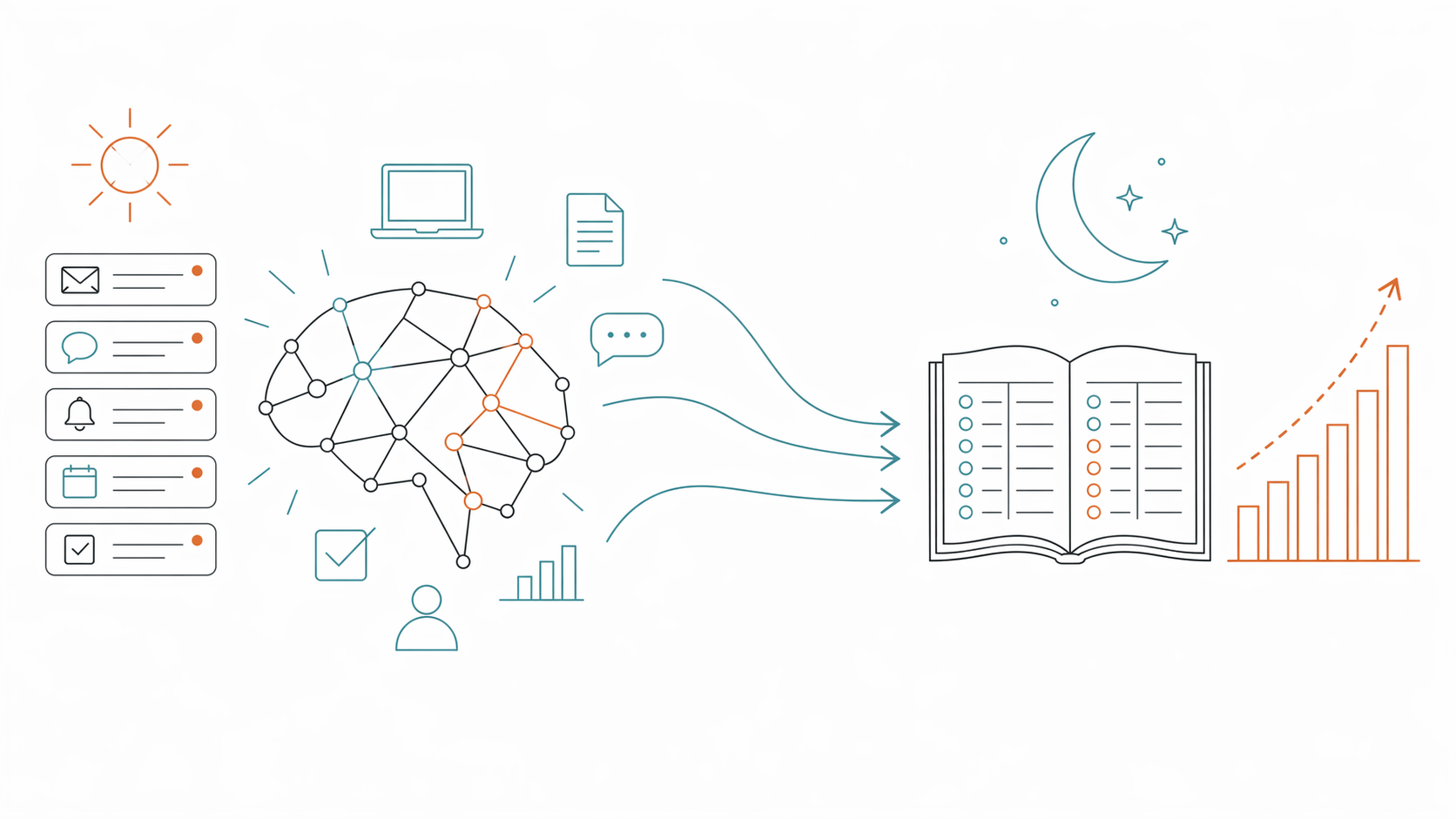
Do you think insomnia starts only after midnight? Imagine your brain as a company that kept swiping the card all day and then expected to close the books at once. The bill is already at the door. It is not that you refuse to sleep. The system simply never clocked out.
Lead: Sleep debt is rarely one dramatic collapse. It is more often the sum of daytime overextension, constant stimulation, and caffeine used to delay fatigue. Nighttime difficulty is often the invoice for a day that never slowed down.
Sleep debt is not a character flaw. It is daytime overdraft.
What feels like “just pushing a little longer” can look to the brain like a full day of unpaid balance.
Dr. Tsai Yu-Che’s practical warning is simple: the real problem often begins before night arrives. Work messages, short videos, streaming, unfinished tasks, and nonstop vigilance keep the nervous system at high RPM. You may be sitting still, yet the brain is still pressing the accelerator. Over time, it does not forget how to sleep. It forgets how to stop.
Many people mistake “not working” for “resting.” But scrolling is not always rest, and emotionally charged content is not either. If you replace work stimulation with social stimulation, the message to the brain is the same: the shift is still on.
Adenosine behaves like a bill, and caffeine only delays collection
The longer you stay awake, the more adenosine piles up like unpaid invoices on a desk.
As the brain spends ATP through waking activity, adenosine accumulates. It is not a punishment. It is a metabolic record. The more it binds to receptors, the more heavy, dull, and sleepy you begin to feel. Caffeine does not erase that debt. It mainly blocks the signal for a while.
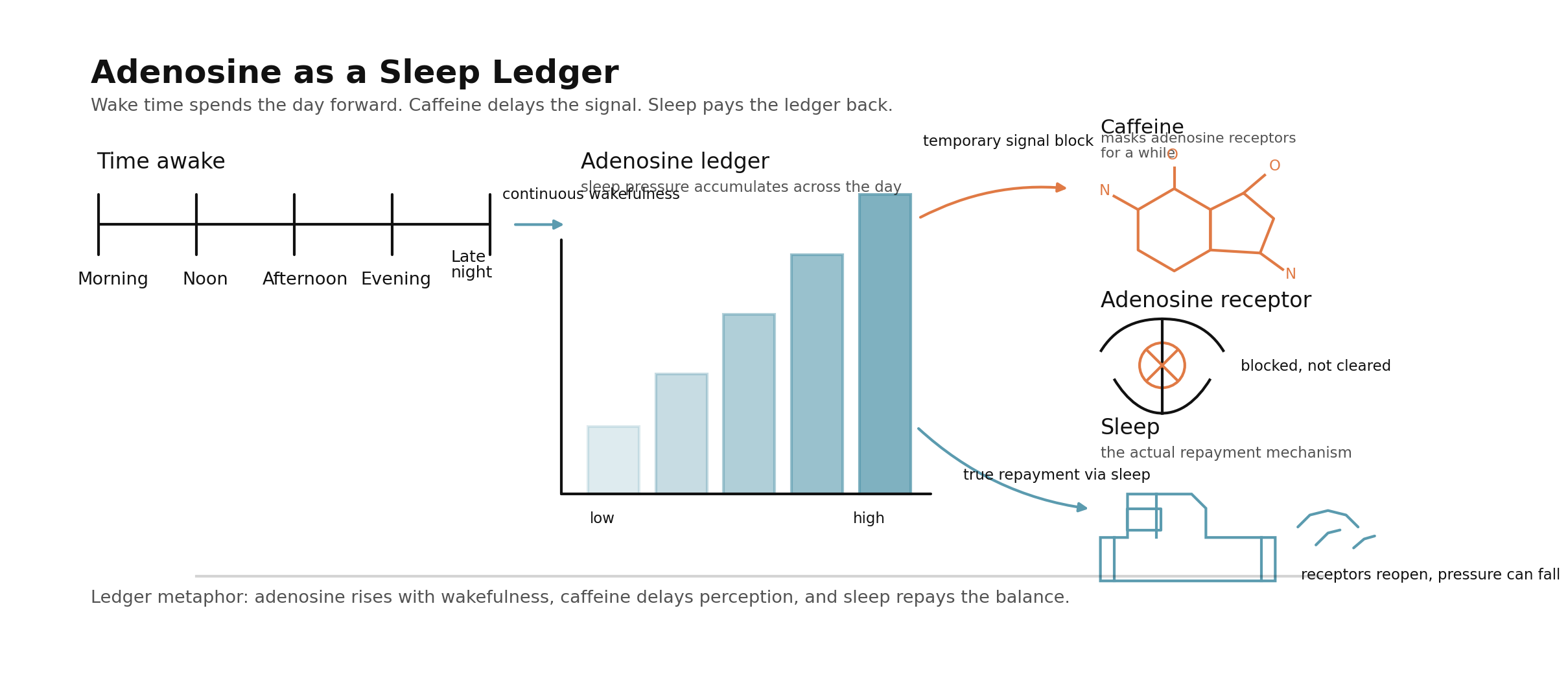
Figure 1: Adenosine builds up like a sleep ledger
That is why using coffee to survive a meeting is not the same as recovery. The signal is delayed, not resolved. If the night is then filled with more light, more messages, and more emotional activation, the debt keeps rolling forward.
The most valuable part may be the first hour after sleep onset
Sleep quality is not only about total duration. It is also about whether the repair crew can enter early, deeply, and without interruption.
Why do some people sleep for 8 hours and still wake up as if nothing was restored? One answer is that the most restorative phase may cluster near the first hour after falling asleep. When that window is cut apart by phone vibration, alarms, noise, or repeated waking, the total number of hours can stop matching the feeling of recovery.
The best-known metabolite clearance evidence from Xie and colleagues comes largely from mouse work. Human sleep likely moves in a similar direction, but the details still need more study. Still, everyday experience and clinical observation point the same way: total time matters, yet continuity and timing matter too.
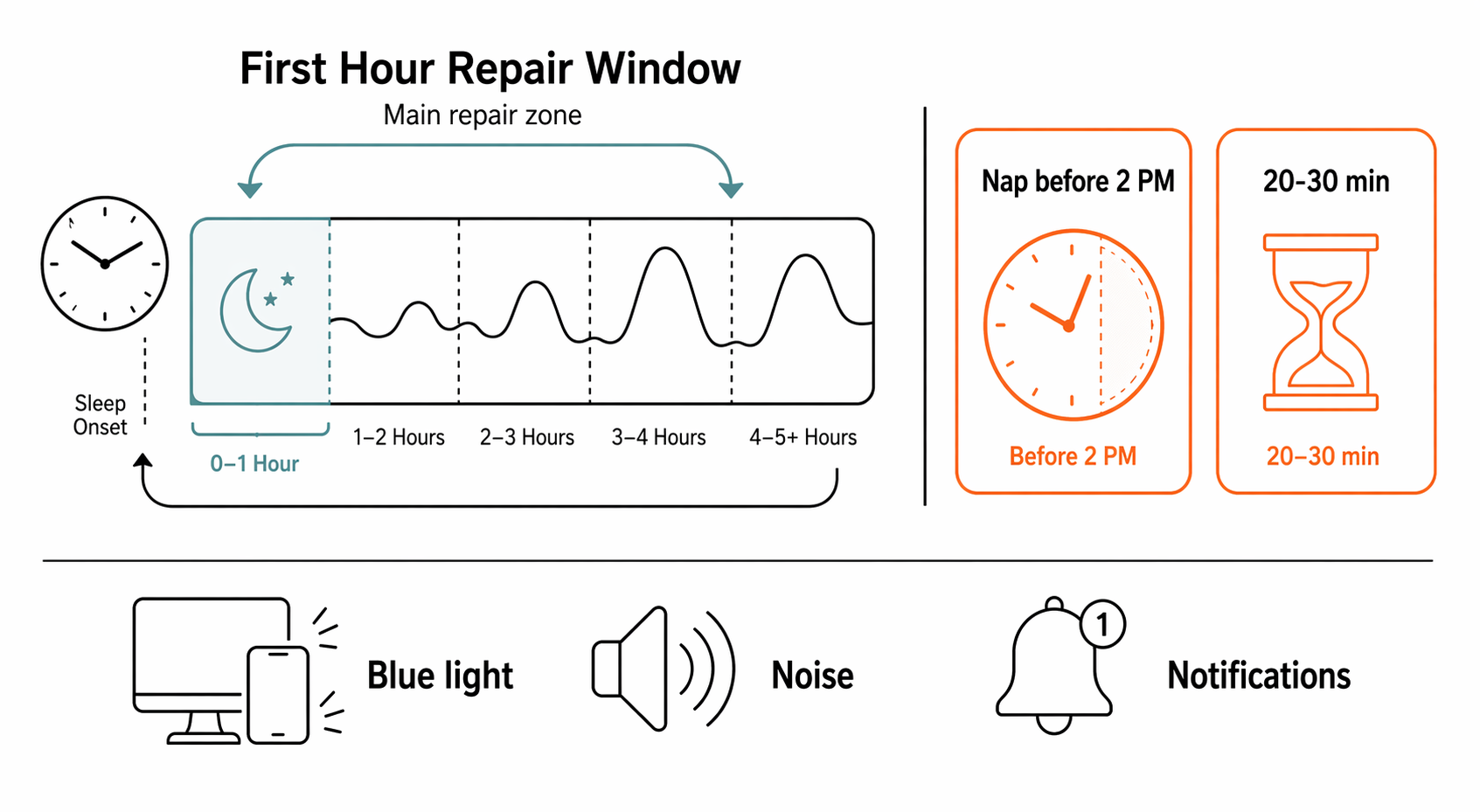
Figure 2: The first-hour repair window and the daytime nap window
New parents, shift workers, and on-call clinicians often get trapped here. They are not failing to sleep entirely. They are repeatedly missing the best repair window.
Daytime naps need rules, and nighttime downshifting needs rules too
Napping can help, but bad timing can turn the evening into a bigger traffic jam.
If you genuinely cannot stay functional, a nap can reduce the sharpest edge of fatigue. Two boundaries matter most: before 2 PM, and around 20 to 30 minutes. The point is not to repay the full debt. It is to relieve the pressure without erasing the drive to sleep later that night.
Screens are difficult for two reasons. First, blue light can disrupt melatonin timing. Second, the content itself can keep emotion and attention elevated. What feels like “winding down” may still be another shift of cognitive work. A calm podcast, low-arousal music, or a few minutes of eyes-closed breathing usually behaves more like genuine deceleration.
You do not need to force sleep harder. You need to let the system clock out.
Once the bed becomes an anxiety workstation, the body stops reading it as a place of rest.
If you stay in bed for 20 minutes and remain fully alert, it is often better to step away for a low-effort, low-emotion activity in dim light and return only when the heaviness is real. That is not failure. It is a way to protect the link between bed and sleep. Alcohol is not a clean shortcut either. It may sedate quickly, but it often fragments the second half of the night.
Sleep is not weakness. It is closer to daily systems accounting. Whether you allow space during the day often decides whether the mind can shut down at night. Before blaming your discipline, ask the more practical question: did your brain actually get to clock out today?
References
- Dr. Tsai Yu-Che (2026). Interview summary on the science of rest.
- Xie L, et al. (2013). Sleep drives metabolite clearance from the adult brain. Science. doi: 10.1126/science.1241224
- Porkka-Heiskanen T, et al. (1997). Adenosine: a mediator of the sleep-inducing effects of prolonged wakefulness. Science. doi: 10.1126/science.276.5316.1265
- Barnes CM, et al. (2015). Sleep and organizational behavior: implications for workplace productivity and safety. Organizational Psychology Review. doi: 10.1177/2041386614558098