Your 536 cell types are undergoing a quiet revolution, and your gut may lose its memory before your brain does.
What If Aging Isn't What You Think?
Three studies published in top-tier journals in 2026 show that aging is a coordinated, organism-wide remodeling: reaching from the gut microbiome to brain memory to mitochondrial energy metabolism.
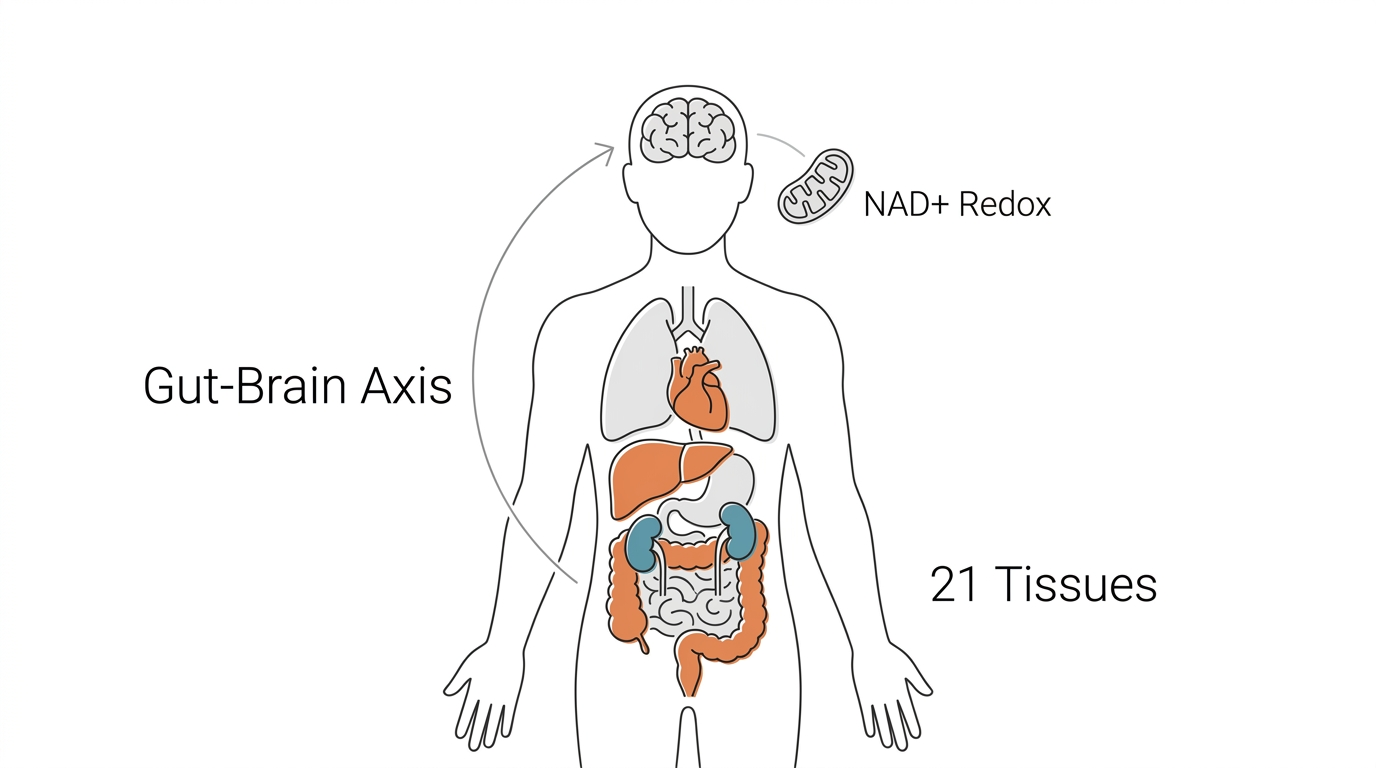
Your body houses over 500 distinct cell types spread across 21 tissues. With every passing year, roughly one in four of those cell types quietly shifts its identity. Not breaking down — restructuring. Like a company silently reorganizing while you're still at your desk. Meanwhile, bacteria in your gut are interfering with your brain's ability to form memories, and a tipping point in your cellular energy currency, NAD+, may be the opening act for Alzheimer's disease.
The Whole-Body Aging Map: Your Cells Are Changing Shifts
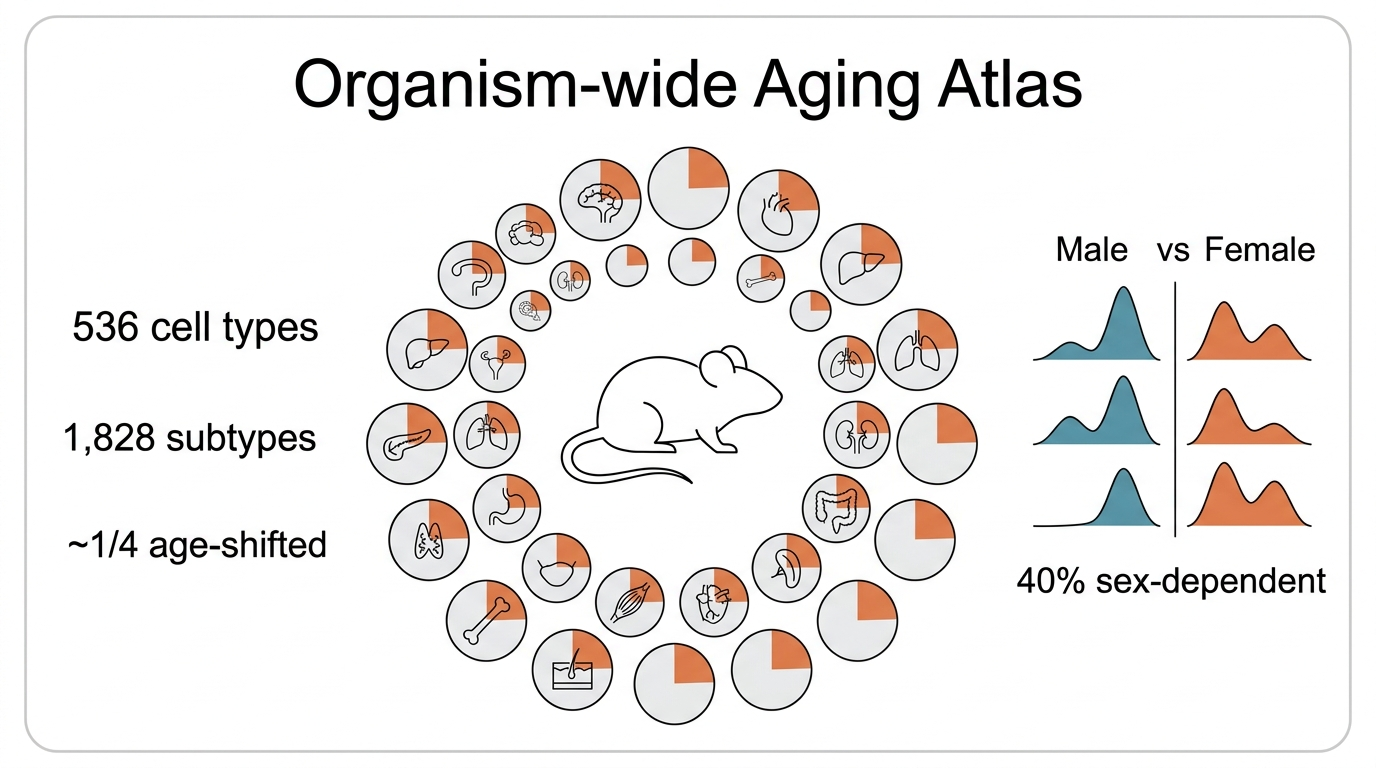
Lu and colleagues published what may be the most comprehensive mammalian aging atlas to date in Science. Using single-cell chromatin accessibility profiling across 21 mouse tissues, three age groups, and both sexes, they catalogued 536 organ-specific cell types and 1,828 finer subtypes. Roughly one-quarter showed significant age-related population shifts.
This was no isolated organ affair. Cells from the same lineage but different organs displayed synchronized aging dynamics, hinting at systemic signals coordinating the transformation. And approximately 40% of these aging-associated changes were sex-dependent, with tens of thousands of chromatin peaks diverging between males and females. Your body does not age uniformly. Men and women follow different "aging scripts."
When Your Gut Forgets How to Talk to Your Brain
If Lu's study was a satellite view of whole-body aging, a Nature paper by Cox and colleagues reads like a ground-level detective report.
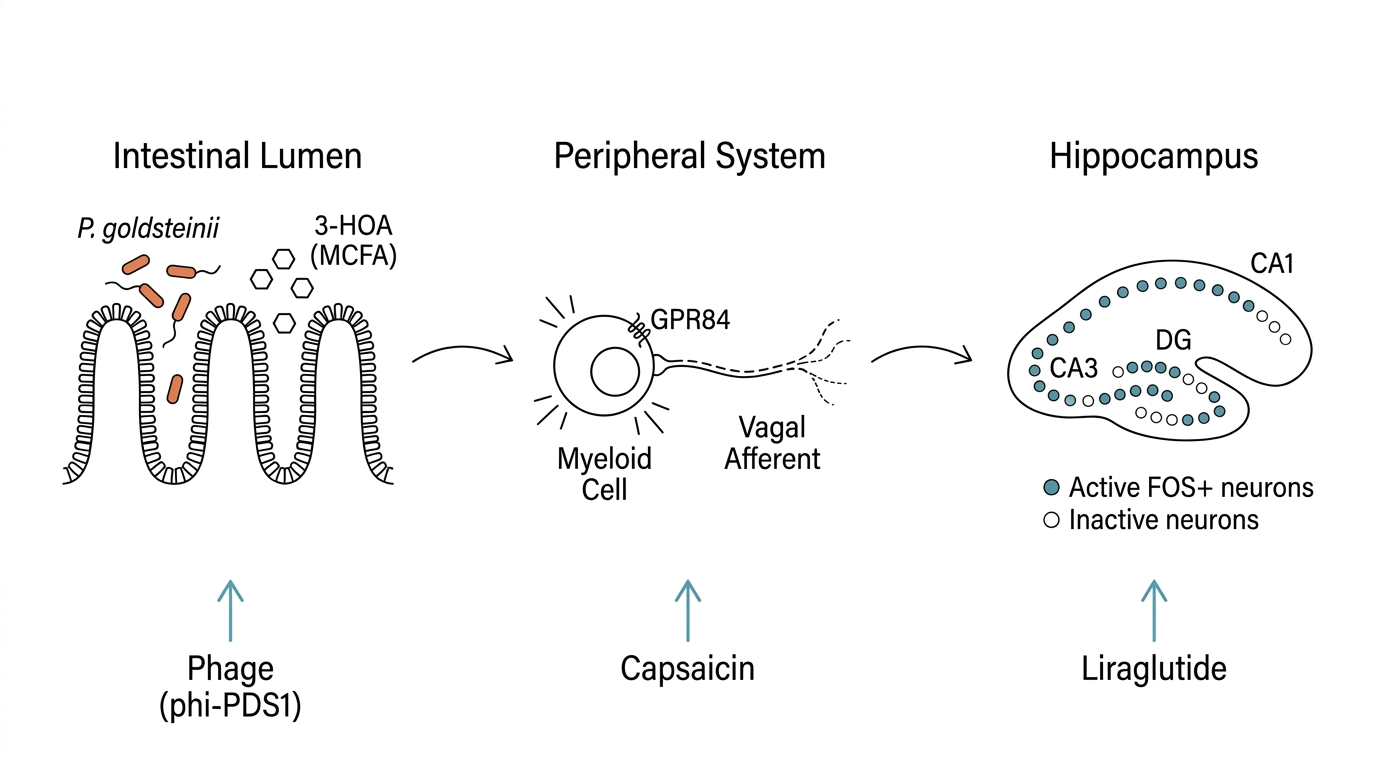
The team tracked the gut microbiome across the entire lifespan of mice (mean lifespan 955 days), identifying 1,133 bacterial species with significant lifetime fluctuations. The prime suspect: Parabacteroides goldsteinii, a bacterium that steadily increases with age and spreads to younger animals through co-housing.
The mechanism is straightforward. P. goldsteinii produces the medium-chain fatty acid 3-hydroxyoctanoic acid (3-HOA), which activates GPR84 receptors on peripheral myeloid cells, triggering inflammation that weakens vagal afferent neurons. The downstream result: diminished neuronal activation in the hippocampal memory-encoding regions: DG, CA3, and CA1. Your brain starts losing its grip on new memories.
The real twist came from intervention experiments. Targeted phage therapy to eliminate Parabacteroides restored memory in aged mice. Low-dose capsaicin reactivated sensory neurons with similar success. Even liraglutide, a GLP-1 receptor agonist familiar to gastroenterologists, enhanced memory in elderly mice.
Your gut doesn't just digest food; it translates the world for your brain. When the translator ages, the message garbles.
The NAD+ Question: It's Not How Much, but How Balanced
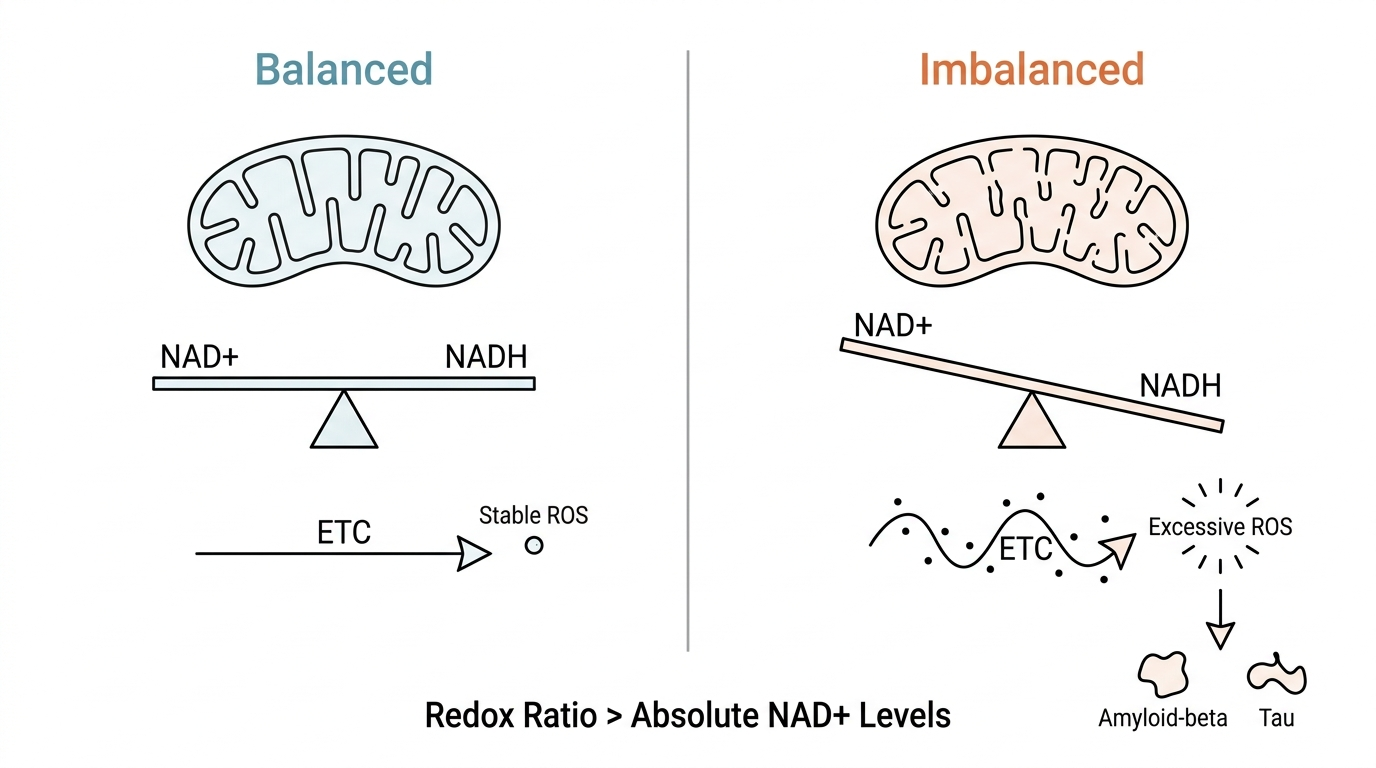
NMN and NR supplements have become staples of the biohacking community. But Stefano and colleagues, writing in Frontiers in Bioscience-Landmark, raise a point most people overlook: the supplements you take boost absolute NAD+ levels, yet what truly governs mitochondrial function is the NAD+/NADH redox ratio.
Think of your home electrical system. The problem isn't "not enough power." It's voltage surging and dropping unpredictably. A generator without a voltage regulator causes more damage than a blackout. When the redox ratio tips, the electron transport chain loses efficiency, reactive oxygen species spiral out of control, and inflammatory signaling amplifies. In this framework, metabolic failure becomes the upstream "permissive condition" for Alzheimer's: energy collapse first, then amyloid-beta and tau accumulation.
The authors are candid about limits: claims that NAD+ modulation can "reverse" neurodegeneration remain unsupported by clinical evidence. The hypothesis demands redox-resolved metabolic assays and rigorous human trials.
Your Aging Prescription May Need More Than One Page
Three studies, one picture: Lu shows how wide and uneven the remodeling is; Cox reveals how gut-brain communication fractures with age; Stefano argues that once the metabolic balance tips, degeneration finds its opening.
The future of anti-aging won't be a single pill. It will likely involve maintaining gut microbiome diversity, restoring NAD+ redox equilibrium, and accounting for sex-based biological differences. A prescription written just for you.
References
- Lu et al. (2026). Organism-wide cellular dynamics and epigenomic remodeling in mammalian aging. Science. doi: 10.1126/science.adw6273
- Cox et al. (2026). Intestinal interoceptive dysfunction drives age-associated cognitive decline. Nature. doi: 10.1038/s41586-026-10191-6
- Stefano et al. (2026). NAD+ Homeostasis and Mitochondrial Modifiability: Resilience in Alzheimer's Disease. Frontiers in Bioscience-Landmark. doi: 10.31083/FBL49714
Author: TheVoidWeaver | Published: 2026-05-07