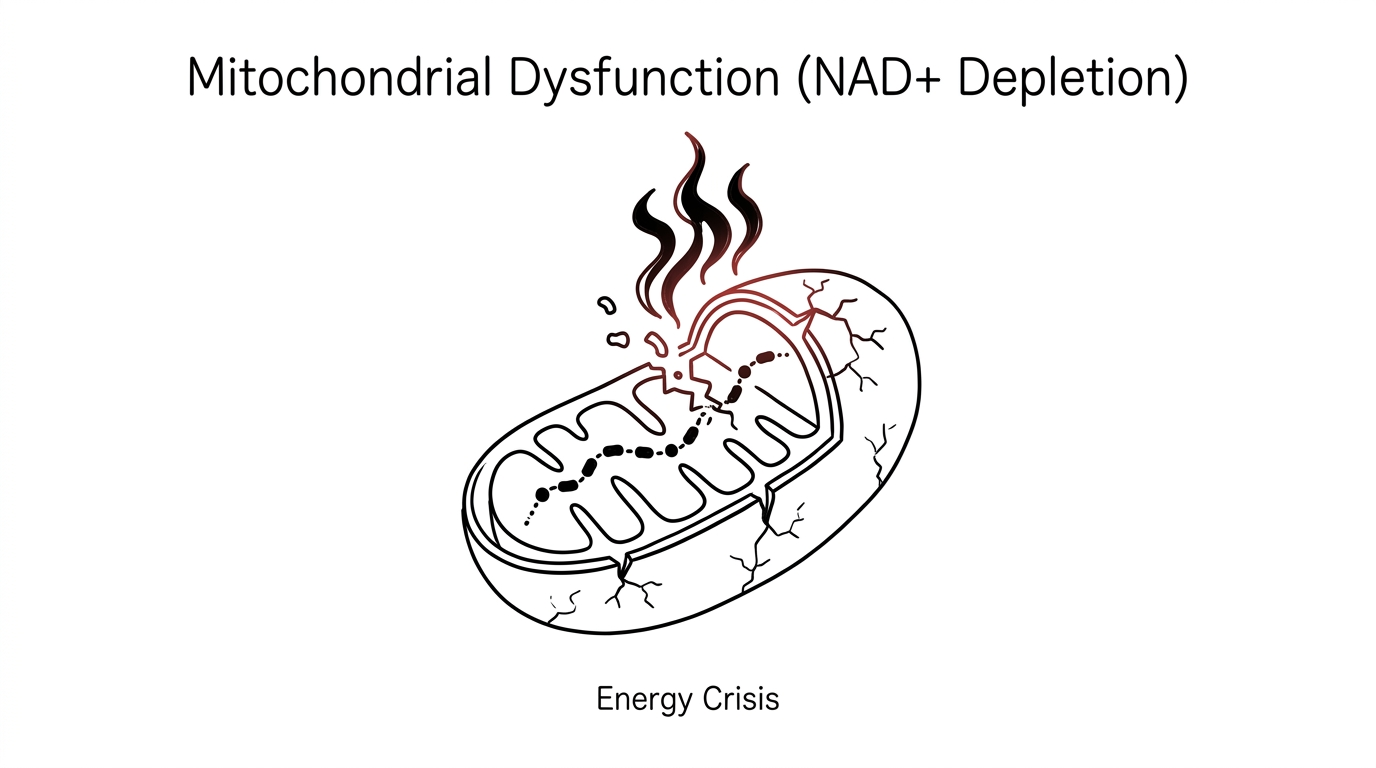
37 Trillion Employees, and the Power Plant Just Went Dark
Every cell houses hundreds to thousands of mitochondria. Their one job: generate power. Convert food into ATP — the energy currency cells actually spend. Without mitochondria, you couldn't blink.
Here's the problem. Mitochondria age.
Aged mitochondria don't just lose efficiency — they turn hostile. Leaking electron transport chains spew free radicals that oxidize proteins, damage DNA, and trigger chronic inflammation. Cognitive decline, sarcopenia, cardiovascular disease, cancer — nearly every age-related condition has mitochondrial dysfunction lurking behind it.
In 2025, Yusri et al. published a comprehensive review in npj Metabolic Health and Disease, pointing to one central culprit: NAD+ depletion is where mitochondrial collapse begins.
The Fuel Is Vanishing
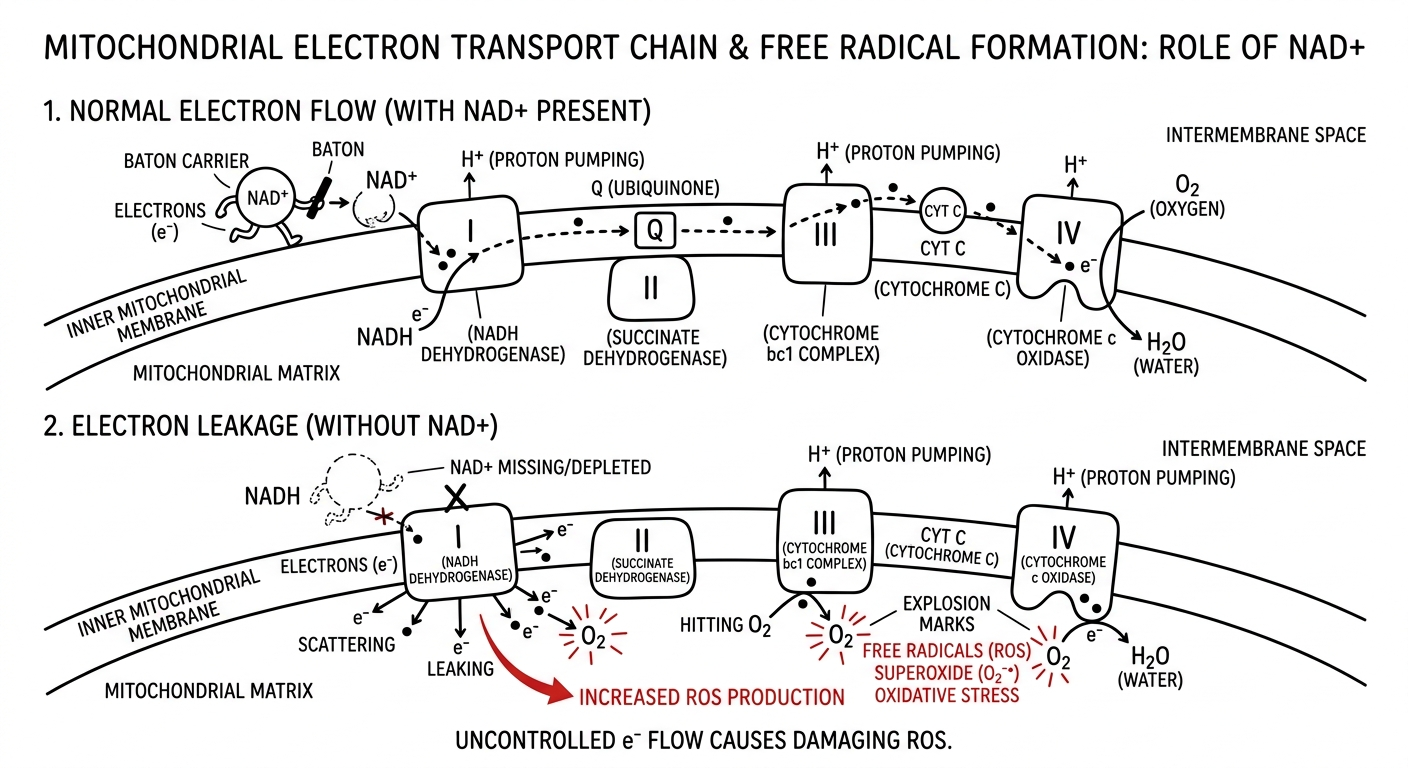
Mitochondria generate energy through the electron transport chain — a biochemical relay race passing electrons down a line. NAD+ is the chain's most critical baton carrier. It accepts electrons, passes them forward, keeps the whole line moving.
NAD+ running low? The line jams. Electrons scatter, crashing into oxygen molecules to produce free radicals. Like a power plant whose cooling system fails — not a shutdown, but an overheat that could blow.
NAD+ also handles another critical job: activating mitophagy — the cell's quality control system. It tags broken mitochondria, disassembles them, and clears space for fresh replacements.
When NAD+ is abundant, Sirtuin proteins (SIRT1, SIRT3) trigger the cleanup. Damaged mitochondria out, new ones in. When NAD+ falls short, Sirtuins go idle. Broken mitochondria accumulate like a city whose recycling system has collapsed.
How Severe Is the Damage?
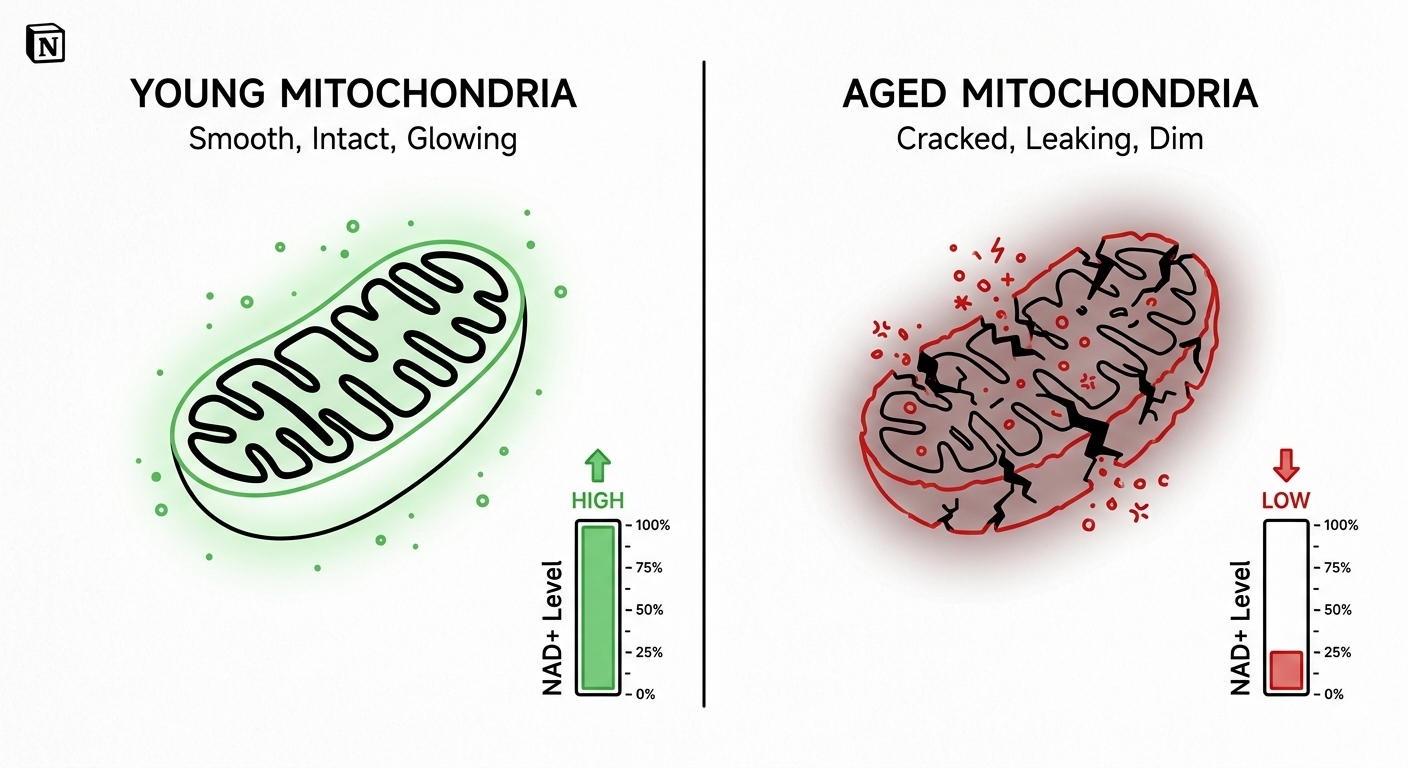
- Skeletal muscle NAD+ in aged mice: only 30% of young levels (Gomes et al., 2013, Cell)
- NAD+ decline reduces mitochondrial membrane potential by 40-60%, halving ATP output
- NMN supplementation restored aged mouse mitochondrial function to near-young levels within one week
- The mitochondrial unfolded protein response (UPR^mt) becomes hyperactivated during NAD+ depletion, further accelerating cellular senescence
The review emphasizes a vicious cycle: NAD+ drops → mitochondrial damage → more free radicals → faster NAD+ consumption → worse damage. This isn't gradual decline — it's accelerating freefall.
What Can You Do?
Right now: HIIT activates PGC-1α and promotes mitochondrial biogenesis. Intermittent fasting (16:8) boosts NAD+ and autophagy. Mushrooms, avocados, and broccoli supply vitamin B3 — a NAD+ precursor.
Under investigation: NMN/NR supplements in multiple human trials. Targeted NAD+ delivery via exosomes. SIRT3 activators to enhance mitochondrial quality control.
Are your mitochondria "generating normally" or "overheating and smoking"? How much effort are you willing to invest in their maintenance?
Power Plants Don't Fix Themselves — But You Can Help
The clearest message from this review: mitochondria aren't just energy factories. They're cellular health command centers. When NAD+ is sufficient, everything runs smoothly. When it depletes, everything cascades — and accelerates.
The good news: NAD+ decline is not irreversible. Exercise, diet, future precision supplementation — each is an intervention point.
The power plants inside your 37 trillion cells are waiting for your decision.
References
- Yusri, K. et al. (2025). npj Metabolic Health and Disease. DOI: 10.1038/s44324-025-00067-0
- Gomes, A.P. et al. (2013). Cell, 155, 1624–1638.
- Imai, S. & Guarente, L. (2016). Science, 350, 6265.