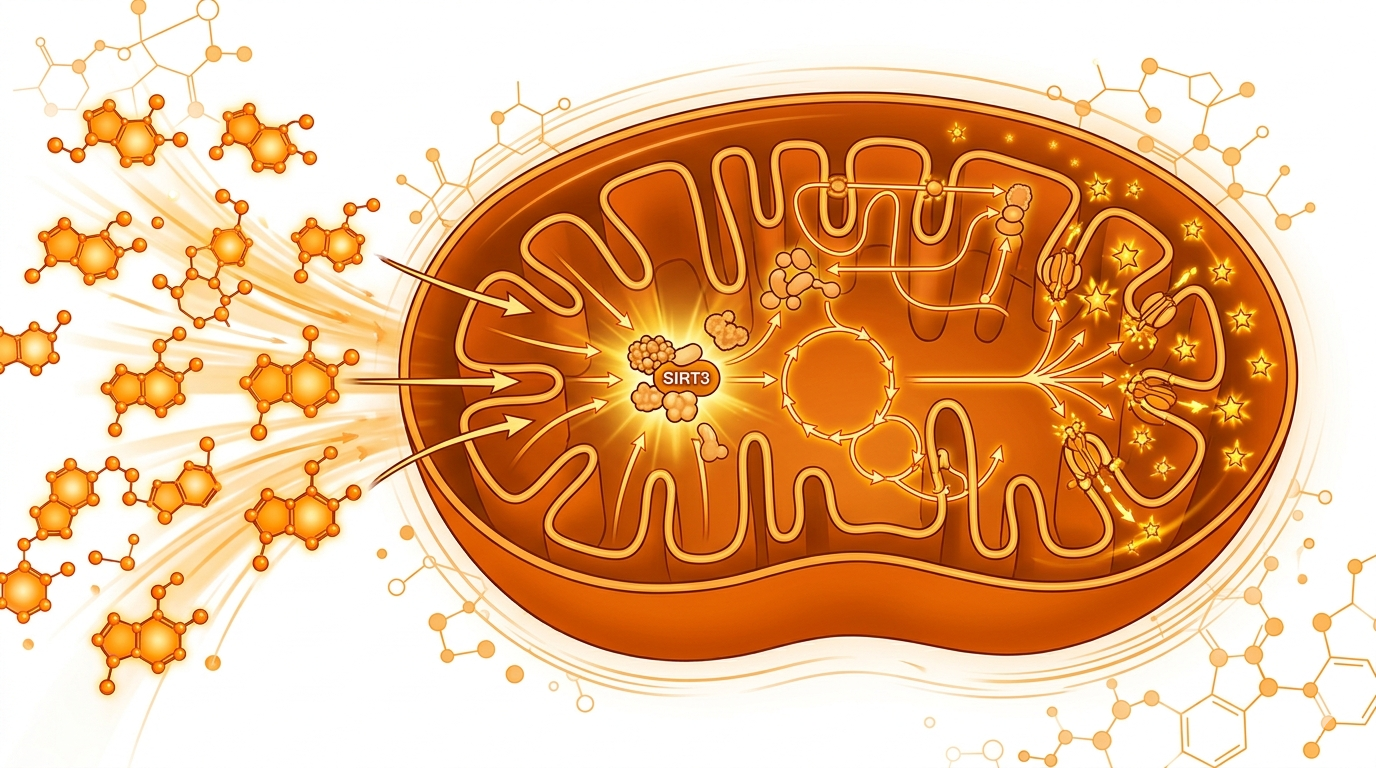
 Fig. 1: Mitochondria — the power plants inside your cells — depend on NAD+ to stay functional and young.
The Brownout Nobody Warned You About
Picture your body as a massive, humming city. Every single cell houses its own tiny power plant — the mitochondria — and in your twenties, these plants run like clockwork. Energy is abundant, waste gets cleared, systems stay sharp.
Then, gradually, something shifts. The plants slow down. Debris accumulates. Unexpected "blackouts" become the norm. You chalk it up to aging, stress, or bad sleep.
But according to a 2025 study published in npj Metabolic Health and Disease, the real culprit has a name: NAD+ depletion.
Your mitochondria aren't broken. They're just running on empty — and understanding why could change how you think about your own health.
What Is NAD+, and Why Should You Care?
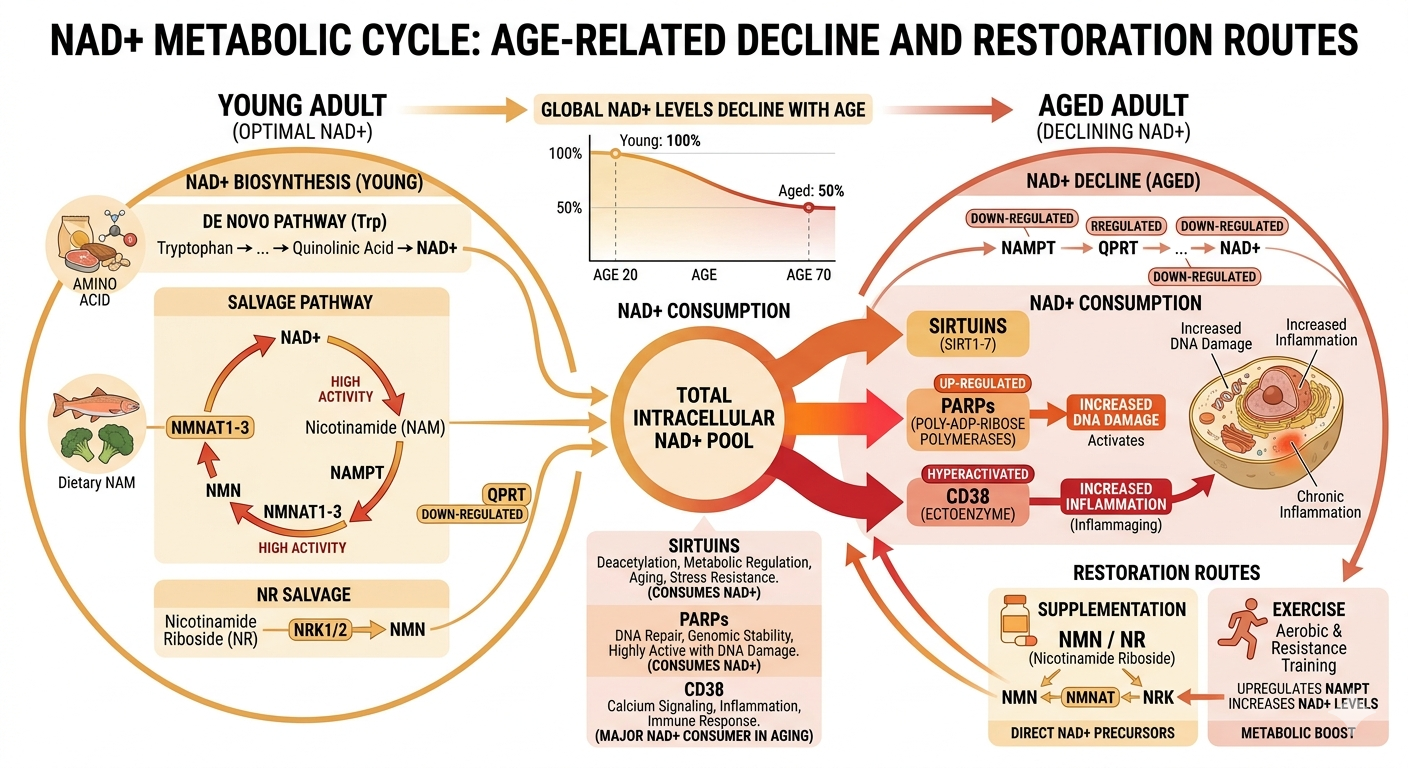 Fig. 2: NAD+ sits at the center of your cellular energy cycle, linking fuel intake to mitochondrial output.
NAD+ (nicotinamide adenine dinucleotide) sounds like something out of a biochemistry exam, but here's the simple version: it's a molecule your cells use as a universal energy carrier. Every time you eat, your body converts food into usable energy (ATP), and NAD+ is the essential go-between in that process.
But its job doesn't stop at energy conversion. NAD+ also activates a family of proteins called Sirtuins — think of them as your cells' maintenance crew. When NAD+ is plentiful, these proteins get busy: they sweep out damaged components, flag broken mitochondria for recycling, and defend against the oxidative stress that quietly wears your cells down over time.
So when people talk about "boosting NAD+," they're not chasing some fantasy of immortality. They're trying to keep your cellular maintenance crew funded and on the clock.
The problem? NAD+ levels naturally fall as you age — and that fall is steeper than most people realize.
Meet SIRT3: The Commander Your Mitochondria Can't Live Without
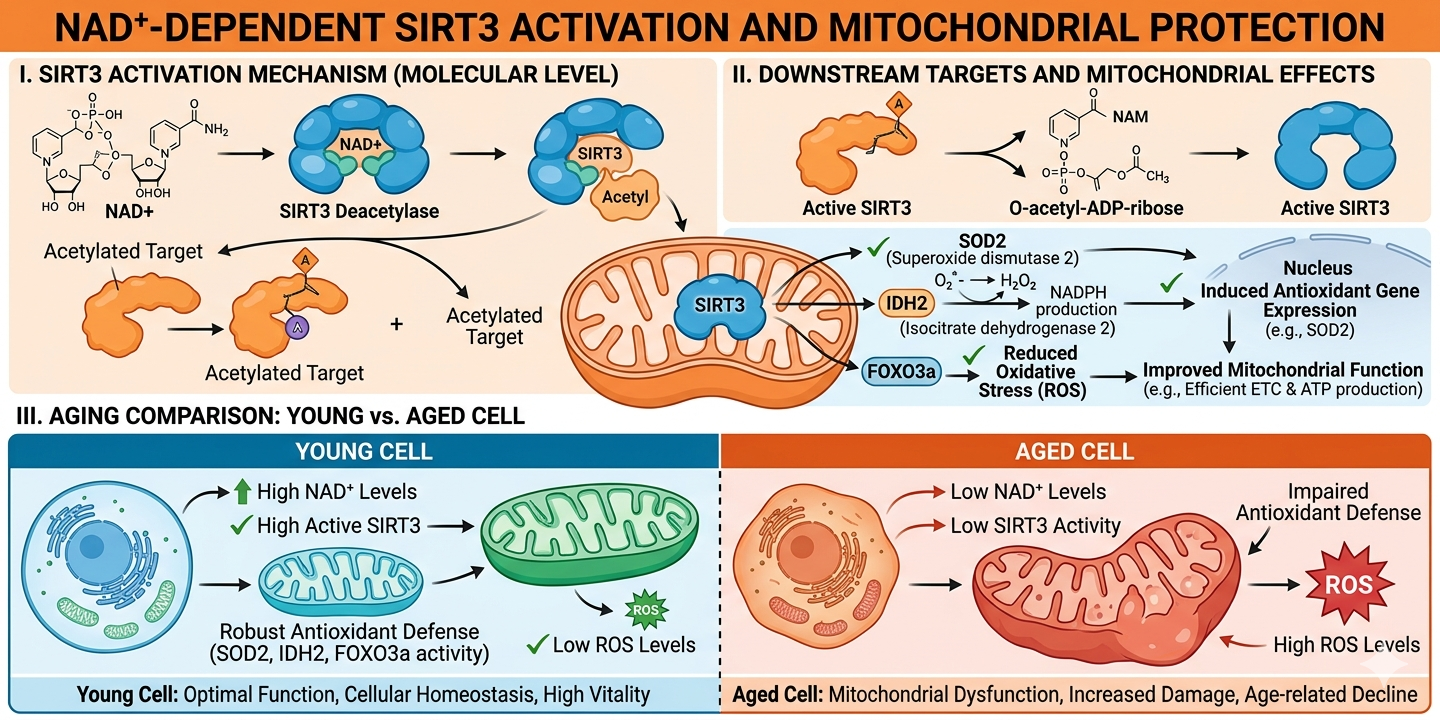 Fig. 3: SIRT3 sits at the center of mitochondrial quality control — activating antioxidant defense, mitophagy, and biogenesis.
The 2025 research from Yusri et al. zeroes in on a specific protein that turns out to be the linchpin of mitochondrial health: SIRT3.
Here's what happens when your NAD+ is adequate. SIRT3 activates a signaling pathway called SIRT3/FOXO3α, which does three things your mitochondria desperately need:
- Antioxidant defense — It ramps up enzymes like SOD and Catalase that neutralize the free radicals eating away at your mitochondrial membranes.
- Mitophagy — It triggers your cells to break down and recycle mitochondria that are too damaged to repair. Think of it as controlled demolition before a rebuild.
- Biogenesis — Through a downstream connection to SIRT1 and PGC-1α, it actually stimulates the production of new mitochondria. More plants, better capacity.
What this means in practice: when your NAD+ is high, SIRT3 doesn't just protect what you have — it helps you build more. When NAD+ drops, this whole cascade stalls.
Is it starting to make sense why mitochondrial decline and systemic aging seem to move together? The research suggests they're not just correlated — they're mechanistically linked through this NAD+–SIRT3 axis.
Beyond NMN: What the Research Actually Found
By now, you've probably heard of NMN (nicotinamide mononucleotide) or NR (nicotinamide riboside) as NAD+ precursors. The supplement market has been loud about both. But this study points to some less-discussed candidates that deserve your attention.
NMNH is a reduced form of NMN — and early data suggests it may raise tissue NAD+ levels more efficiently than standard NMN in certain contexts. The research is still early, but the mechanism is distinct enough to be worth watching.
More interesting, perhaps, is Trigonelline — a natural compound found in coffee and fenugreek. Trigonelline has shown a positive correlation with both muscle health and cognitive function, seemingly via its ability to support the NAD+ biosynthesis pathway. If this holds up in larger trials, your morning coffee might be doing more for your mitochondria than you thought.
The bigger takeaway here isn't about picking one supplement over another. It's that the field is moving toward personalization. Your body's ability to synthesize NAD+ internally depends on an enzyme called NAMPT, which declines with age. Future strategies may involve assessing your NAMPT levels and then choosing the precursor that actually fits your biology — rather than defaulting to whatever's trending.
The Most Underrated NAD+ Strategy Is Free
Here's the thing the supplement industry would rather you not dwell on: regular exercise is one of the most reliable ways to sustain your NAD+ levels.
The clinical data in this study is clear. Physically active older adults consistently show NAD+ levels comparable to those of much younger people. Not slightly better — comparable. The mechanisms involve both increased NAMPT expression from muscle contractions and reduced inflammatory load that otherwise accelerates NAD+ consumption.
So before you spend money on any precursor, it's worth asking yourself: are you moving consistently? Because no supplement has yet matched what a solid exercise habit does for your mitochondrial health at baseline.
That said, for people who can't exercise intensively — due to illness, injury, or age-related frailty — NAD+ precursor supplementation may offer a meaningful compensatory pathway. This is where the research genuinely opens a door.
💬 Have you tried any NAD+ supplements like NMN or NR? Or do you rely mainly on exercise to keep your energy up? Share your experience in the comments — real-world data matters here.
The Takeaway
Your mitochondria are not passive victims of aging. They're responsive, dynamic systems — and the NAD+–SIRT3 pathway gives us a concrete handle on how to support them.
The science doesn't promise you a shortcut. But it does point toward a coherent framework: keep your NAD+ up, keep SIRT3 active, and your mitochondria will stay cleaner, more efficient, and more numerous for longer.
Whether that comes from moving your body, choosing the right precursor for your biology, or both — the machinery is there. You just have to give it something to work with.
References
- Yusri, K. et al. (2025). NAD+ metabolism and mitochondrial function in aging: the role of sirtuins and NAD+ precursors. npj Metabolic Health and Disease. doi: 10.1038/s44324-025-00067-0