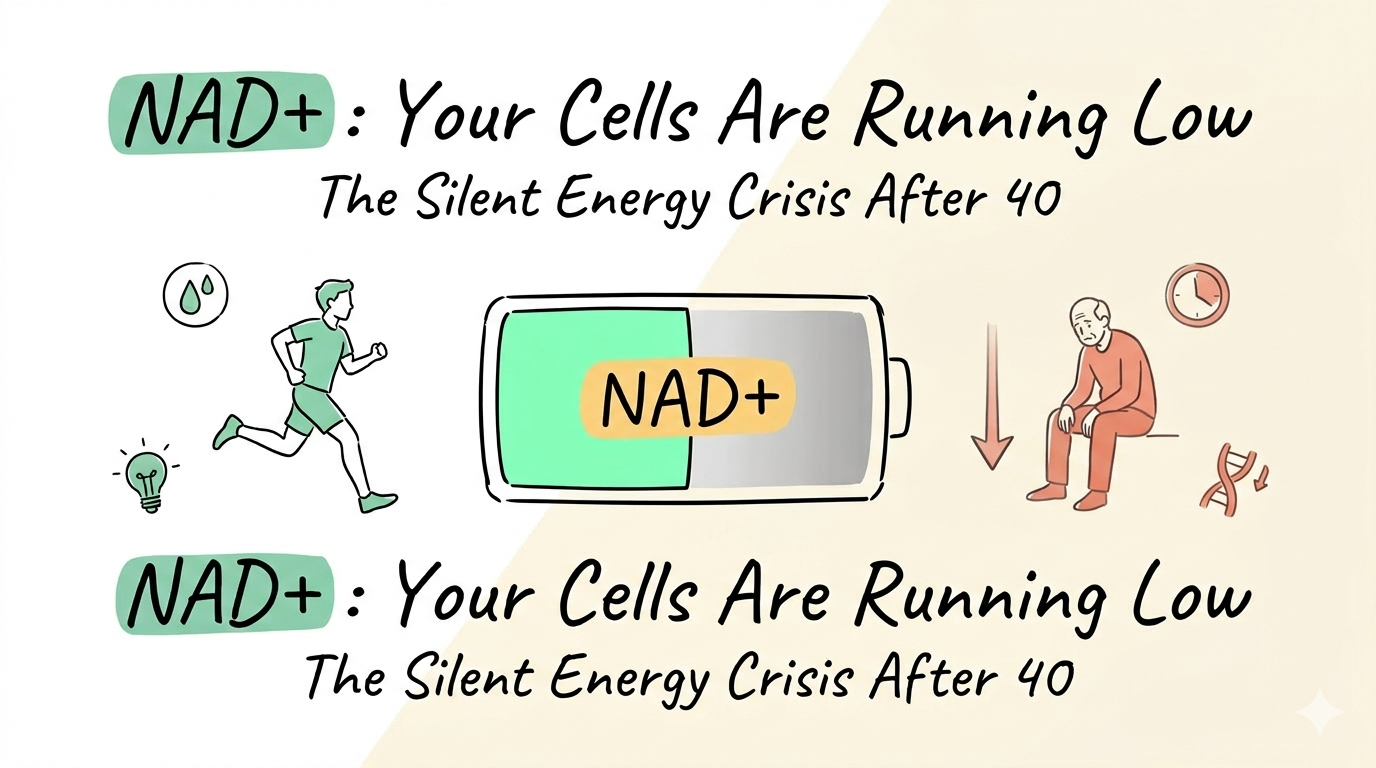
Your Cells Are Running Out of Battery — And It Started in Your 30s
TL;DR: It's not laziness. Your cells are literally losing power. A 2025 Nature Aging review maps out exactly how fast NAD+ disappears — and what you can actually do about it.
Remember When You Could Pull an All-Nighter and Feel Fine?
At twenty, you could sleep four hours and still function. At forty, losing two hours of sleep wrecks you for three days.
That's not a willpower problem. Your cells are genuinely running out of juice.
The molecule responsible is called NAD+ (nicotinamide adenine dinucleotide). Ugly name, simple job: it's your cell's charging cable. Mitochondria need it to turn food into energy. Your DNA repair crew needs it to fix daily damage. And the Sirtuins — a family of proteins often called "cellular housekeepers" — can't even clock in without it.
The problem? That charging cable is getting shorter every year.
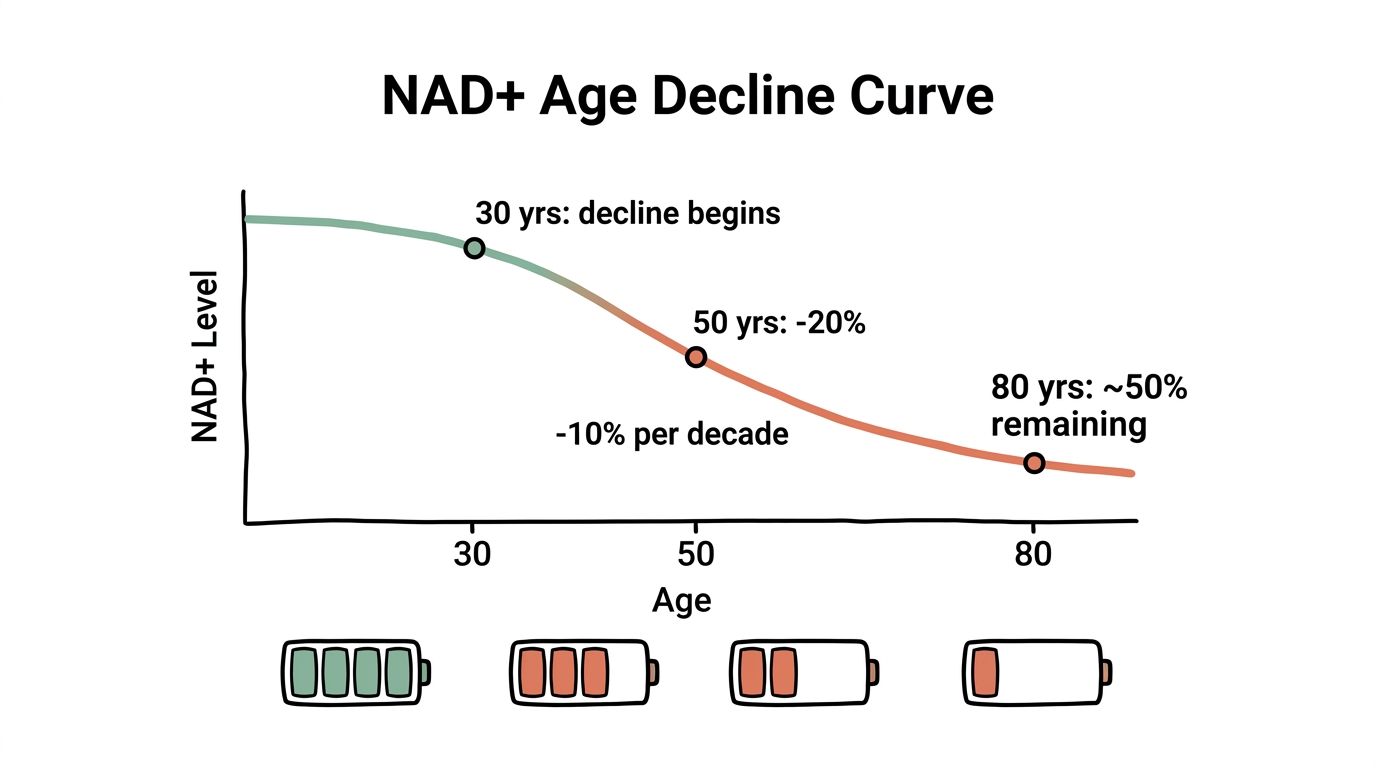
A 2025 review in Nature Aging (Zhang et al.) lays it out clearly: starting around age 30, NAD+ levels drop roughly 10% per decade. By 80, you may be running on half the supply you had in your twenties. This isn't vague hand-waving about "getting older." It's a measurable, steady drain.
What Happens When NAD+ Runs Low?
Three systems fail at once.
Your power plants crash. NAD+ is the electron shuttle inside mitochondria — the step that converts food energy into ATP, the universal fuel your cells actually use. Less NAD+ means a bottleneck on that production line. You feel tired not because you're lazy, but because your cells are in a brownout.
Your repair system stalls. DNA takes hits every single day — UV light, free radicals, metabolic byproducts. Normally, repair enzymes consume NAD+ to patch things up. When NAD+ runs low, damage accumulates. Enough damage, and cells either turn cancerous or enter senescence — becoming "zombie cells" that take up space, secrete inflammatory signals, and do nothing useful.
Your housekeepers go on strike. The Sirtuin family (SIRT1 through SIRT7) regulates metabolism, suppresses inflammation, and maintains your circadian rhythm. They're sometimes called "longevity gene" products. But here's the catch: Sirtuins are NAD+-dependent enzymes. No NAD+, no activation. Period.
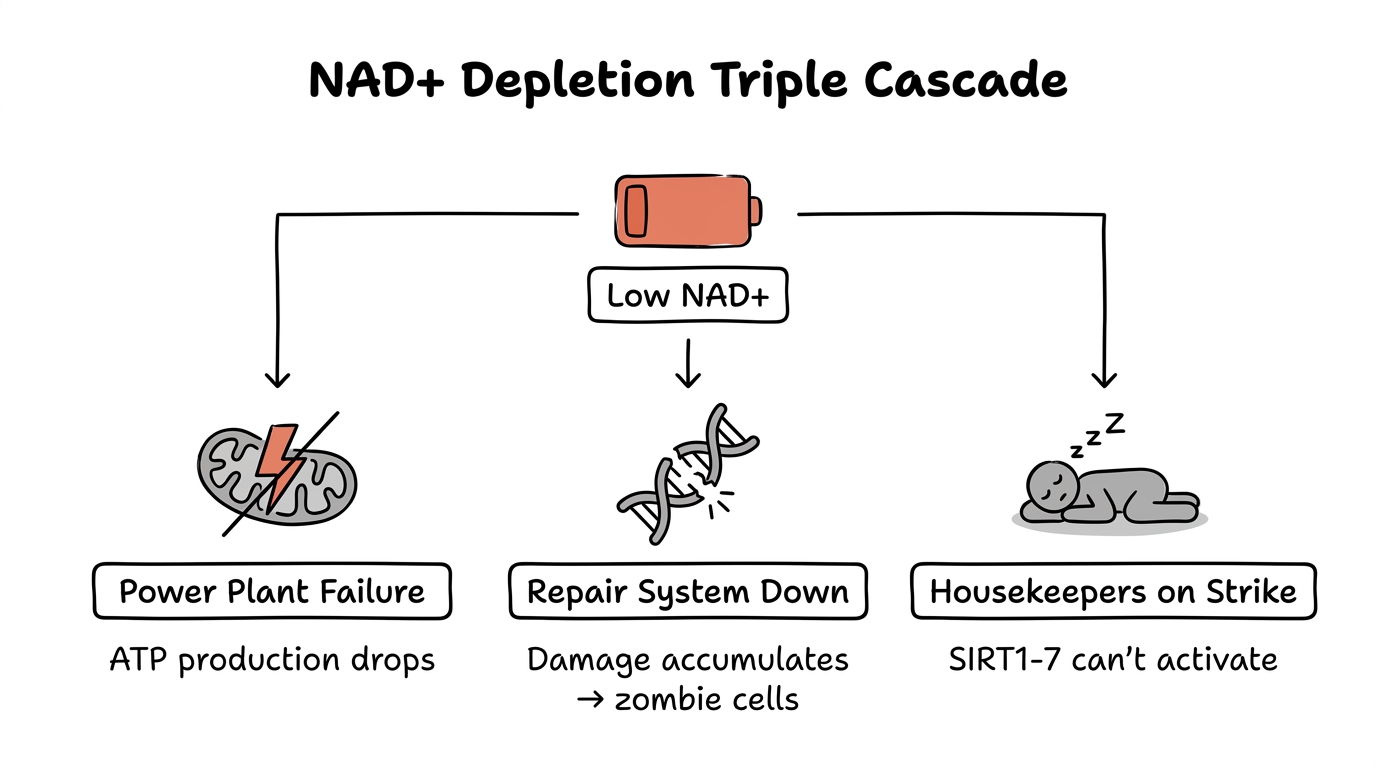
Three lines breaking simultaneously — that's what "accelerated aging" actually feels like from the inside.
Can You Refill the Tank? Three Routes
NAD+ itself is too large to survive digestion. So researchers use precursors — smaller molecules your body can convert into NAD+.
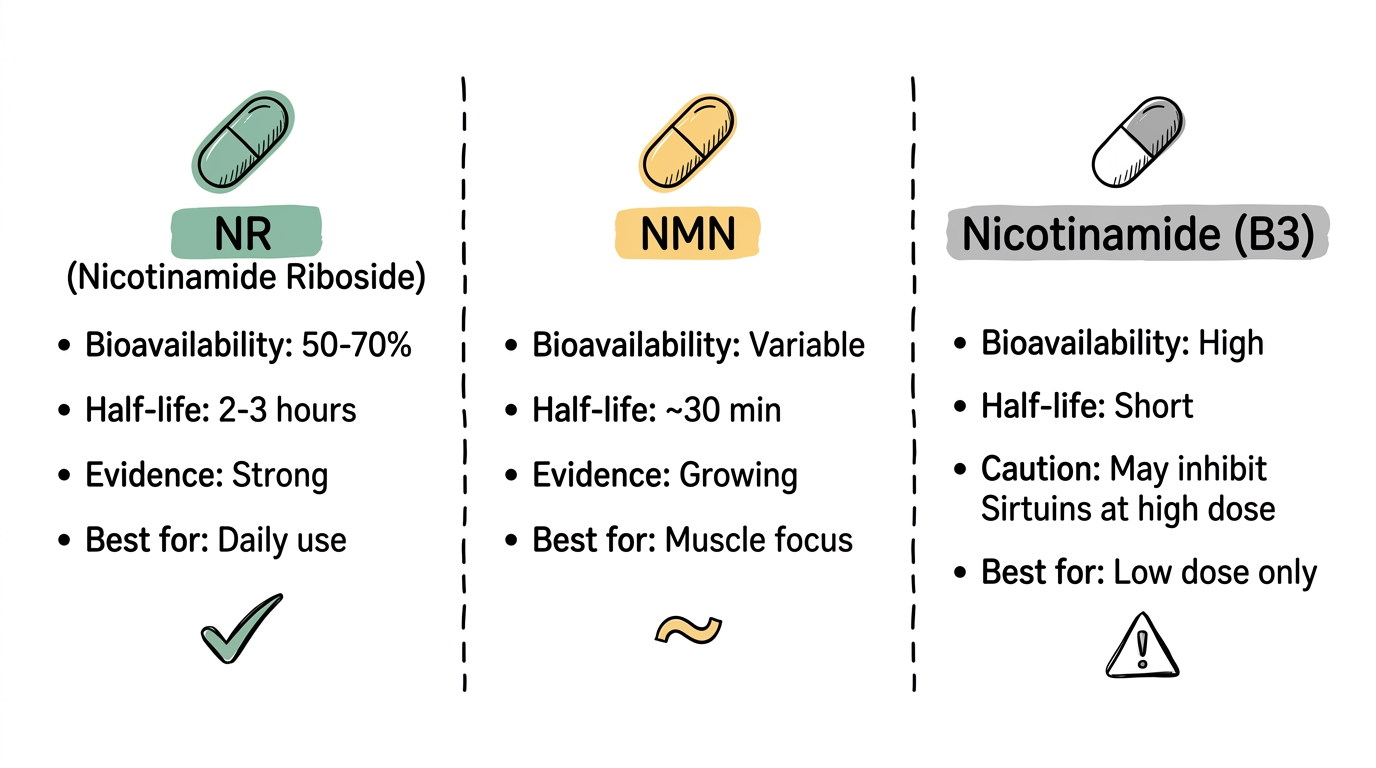
NR (nicotinamide riboside): The strongest evidence base so far. Absorbed through the gut and converted to NAD+ via the NRK enzyme pathway. Bioavailability sits around 50–70%, with a half-life of 2–3 hours. Solid for daily supplementation.
NMN (nicotinamide mononucleotide): Requires a specific transporter protein, SLC12A8, to enter cells. Shorter half-life (~30 minutes), though muscle tissue converts it reasonably well. Marketing is aggressive; clinical data is still catching up to NR.
Nicotinamide (vitamin B3): The cheapest option, but high doses may actually inhibit Sirtuin activity — effectively recharging the battery while switching off the housekeepers. Counterproductive.
If you're choosing for general maintenance, NR currently offers the best risk-benefit profile. NMN isn't bad, but it's pricier with thinner evidence. Nicotinamide works only at low doses; go higher and you might do more harm than good.
Why Isn't Your Doctor Prescribing NAD+ Yet?
Two words: not enough data.
Most clinical trials have tracked participants for only 3–6 months. Is five years of supplementation safe? Ten? Nobody knows yet.
Then there's the cancer question. Tumor cells are energy-hungry too. Could elevating NAD+ feed a growing cancer? Most physicians err on the side of caution and don't recommend supplementation for anyone with an active malignancy. Pregnant women, and those on Metformin or statins, should also consult their doctor first.
And individual variation is real. Your genetics, gut microbiome, and metabolic efficiency are completely different from the next person's. The same supplement might boost one person's NAD+ by 40% and do absolutely nothing for another. That's not a product failure — it's biology.
The Free Version
Before reaching for a bottle, these interventions already have solid evidence for raising NAD+:
- Aerobic exercise: The most effective natural NAD+ booster. 150 minutes per week at moderate intensity is enough.
- Intermittent fasting: Activates the AMPK pathway, which indirectly promotes NAD+ synthesis.
- Adequate sleep: Repair-phase metabolism is heavily NAD+-dependent.
- Cut refined sugar: Excess sugar accelerates NAD+ consumption.
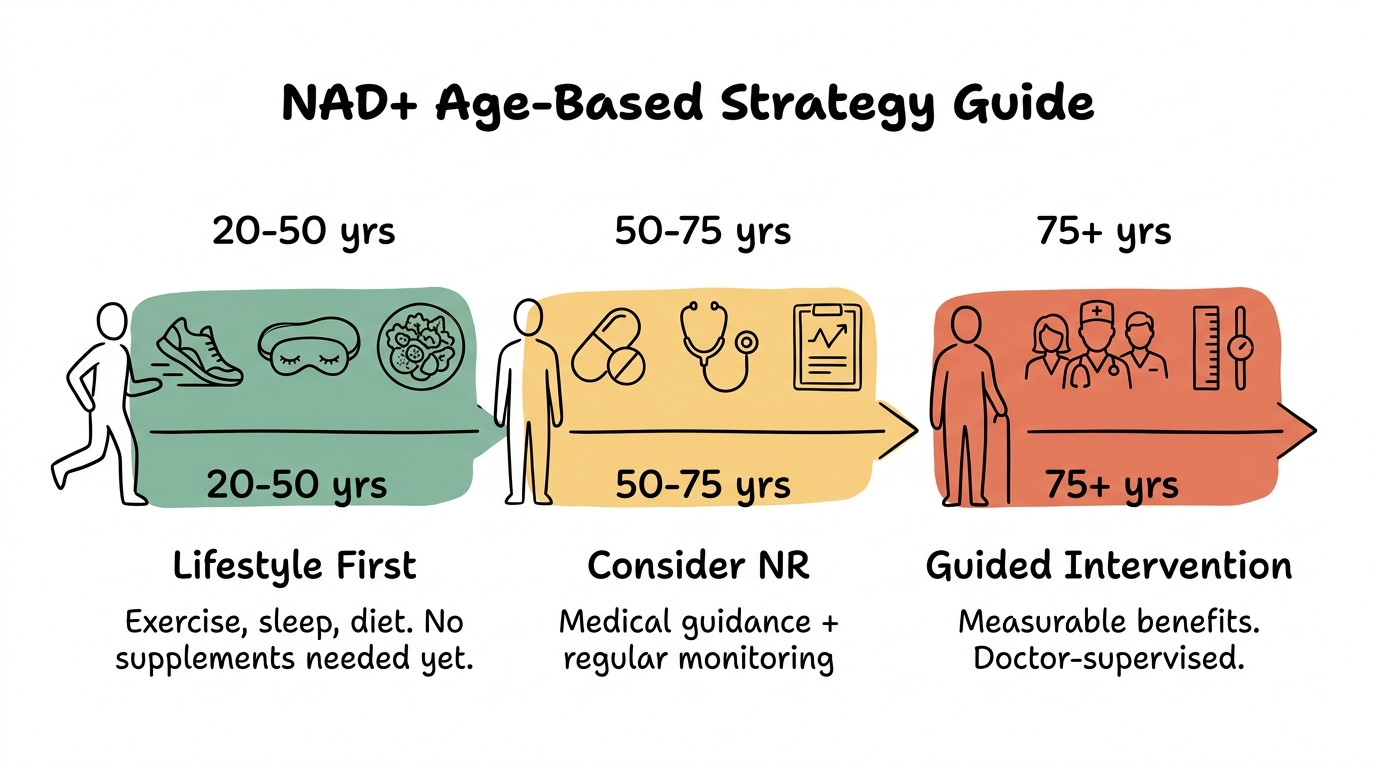
Ages 20–50: Your NAD+ levels are still holding. Focus on lifestyle — exercise, sleep, diet. No rush to buy supplements.
Ages 50–75: The decline is noticeable. Consider trying NR under medical guidance, with periodic monitoring.
Ages 75+: Depletion is significant. Supplementation effects are easier to measure at this stage, but always work with your healthcare team.
The Bottom Line
Aging isn't a switch. It's a slope — and the rate of NAD+ loss determines how fast you slide down it.
You can't remove the slope. But you can choose your shoes.
When did aging first stop being an abstract concept and become something you could physically feel? At 30? 40? Drop your answer below — I'm genuinely curious.
Author: TheVoidWeaver | Updated: 2026-03-12 Source: Zhang et al., Nature Aging, 2025 DOI: 10.1038/s43587-025-00947-6