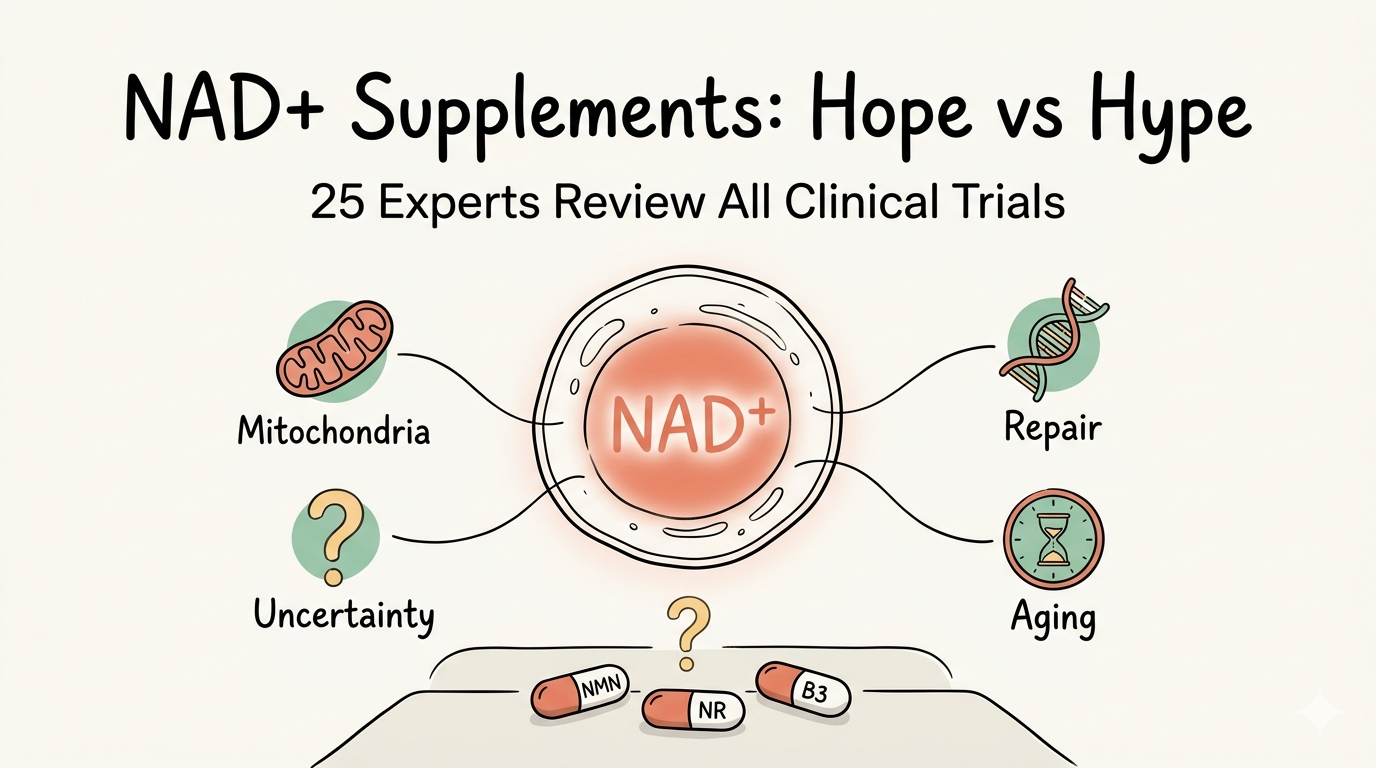
25 Experts Reviewed Every NAD+ Clinical Trial. Their Verdict? Six Words.
TL;DR: You've been taking NMN for six months. Did it actually do anything? A massive Nature Aging review finally has an answer.
That Bottle You've Been Taking for Six Months
Walk into any supplement store and you'll find them: NMN, NR, nicotinamide. The labels promise everything — reverse aging, boost energy, protect your brain.
You bought a bottle. Then another. Six months in, you feel... maybe a little sharper? Or maybe that's just the placebo talking. You're not sure. But you've spent real money, and you want a real answer: does any of this actually work?
In 2025, Nature Aging published one of the most comprehensive reviews ever conducted on this question. Over 25 international experts systematically evaluated every published human clinical trial on NAD+ supplementation (Zhang et al., 2025). Their conclusion?
Promising, but not magic.
What Is NAD+ and Why Should You Care?
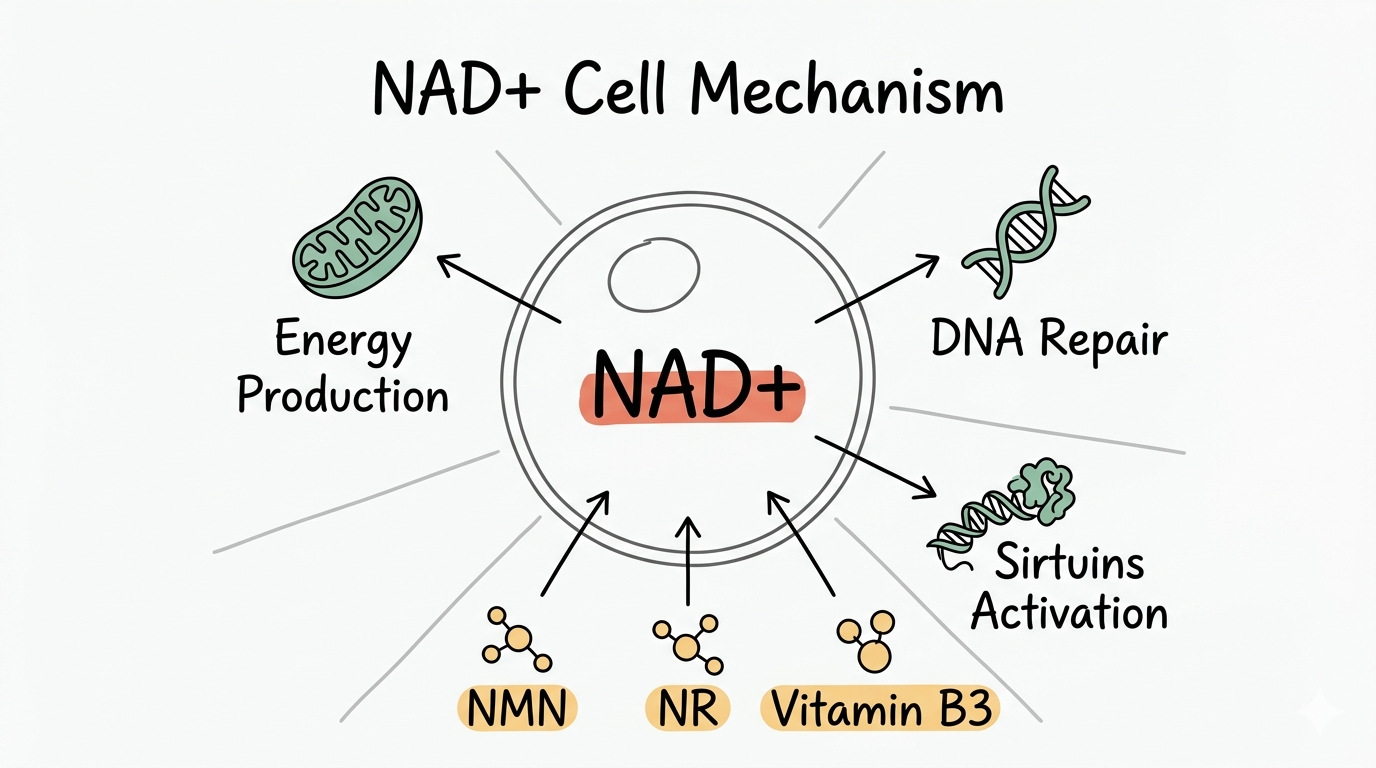
NAD+ (nicotinamide adenine dinucleotide) is your cells' universal battery adapter. Mitochondria need it to turn glucose into energy. Your DNA repair machinery needs it to fix damage. Sirtuins — the so-called "longevity genes" — can't function without it.
Here's the problem.
After 40, your NAD+ levels start to nosedive — potentially dropping to half of what they were in your twenties. That creeping fatigue, the brain fog, the sluggish metabolism? It's not just "getting old." Your cells are running an energy crisis.
So why not just top it off? The logic is elegant. But NAD+ molecules are too bulky to cross cell membranes when you swallow them. That's why scientists developed three smaller stand-ins: NMN, NR, and nicotinamide (plain old vitamin B3). They're compact enough to slip inside cells and get converted into NAD+.
Beautiful theory.
But your body isn't a test tube.
What the Clinical Trials Actually Found
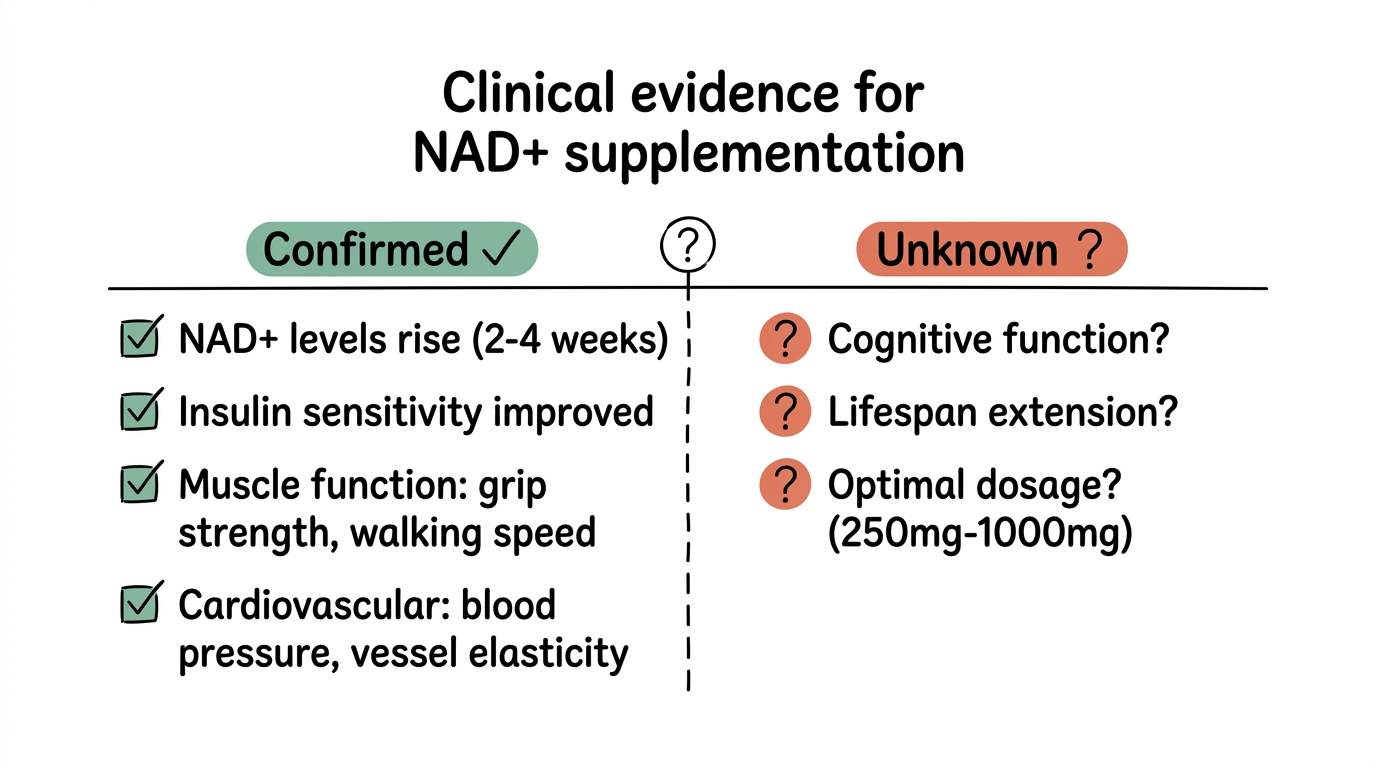
The review combed through every available human trial. The results split neatly into two piles.
What holds up: Oral NMN or NR reliably raises blood NAD+ levels, usually within 2–4 weeks. Some studies found improved insulin sensitivity — particularly encouraging for prediabetic participants. Older adults showed modest gains in grip strength and walking speed, with slightly faster recovery after exercise. A handful of trials reported lower blood pressure and improved vascular elasticity.
Sounds great? Don't pop the champagne yet.
What's still up in the air is a longer list. Cognitive function? Theoretically promising, but the clinical data is too thin to draw conclusions. Lifespan extension? Stunning in mice, zero evidence in humans — and that kind of study would take decades. The most awkward gap: dosage. Trials used anywhere from 250 mg to 1000 mg. Which is right? Nobody agrees.
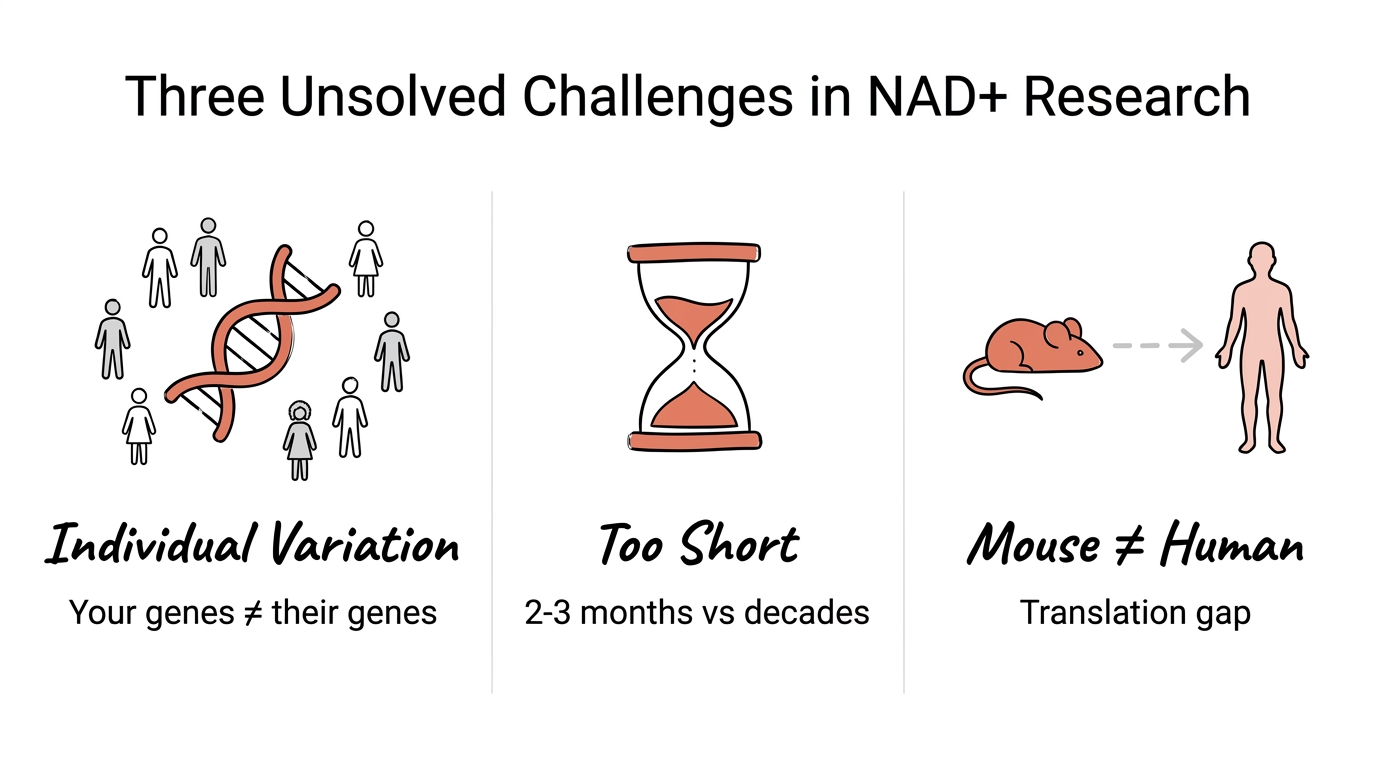
Three Problems No One Has Solved Yet
You are not your neighbor. Some people take NMN and feel noticeably sharper. Others feel absolutely nothing. Genetics, gut microbiome composition, metabolic capacity — all vary wildly between individuals. There is no one-size-fits-all protocol. Someday we may need genetic testing before prescribing NAD+ precursors. Personalized NAD+ therapy sounds futuristic, but the field is already heading that way.
The clock is too short. Most clinical trials tracked participants for 2–3 months. A few stretched to six. But anti-aging is a marathon. Is five years of supplementation safe? Ten? Nobody knows. Long-term data remains the biggest black hole in this field.
Mice are not people. Lab mice on NMN lived longer and healthier lives. But translating animal results to humans has always been medicine's hardest river to cross. History is littered with "mouse miracles" that crashed and burned in human trials. Will NAD+ be another one? Honestly, we don't know yet.
So What Should You Actually Do?
If you're considering NAD+ supplements, here's what the evidence supports:
Ask whether you need it at all. Young, eating well, exercising regularly? You probably don't. Over 40, noticeably fatigued, metabolism clearly slowing down? Worth a try.
Pick what has data behind it. NMN and NR have the most clinical research. Plain nicotinamide is cheaper but may be less effective.
Manage your expectations ruthlessly. This is not a fountain of youth. It won't make you look 25 overnight. It's an assist tool — meaningful only alongside a healthy lifestyle. Take it for 2–3 months, then honestly assess your energy, sleep, and physical performance. No improvement? It might not be for you. Stopping is not failure.
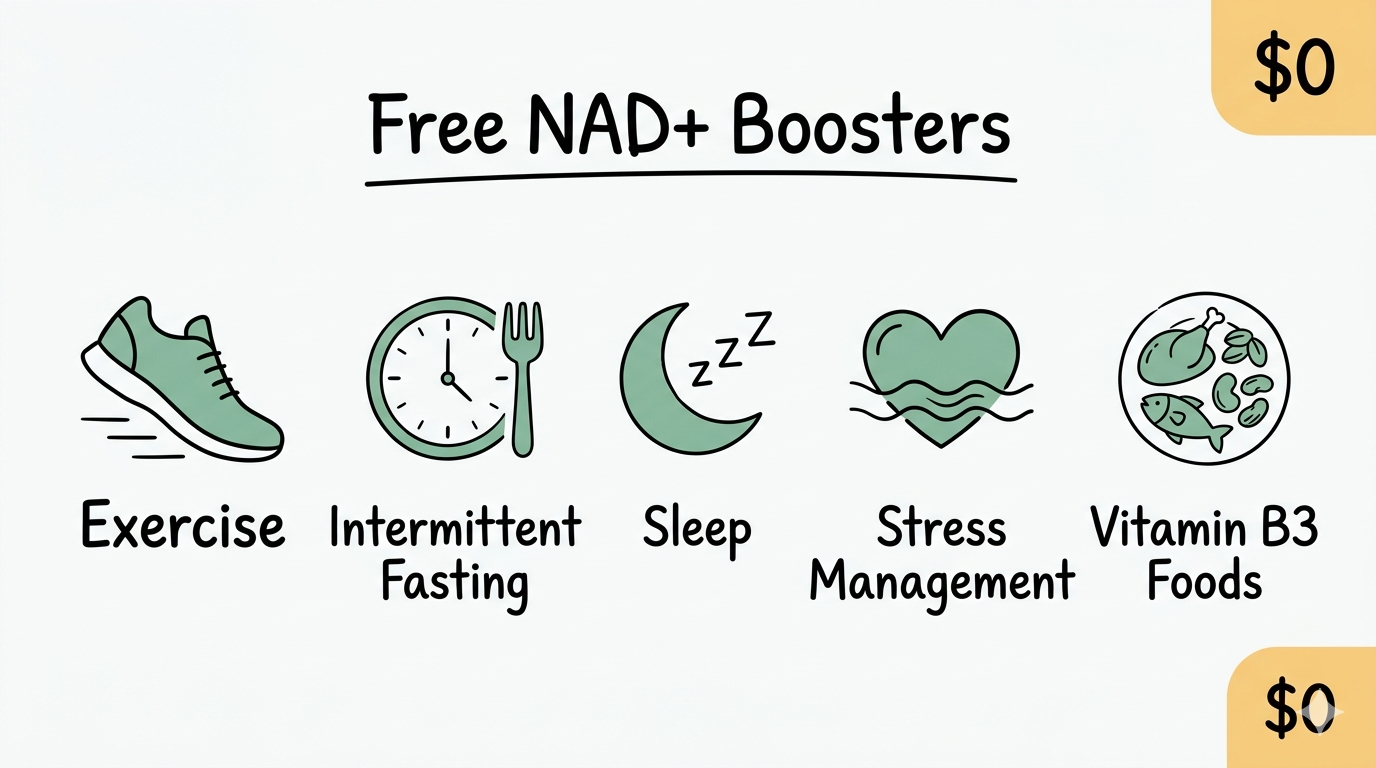
And here's the thing — you can raise NAD+ without spending a cent. Exercise is the most potent NAD+ booster we know of. Intermittent fasting activates NAD+ synthesis pathways. Quality sleep and stress management help too. Chicken, fish, nuts, and green vegetables are rich in vitamin B3. All free.
The Bottom Line
NAD+ supplements are not a scam. They're also not a miracle. The molecular biology is real, but the clinical evidence is still catching up. Science moves slower than marketing — and that's exactly how it should be.
If you choose to try — pick a reputable brand, use a reasonable dose, and track your results honestly.
But never forget: the best anti-aging strategy has always been regular exercise, balanced nutrition, and sufficient sleep.
Supplements are the icing. Not the cake.
Has anyone in your life tried NMN? How long have they been on it, and what did they notice? Drop a comment — I'd love to hear real experiences, not marketing copy.
📖 Further reading: Want the full evidence picture behind this discussion? A 2026 PRISMA systematic review pooled 113 studies — I break down, section by section, what it actually proved and what's still missing: Where the 2026 PRISMA Review Leaves the NAD⁺ Evidence.
Author: TheVoidWeaver | Updated: 2026-03-12 Source: Zhang et al., Nature Aging, 2025 DOI: 10.1038/s43587-025-00947-6