Why Do Some People Run Marathons at 70 While Others Need Dialysis at 50?
The answer isn't "good genes vs bad genes."
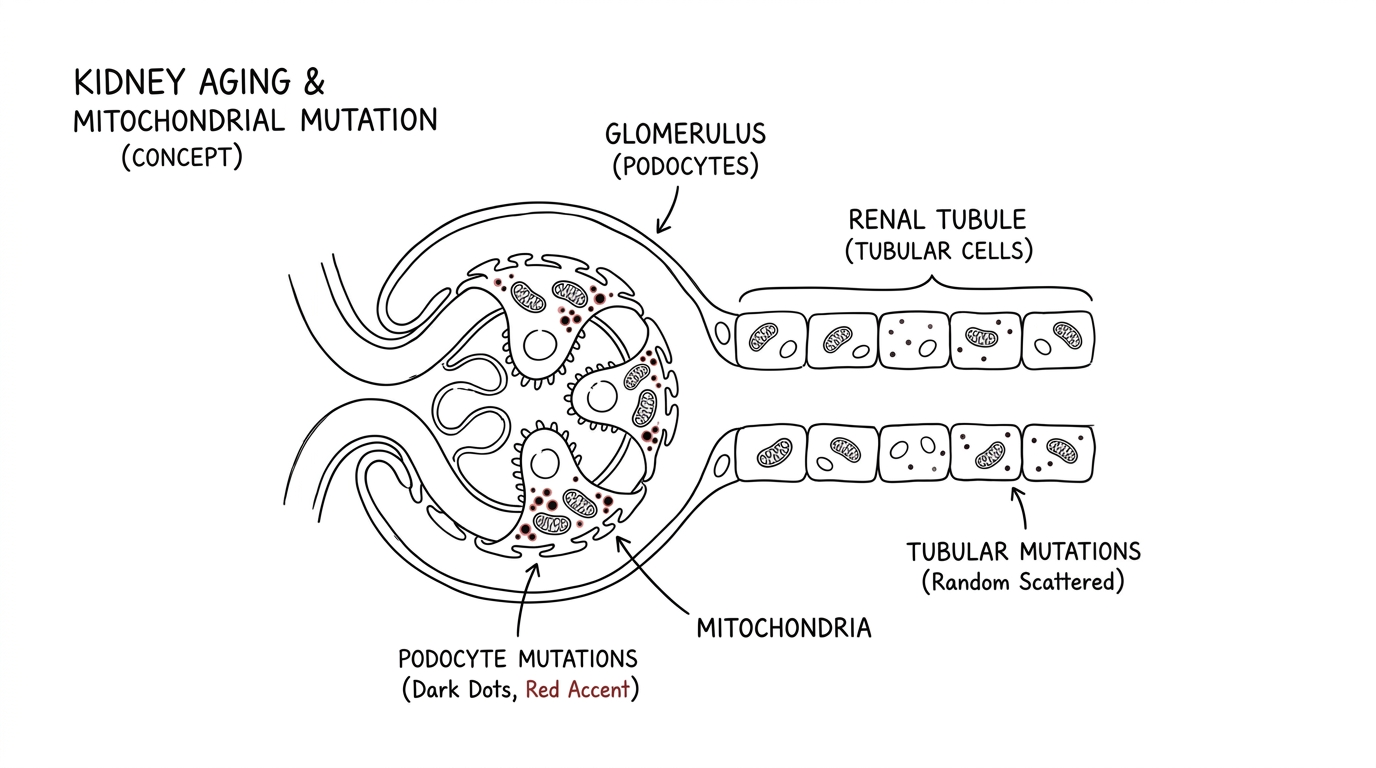
Your kidneys contain two critical cell types. Feed them the same mitochondrial mutation and they react in completely opposite ways. One embraces mutations, accumulating them relentlessly. The other rolls dice, distributing them randomly.
A 2025 study in Nature Aging used single-cell technology to dissect this phenomenon. The conclusion: aging isn't a simple clock. It's a survival game played at the cellular level.
Two Workers, Two Destinies
Picture your kidney as a factory.
Podocytes are precision filters — screening waste from blood. They cannot divide. Cannot be replaced. Lose one, it's gone forever.
Tubular epithelial cells are the logistics crew — packaging and transporting filtered waste. They divide and replenish. Break one, grow a new one.
Now the power system (mitochondria) develops a bug. You'd expect both workers to suffer equally.
They don't.
Researchers found:
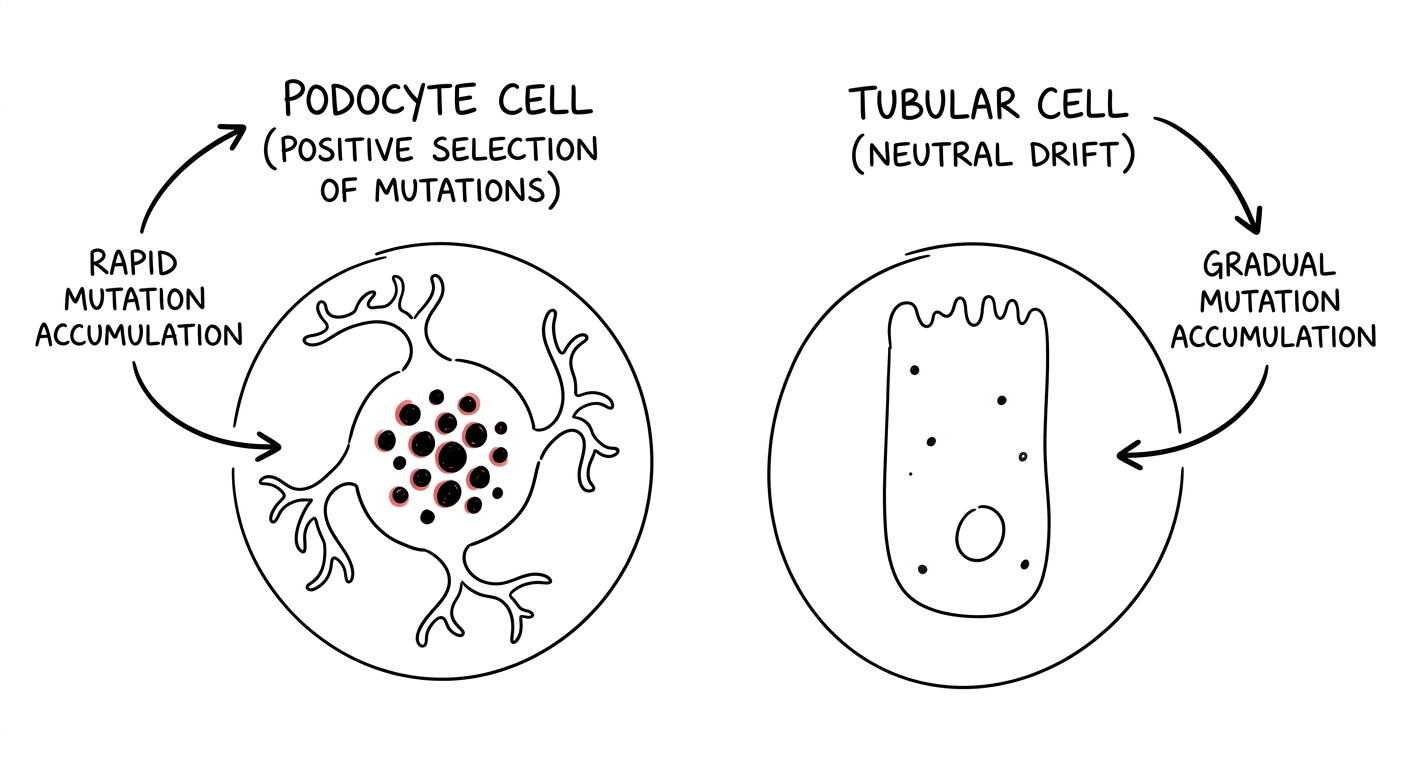
- Podocytes actively "select" mutant mitochondria, driving mutation levels higher over time — positive selection
- Tubular cells distribute mutations randomly, some high, some low — neutral drift
Why? Podocytes can't be replaced, so they must process every mutation — but ironically, this mechanism accelerates accumulation. Tubular cells dilute mutations through division.
The Numbers Are Staggering
Using gene editing to create mitochondrial tRNA mutations in mice, researchers tracked progression from youth to old age:
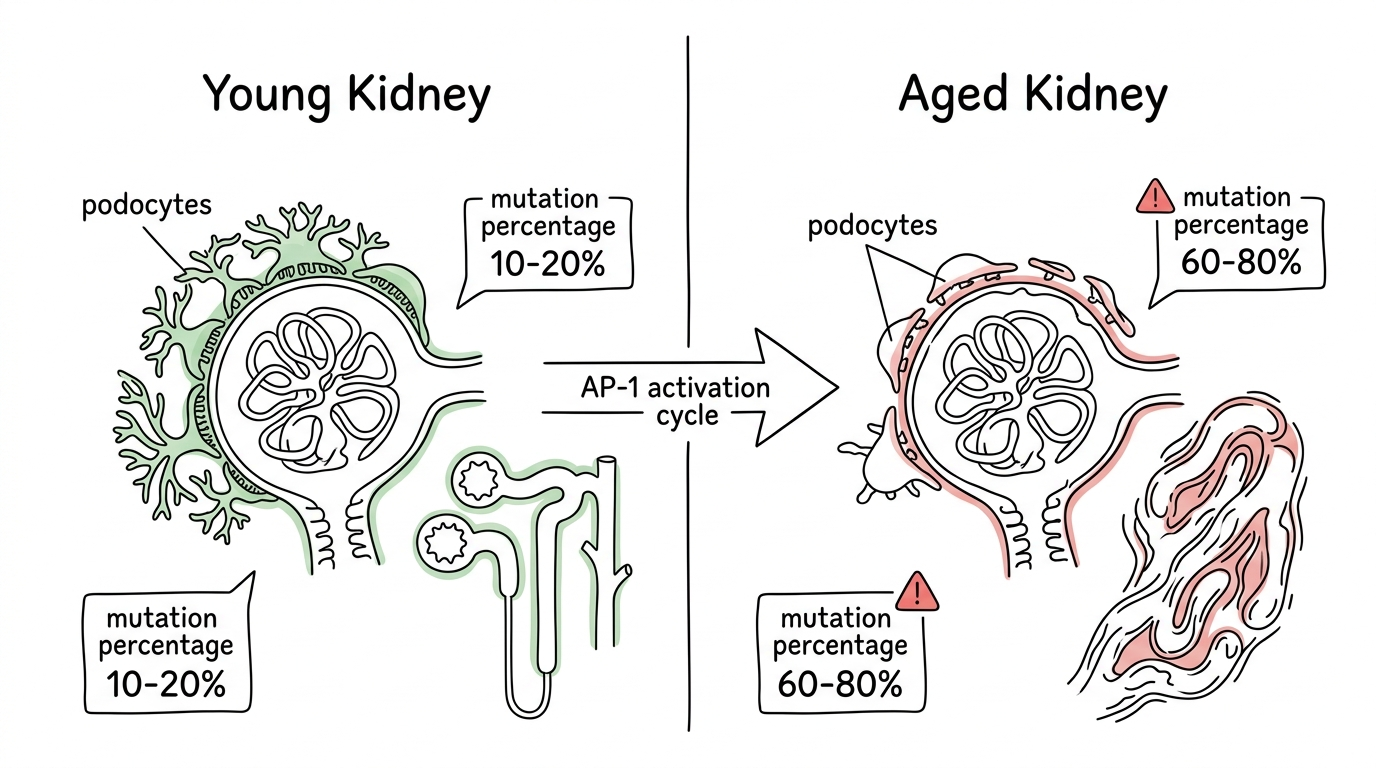
- 3 months (young): Low mutation levels, normal kidney function
- 6-12 months (middle-aged): Mutations accumulate, podocyte levels rise sharply
- 18-24 months (elderly): Mutation levels explode — podocytes reach 60-80%, tubular cells stay at 20-40%
Aged mice developed proteinuria and renal fibrosis. In the highest-mutation cells, AP-1 transcription factor activity surged — once this stress pathway activates, a vicious cycle forms: mutation accumulation → cellular stress → inflammation → kidney damage.
The technical breakthrough: mtscATAC-seq (mitochondrial single-cell chromatin accessibility sequencing) — analyzing mutation levels and gene expression changes cell by cell.
Clinical Implication: Kidneys May Be the Earliest Warning Station
This discovery overturns conventional wisdom. Previously, mitochondrial diseases were thought to hit muscles and nerves first. Now: kidney podocytes may be the earliest mutation accumulators — silently deteriorating before other organs show symptoms.
Future interventions:
- Urinary podocyte shedding detection: Early screening for mitochondrial mutation burden
- AP-1 pathway inhibitors: Breaking the mutation → inflammation cycle
- Enhanced mitophagy: Clearing mutant mitochondria before they accumulate
- Mitochondrial replacement therapy: The ultimate fix — swapping out damaged power plants
If a urine test could give you a "kidney mitochondrial health score," would you check it regularly?
Aging Isn't Fate — It's a System You Can Hack
The most fascinating thing about this study isn't that kidneys deteriorate. It's the revelation of aging heterogeneity.
Same mutation, different cellular decisions. Podocytes embrace. Tubules drift. Aging isn't a uniform countdown — it's a complex system of countless microscopic "choices" and "drifts."
Understand the rules, and you can hack the system. Not reversing aging — making it more controllable, more gentle.
Kidney function of a 50-year-old at age 80. Maybe not so far away.
References
- Zhang, L. et al. (2025). Nature Aging. DOI: 10.1038/s43587-025-00909-y
- Stewart, J.B. & Chinnery, P.F. (2015). Nature Reviews Genetics, 16, 530–542.
- Kauppila, T.E.S. et al. (2017). Cell Metabolism, 25, 57–71.