Your Brain Is Waiting for You to Move
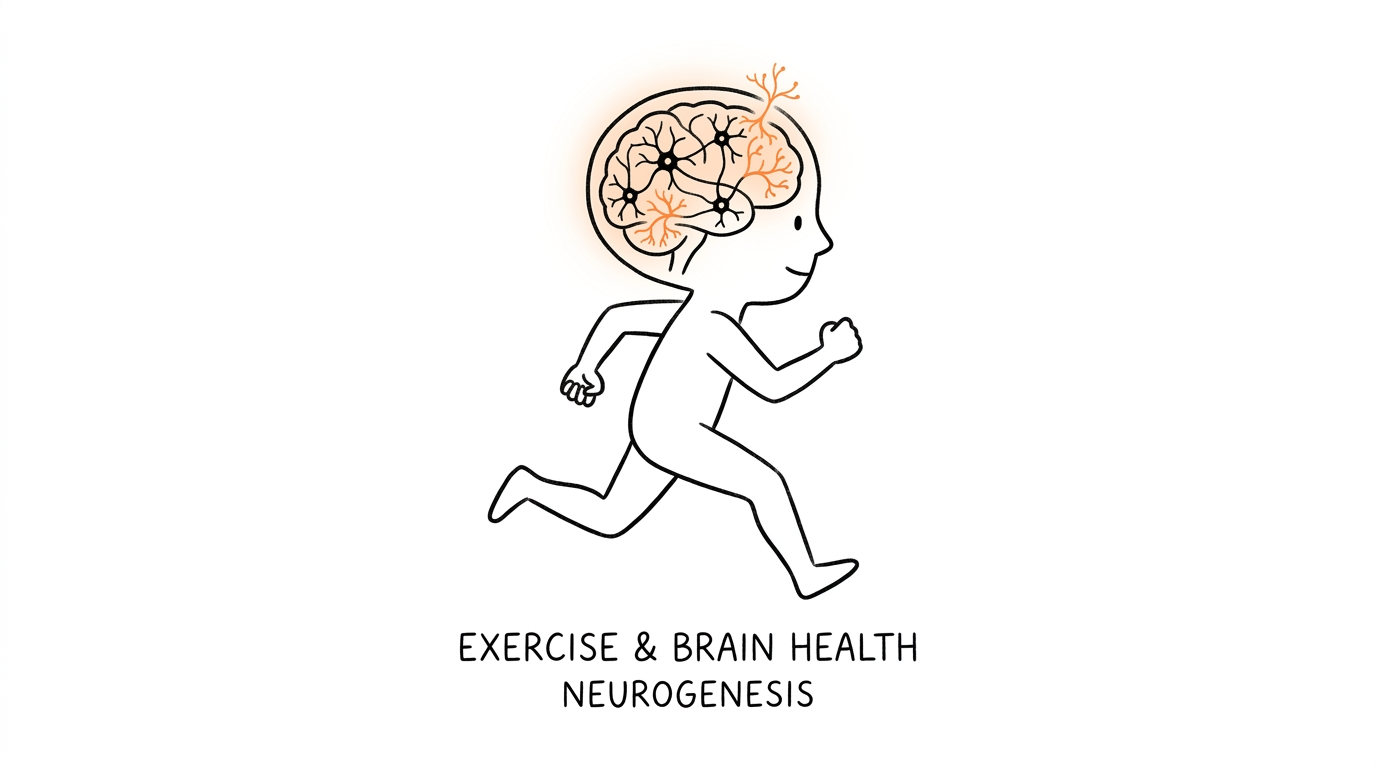
Every time you jog for thirty minutes, your hippocampus — the brain region handling memory — sprouts thousands of new neurons. Not a metaphor. Literally growing.
In 2025, a Norwegian team published a landmark review in The Lancet, synthesizing 177 papers. The conclusion was blunt: exercise protects the brain more powerfully than any known drug.
You've heard "exercise is good for you" a thousand times. But do you know what it actually does at the molecular level?
Your Brain Is a City That Needs Maintenance
Neurons are residents. Synapses are roads. Blood vessels are water pipes. Neurotransmitters are mail carriers. As you age, three problems emerge: roads crumble (synaptic loss), water supply drops (reduced cerebral blood flow), garbage piles up (inflammatory buildup).
Exercise dispatches a repair crew:
- Paving new roads: stimulating hippocampal neurogenesis
- Expanding pipelines: boosting cerebral blood flow by 30-40%
- Clearing waste: activating autophagy to consume senescent cells
Five Molecular Weapons
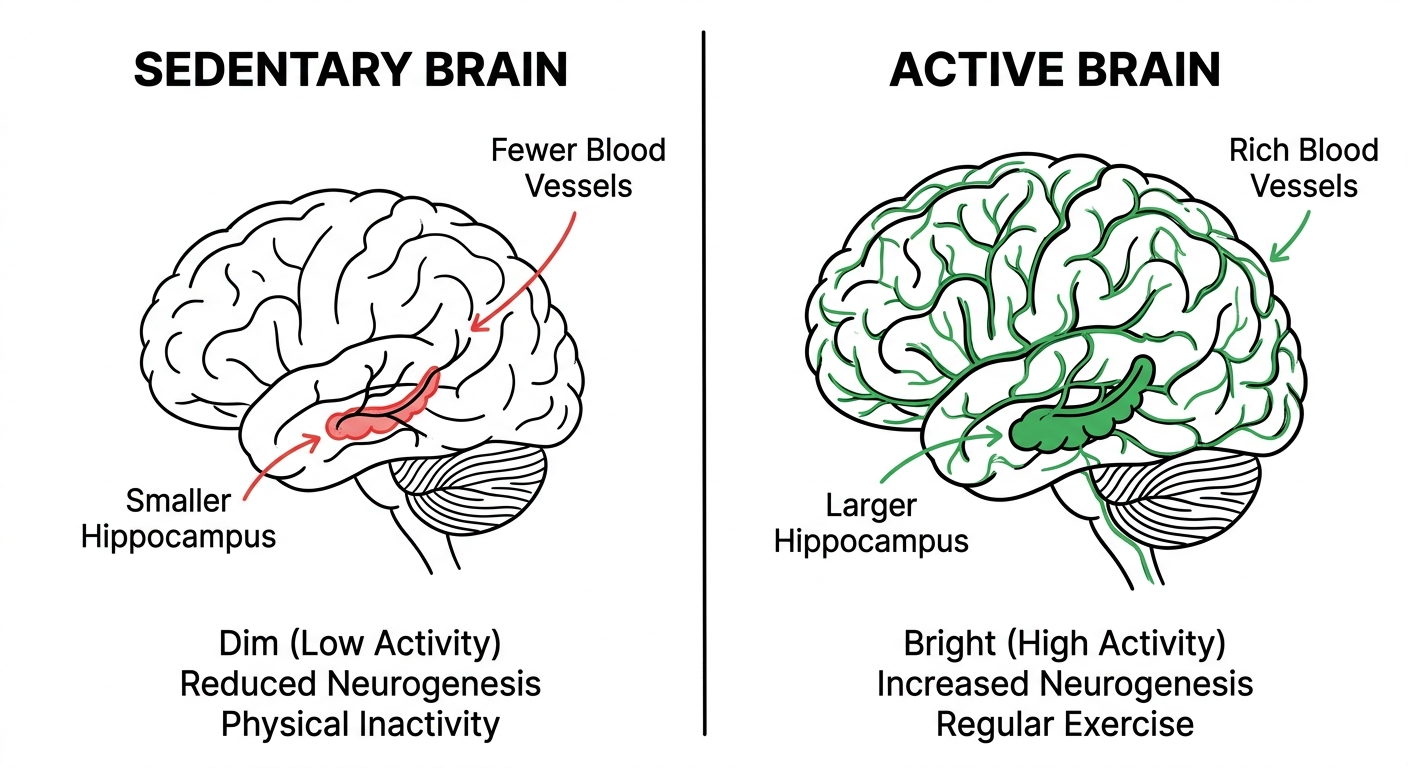
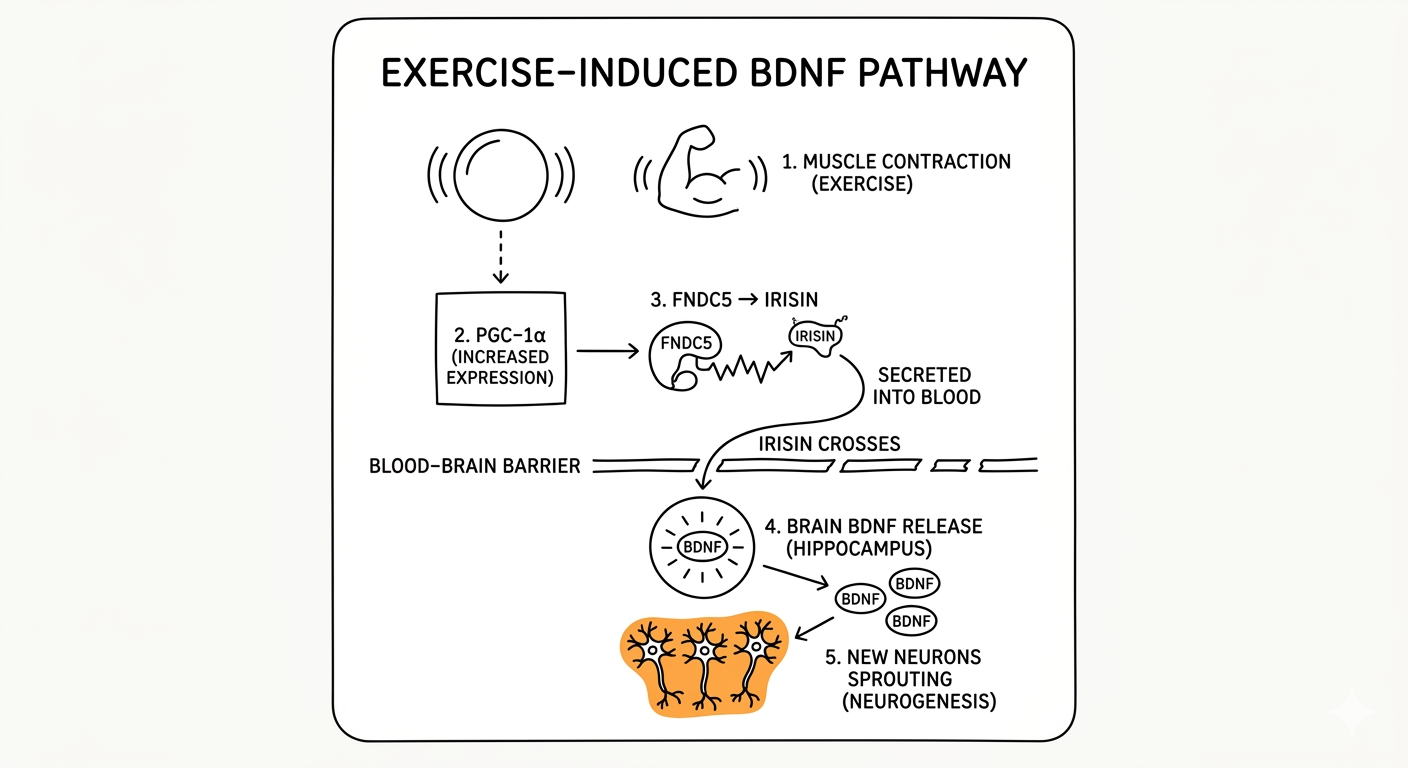
BDNF — the brain's growth hormone. Exercise triggers muscle PGC-1α → FNDC5/irisin → brain BDNF release. Six months of aerobic exercise increased hippocampal volume by 2% — reversing 1-2 years of brain atrophy (Erickson et al., 2011, PNAS).
VEGF — laying new network cables. Exercise stimulates vascular endothelial growth factor, promoting brain angiogenesis. Exercisers show 30% higher hippocampal blood flow than sedentary individuals (Pereira et al., 2007).
IL-6 — the good inflammatory signal. Exercise-derived IL-6 blocks TNF-α toxicity, promotes fat metabolism, and activates antioxidant enzymes.
Klotho — the longevity protein. Regular exercisers carrying the Klotho-VS variant showed 40% lower Alzheimer's risk (Belloy et al., 2020, JAMA Neurology).
Gut-brain axis. Exercise enriches gut microbiome diversity, increasing short-chain fatty acid producers with anti-inflammatory and neuroprotective effects.
Dose Matters

Don't just ask "do you exercise?" The real predictor of brain health is cardiorespiratory fitness (VO₂ max).
Tari et al. (2019, Lancet Public Health) tracked 30,000 people: every 1-MET increase in VO₂ max reduced dementia risk by 16% and all-cause mortality by 12%.
HIIT outperforms moderate-intensity exercise for neuroprotection — more BDNF, stronger angiogenesis, greater mitochondrial improvement. The Norwegian Generation 100 study (Stensvold, 2020, BMJ): twice-weekly HIIT (4×4 min at 85-95% max heart rate) delayed cognitive decline more effectively.
Minimum effective dose: 150 minutes moderate or 75 minutes vigorous per week. Best: combine aerobic + resistance training. Consistency beats intensity — zero exercise and once-weekly carry nearly identical dementia risk.
If you could pick one exercise to "invest in your brain," what would it be?
The Cheapest Brain Medicine — But You Have to Take It Daily
This Lancet review's message is simple: exercise isn't optional health advice. It's the strongest weapon against brain aging. No expensive drugs, no gene editing, no experimental therapy required.
Two to three hours per week. Elevated heart rate. Muscles contracting. Your brain automatically enters repair mode.
Next time you feel too lazy to go outside, remember: you're not just training your body. You're extending your cognitive lifespan.
Move. Your brain will thank you.
References
- Tari, A.R. et al. (2025). The Lancet. DOI: 10.1016/S0140-6736(25)00184-9
- Erickson, K.I. et al. (2011). PNAS, 108(7), 3017-3022.
- Tari, A.R. et al. (2019). Lancet Public Health, 4(11), e565-e574.
- Stensvold, D. et al. (2020). BMJ, 371, m3485.
- Belloy, M.E. et al. (2020). JAMA Neurology, 77(7), 849-862.