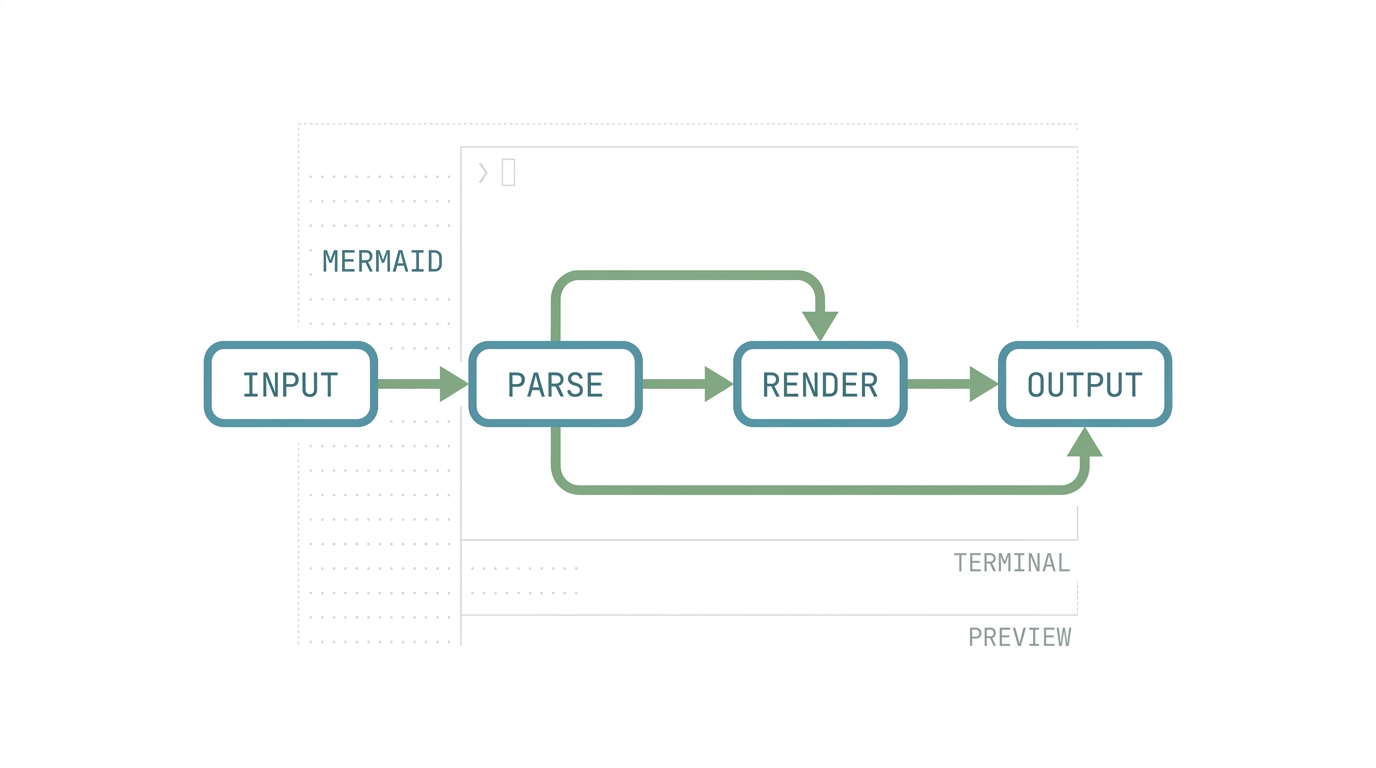
Best For
Termaid makes the most sense for people who already write Mermaid inside terminal-heavy workflows and mostly want a fast way to see whether a diagram is structurally correct before exporting anything polished.
How I Actually See It
What Termaid gets right is its scope. It does not try to be the final renderer for every Mermaid use case. It solves a smaller and more practical problem: you are in a shell, editing a .mmd file, and you want immediate feedback without pulling in a heavier browser-based pipeline.
That makes it much more useful than it first sounds. A lightweight preview tool inside the terminal changes how often you check your diagrams, because the feedback cost drops. You stop treating Mermaid validation as a separate step and start treating it as part of writing.
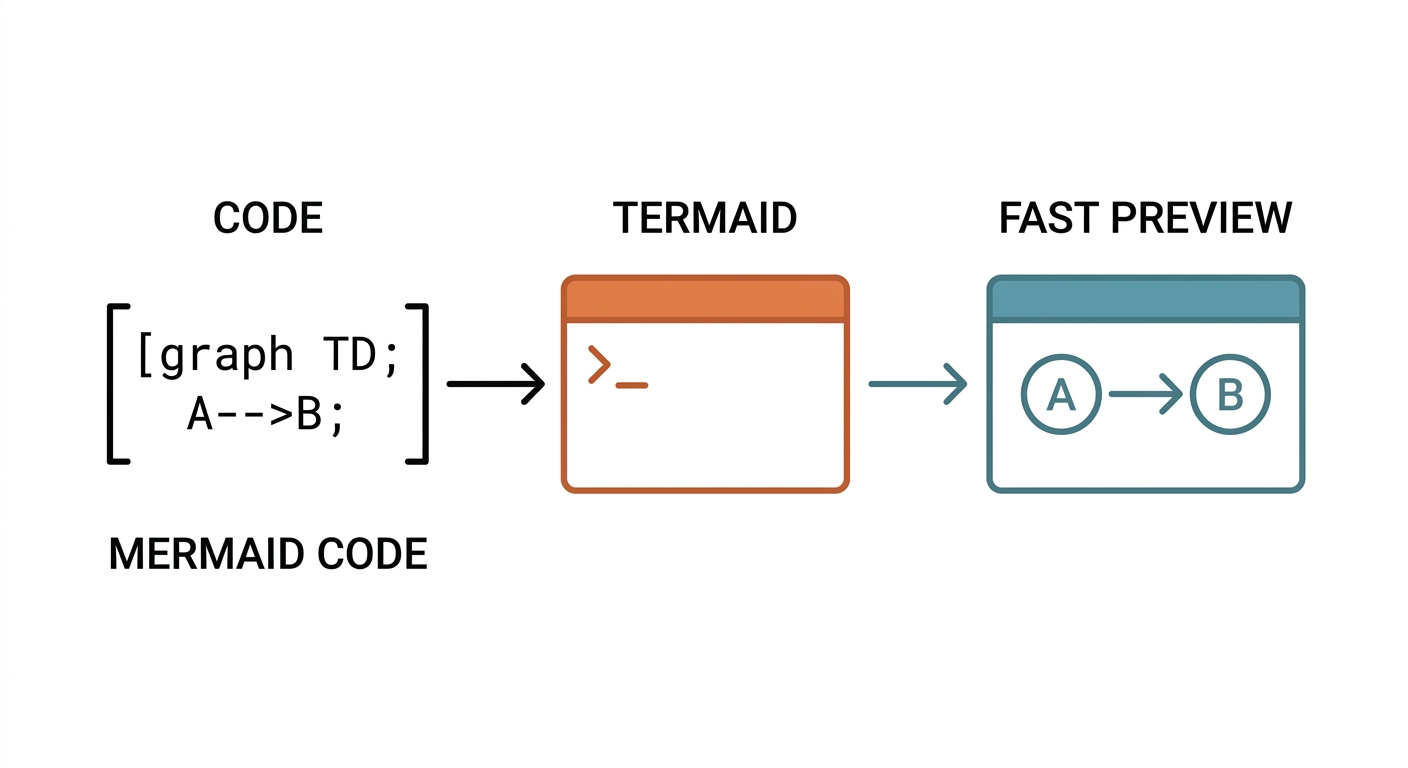
Where It Is Strong
- No Node.js or Chromium dependency chain
- Works naturally with pipes and stdin
- Covers a surprisingly wide set of common Mermaid diagram types
- Very low operational risk because it is fundamentally text parsing and terminal rendering
Where It Fails
- It is still alpha software
- Its custom parser is not a complete Mermaid implementation
- Complex or dense diagrams can lose readability fast
- It is not the right tool for polished SVG, PNG, or PDF output
Pricing, Difficulty, and Risk
Termaid is open-source and easy to try. The real tradeoff is not price but expectation management. If you want a quick terminal preview layer, it is excellent. If you want a production-grade renderer with broad spec coverage, this is the wrong category of tool.
Verdict
I would adopt Termaid as a companion utility for Mermaid-heavy terminal work. I would not present it as a replacement for mermaid-cli, and that distinction matters.