
Best For
This tool is best for people already running Claude Code in multi-agent workflows and feeling the pain of poor visibility. If you want a board, message flow, and review surface instead of juggling terminals, it is immediately interesting.
How I Actually Use It
I would treat this as a visualization and monitoring layer first, not a core system dependency. The most attractive parts are the Kanban board, agent mailbox, review UI, and session observability. That is useful. But it is still early software, so the right posture is controlled evaluation.
Where It Is Strong
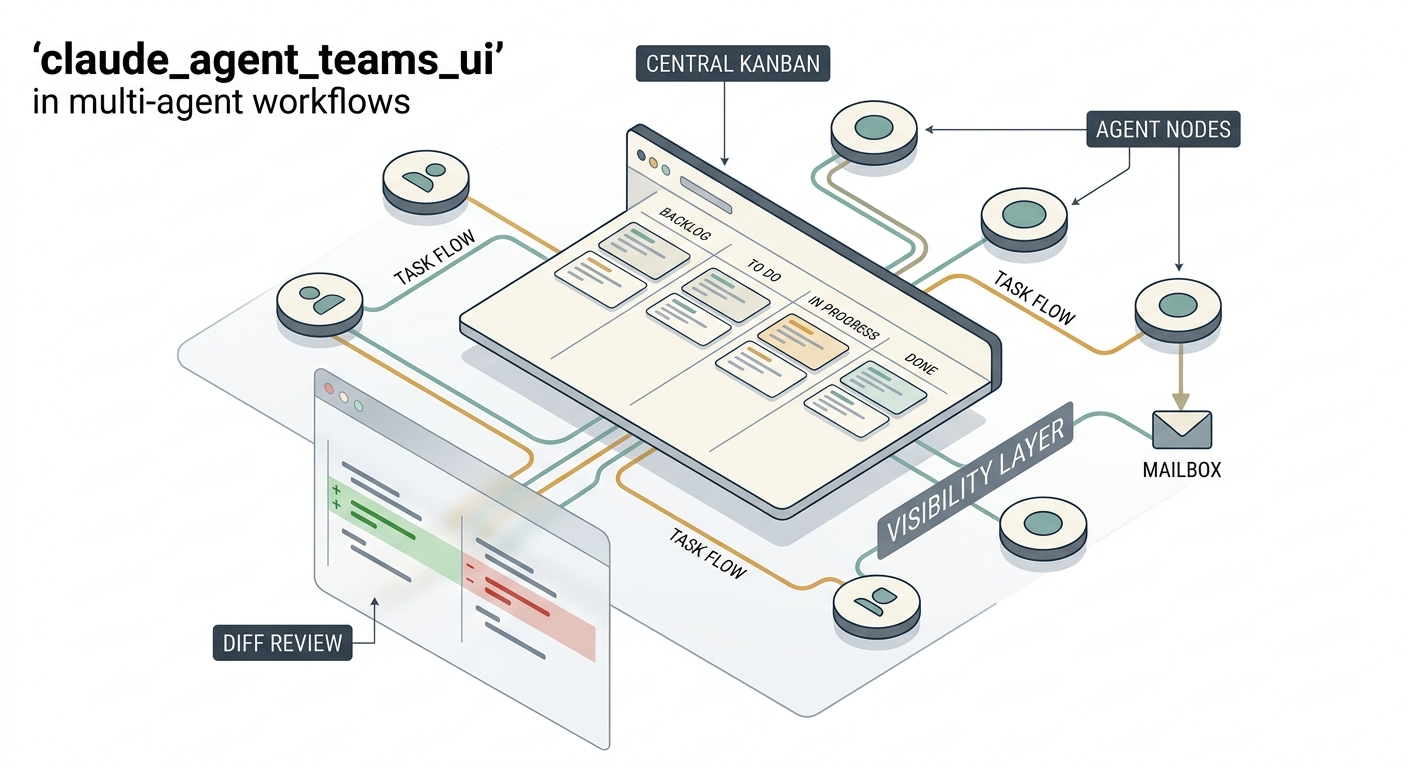
- It gives Claude Code multi-agent work a real desktop control surface
- Kanban, mailbox, and diff review are practical, not decorative
- It stays local rather than forcing another cloud dashboard
- It improves visibility for technical leads and heavy users
Where It Fails
- Stability issues like crashes and frozen UI matter
- It depends on a specific local Claude log model
- AGPL licensing can be a real adoption blocker
- If you are not already doing multi-agent work, this may add more complexity than value
Pricing, Difficulty, and Risk
It is open-source and conceptually easier than many orchestration frameworks. Difficulty is moderate because the UI is approachable, but the workflow assumptions are not trivial. The main risks are early-stage reliability and licensing boundaries.
Verdict
Watch it if you want better visibility into Claude Code agent teams. Do not treat it as a safe default until stability and adoption boundaries improve.