Best For
Carbonyl is best approached by curious engineers who want to study an ambitious terminal-browser experiment, not by teams looking for a current browser tool to integrate into active workflows.
How I Actually See It
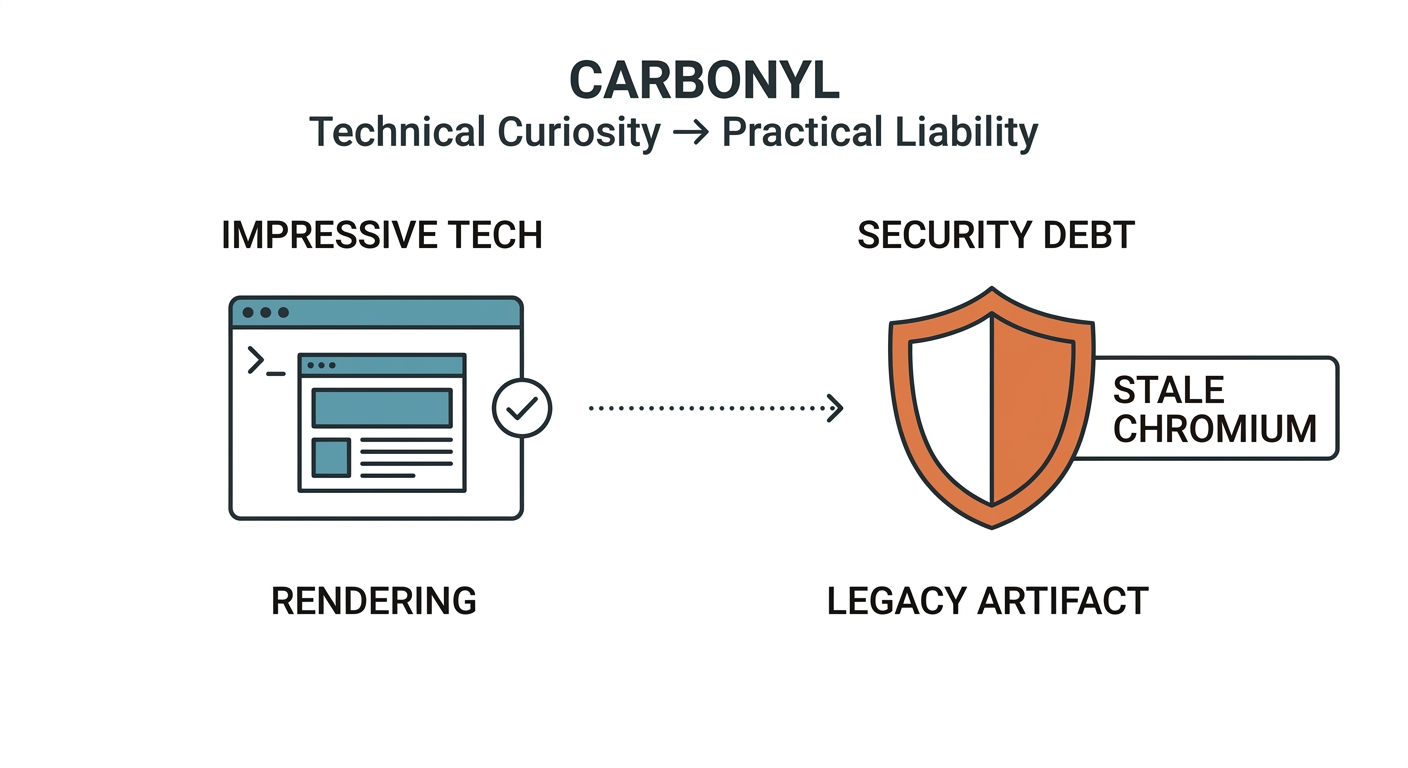
Carbonyl is impressive in a way that still feels fresh. Rendering a Chromium-based browsing experience inside a terminal is not a small trick. It is the kind of project that expands your sense of what the medium can do.
But admiration is not adoption. Once you move from technical curiosity to practical use, the weaknesses become decisive: the maintenance gap is long, the browser security debt is real, and there is no meaningful automation interface that would make it fit modern agent workflows.
Where It Is Strong
- A genuinely memorable technical concept
- Strong learning value for Rust-to-Chromium integration ideas
- Unique terminal-native browsing presentation
Where It Fails
- The project has been inactive for years
- Old Chromium baggage is a serious liability
- It lacks the automation surface modern workflows actually need
- It is much easier to admire than to responsibly deploy
Pricing, Difficulty, and Risk
It is open-source, but that does not make it low-risk. Browser-level software with a stale maintenance story is a bad candidate for real integration, especially when better-maintained tools already cover the practical jobs.
Verdict
Reject it as an adoption candidate. Keep it as a technical curiosity, a study reference, or an isolated demo if you really want to see the idea in motion.