TL;DR: Your carefully trained AI forgets you the instant you close the tab. The problem isn't the model — it's that the entire infrastructure was built wrong.
Every Morning, You Reintroduce Yourself to Your AI
You spend twenty minutes telling ChatGPT who you are, what tone you prefer, where you left off last time. It finally gets up to speed. You close the browser.
Next morning, it's gone. All of it.
The "Prompt Engineer" job title dropped 40% on LinkedIn between mid-2024 and early 2025. Gartner projects 70% of enterprises will automate prompt generation by year-end. The era of "write better prompts, get better results" lasted about eighteen months.
Three things killed it simultaneously. Models learned to "think step by step" on their own. Tasks evolved from single-shot Q&A into 47-step tool-calling marathons. And the job title got quietly absorbed into software engineering and product management.
The First Generation Died. The Second Is Taking Over.
What replaced it is called Context Engineering.
Prompt engineering cares about how you ask. Context engineering cares about what the model sees. Not just your message — the system instructions, memory files, conversation history, tool definitions, retrieved documents, user profiles. Every token that enters the context window, all of it.
Anthropic defines it as "strategies for curating and maintaining the optimal set of tokens during LLM inference." A prompt engineer re-teaches the AI who you are every session. A context engineer bakes your operating manual into the system permanently. One resets. The other compounds. By week eight, the latter's first drafts barely need editing.
Anthropic's prompt caching architecture inside Claude Code is a textbook example: static system prompt first, CLAUDE.md second, session context third, conversation messages last. That ordering maximizes prefix cache hits across API calls. They declare SEVs when cache hit rates drop.
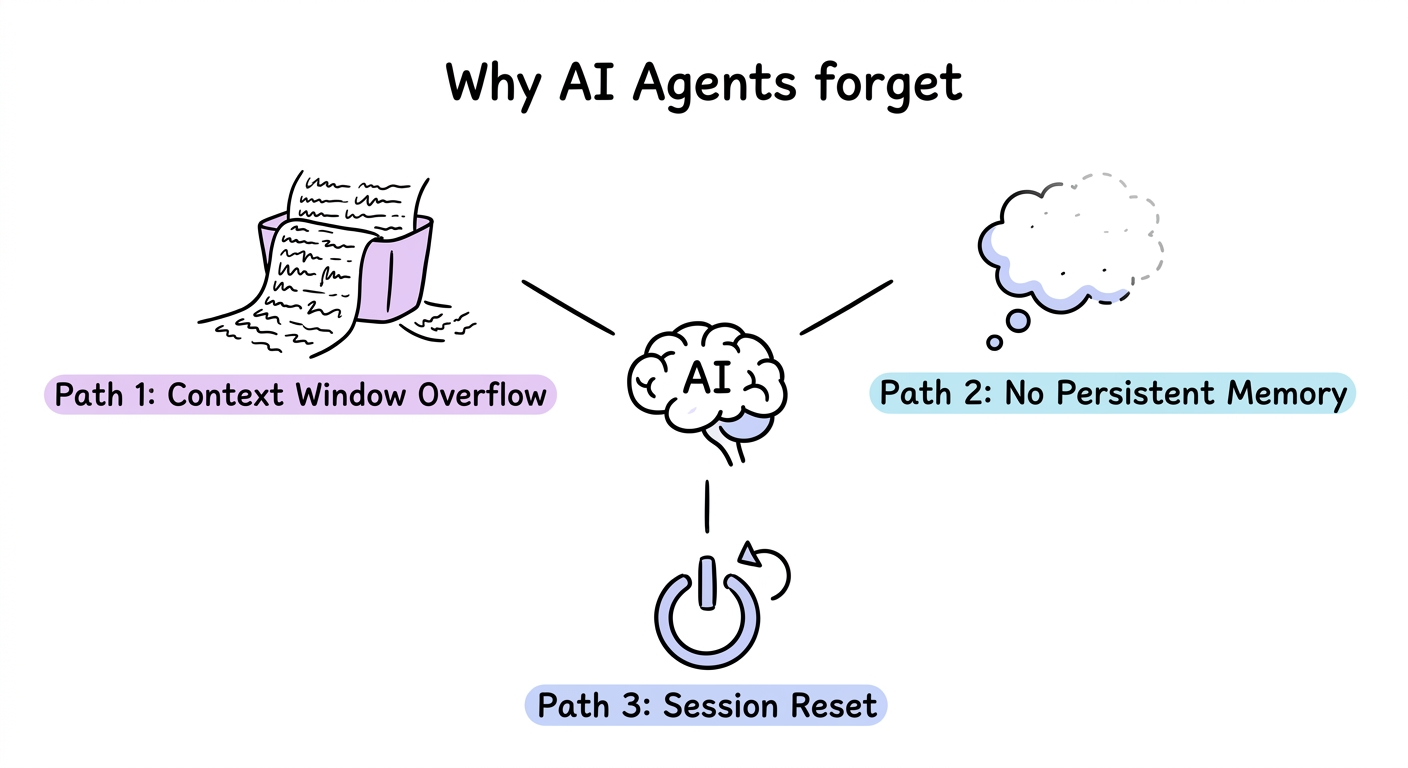
Caption: Prompting is a one-off verbal instruction. Without extra system design, those rules rarely survive into the next session.
But Context Engineering Has a Fatal Blind Spot
UC Berkeley studied 1,600 multi-agent execution traces and found failure rates between 41% and 87%. MIT's NANDA project found 95% of enterprise GenAI pilots delivered zero measurable P&L impact.
The root cause isn't dumb models. It's that nobody built the memory layer.
Your AI agent wrote the code, deployed the fix, closed the ticket. Three days later production explodes and you ask the most basic engineering question: "Why did it do that?"
It has nothing. The context window closed. The reasoning evaporated. You're debugging a ghost.
Traditional logs record what happened. Agents need traces — records of why something happened. The difference between seeing the explosion and seeing who lit the match.
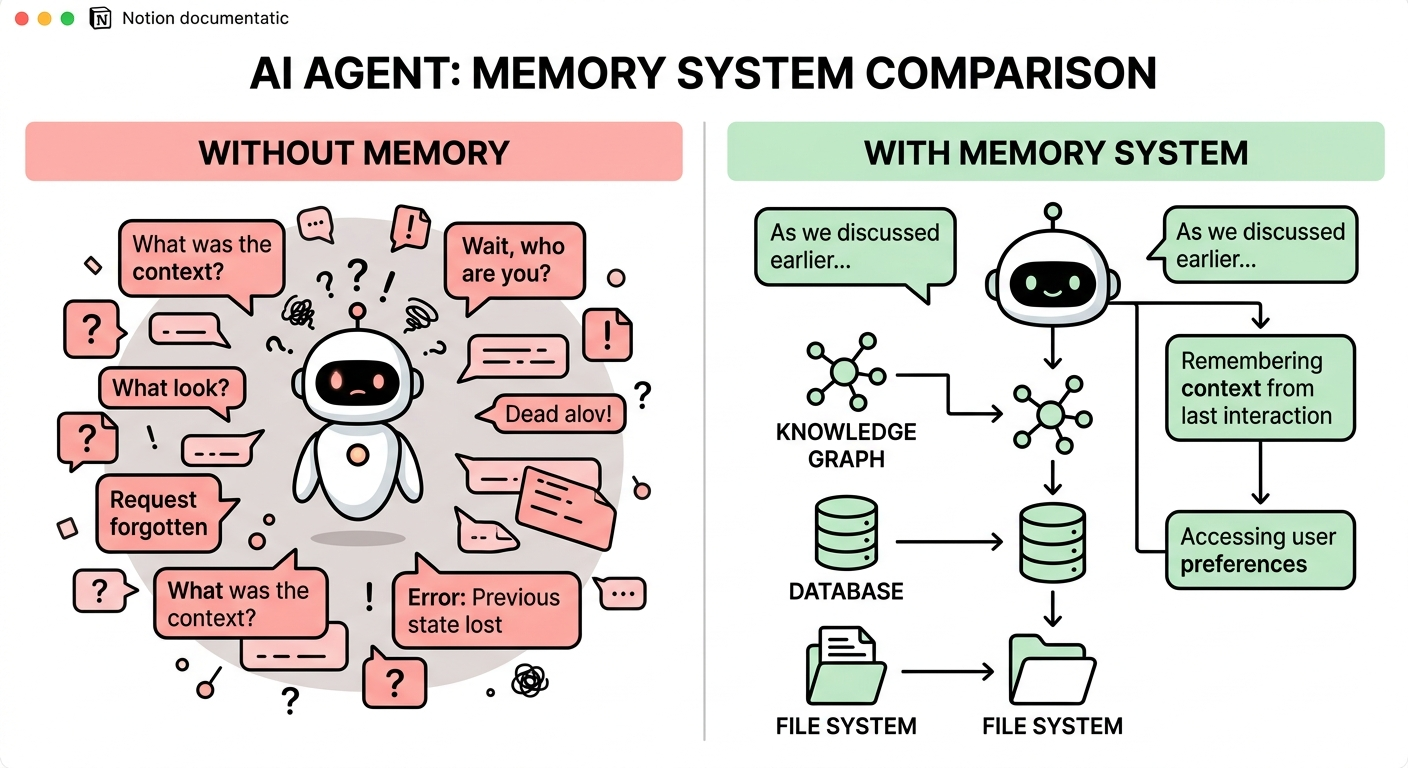
Caption: Recording only what happened is not enough. In multi-step agent work, you usually need the reasoning path too.
The Third Generation Is Already Here: Harness Engineering
OpenAI recently shared an internal experiment: 3 engineers, 5 months, one million lines of code, zero written by hand. But the most important sentence in the report wasn't about those numbers:
"Our most difficult challenges are concentrated in designing environments, feedback loops, and control systems."
Not smarter models. Better environments.
Anyone who's done microservices gets it immediately. Your individual services can be beautiful, but without service discovery, circuit breakers, and distributed tracing, the whole system collapses.
Harness Engineering is the AI agent version of that lesson. It doesn't care how clever your prompt is or how complete your context is. It cares about: What environment does the agent run in? How are sandbox permissions configured? What happens on failure? Where are reasoning traces stored? How does the feedback loop close?
Three generations in one sentence each:
- Prompt Engineering: Ask the right question.
- Context Engineering: Feed the right data.
- Harness Engineering: Build the right environment.
Anthropic's own tool design confirms this trajectory. Their AskUserQuestion tool took three iterations to get right. TodoWrite became a constraint as models improved, replaced by a Task system supporting cross-agent coordination. Search evolved from RAG vector databases to agents grepping files and recursively exploring Skills directories.
The environment sets the agent's ceiling. Not the model.
What You Can Do Right Now
If you're using AI for anything beyond single-shot Q&A, here are three immediate changes:
Write down who you are in a file instead of saying it every time. An about-me.md plus a working-rules.md lets the AI know you from boot. That's the minimum viable Context Engineering.
Let your agent use the file system. Don't cram everything into the context window. Let it write intermediate results to files and search them later. This is how agents get "multiple passes" instead of "one guess."
Start recording decision traces, not just outcomes. Every time an agent completes something, ask it "why this path?" and save the answer. That's the first step of Harness Engineering — you're building the flight recorder.
The prompt era is over. The context era is maturing. And the environment — the operating system wrapped around your agent — is the real battleground for the next decade.