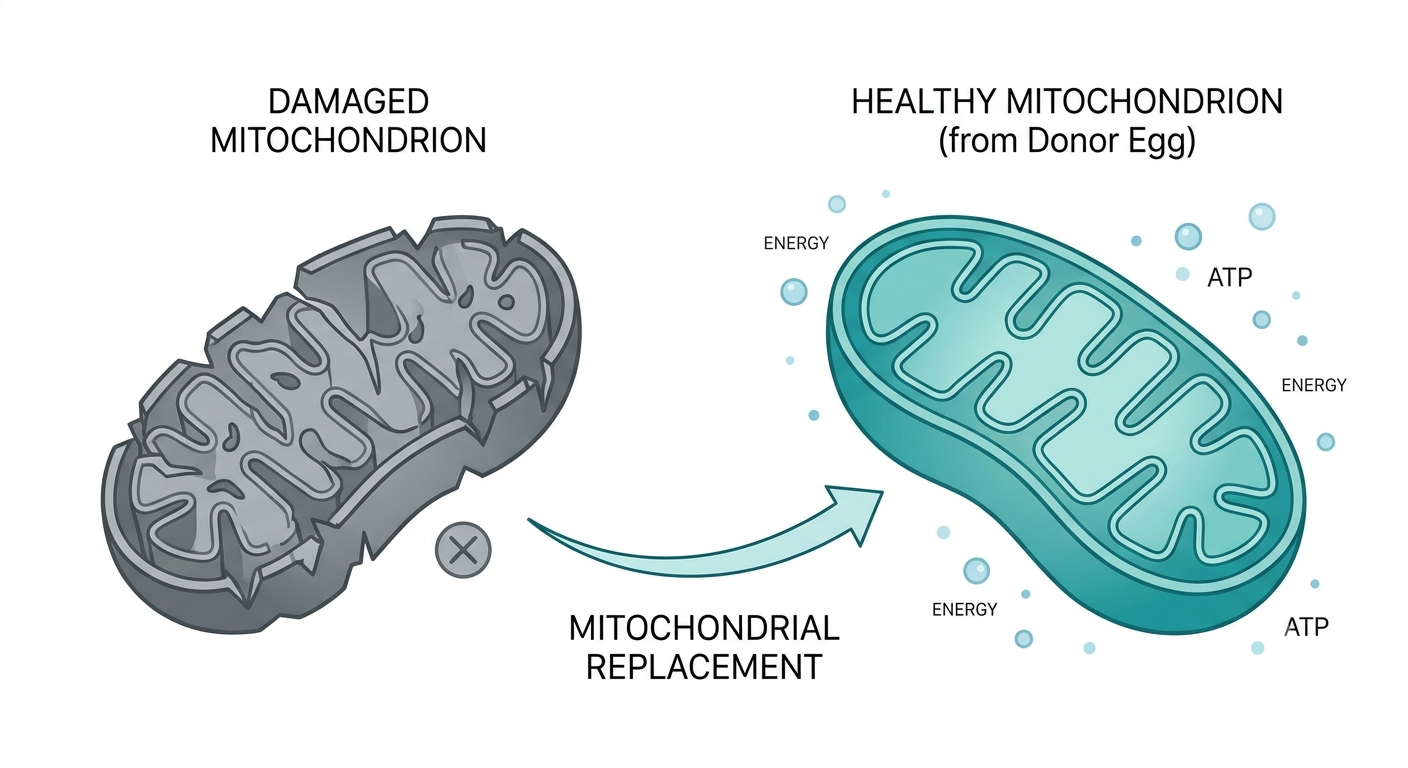
TL;DR: For fifty years, anti-aging science bet on "slowing the damage." A new generation of researchers is asking a different question: if the parts are broken, why not just replace them?
A Half-Century in the Wrong Direction
A vitamin E capsule, a blueberry smoothie, an overpriced bottle of NMN. For the past five decades, the dominant anti-aging narrative could be distilled into a single verb: supplement. Supplement antioxidants, supplement NAD+ precursors, supplement anything that might slow the decline.
The starting point was 1972. American chemist Denham Harman proposed that mitochondria are the body's biological clock. The electron transport chain generates ATP while leaking reactive oxygen species (ROS); ROS attacks mitochondrial DNA (mtDNA), accumulating mutations that ultimately drag down the entire cellular power plant (Harman, 1972).
The logic was seductively clean: ROS damages mtDNA, mitochondria fail, cells run out of energy, organs age. If oxidative damage is the root cause, antioxidants are the cure.
Global laboratories spent decades testing this hypothesis. The results were largely disappointing. Large-scale vitamin E trials failed to reduce cardiovascular mortality. Beta-carotene actually increased lung cancer risk in smokers. Even the more recent NAD+ precursors (NMN, NR) have produced clinical results far less impressive than their animal model data. By 2013, when Lopez-Otin and colleagues published the landmark "Hallmarks of Aging" paper in Cell, listing nine hallmarks with mitochondrial dysfunction as just one among many, the free radical theory's central position began to erode (Lopez-Otin et al., 2013).
What went wrong? The proportions were off.
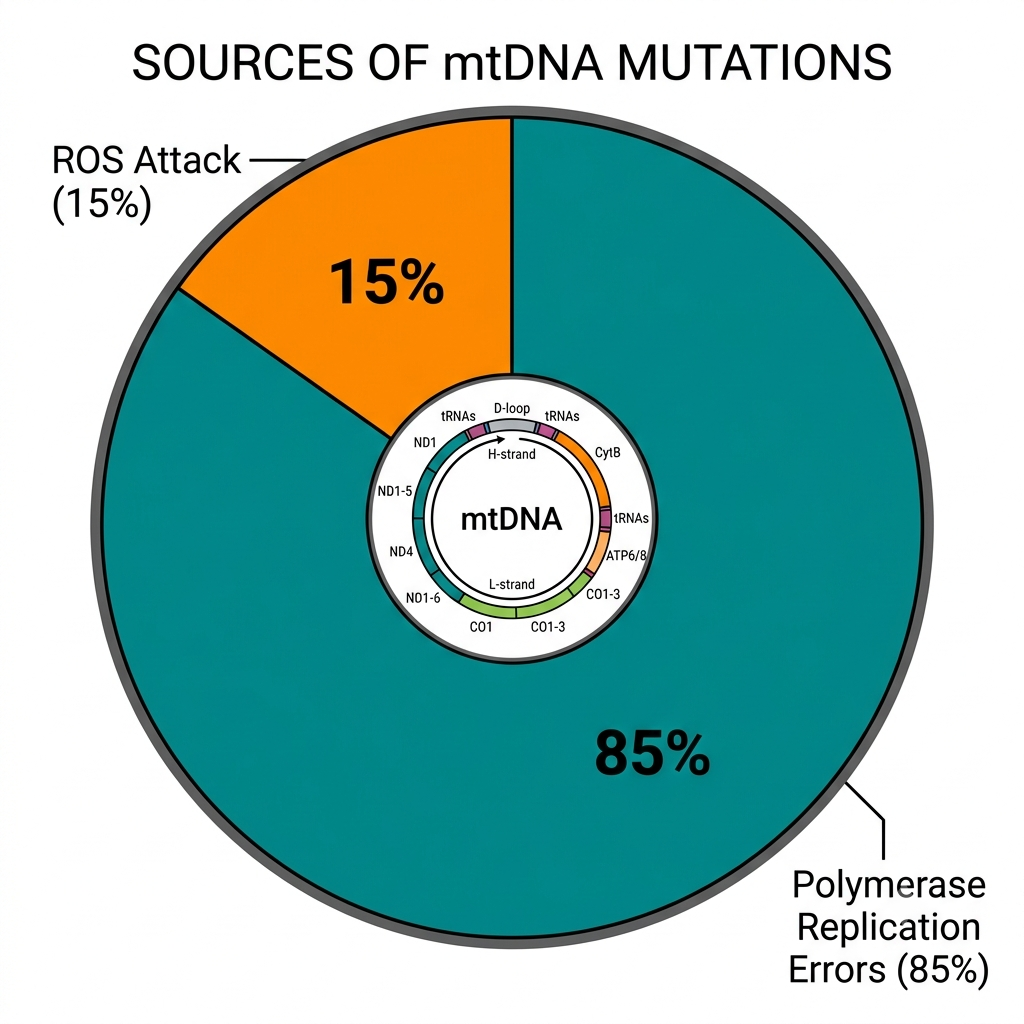 Sources of mtDNA damage: approximately 85% from polymerase replication errors, only about 15% from ROS attack.
85% Is Not Free Radicals: A Physicist Flipped the Math
In 2026, 91-year-old John G. Cramer, professor emeritus of physics at the University of Washington, published a book with a title as blunt as a lab manual: How to Live Much Longer. Cramer spent sixty years at Brookhaven and CERN smashing gold nuclei and reconstructing the first microsecond after the Big Bang. When he turned the same systems thinking toward aging biology, listing nine or twelve hallmarks wasn't enough.
A physicist wants an equation.
He found his answer in the mitochondrial genome: a circular DNA of just 16,569 base pairs encoding 13 proteins, all so hydrophobic they must be synthesized on site rather than shipped from the nucleus. Once this DNA is damaged, the cell's energy-producing capacity declines in tandem.
The Cellular Bioenergetic Crisis (CBC) theory, proposed by Cramer and Mitrix Bio CEO Tom Benson, argues that Harman had the proportions reversed. Roughly 85% of mtDNA damage comes from polymerase errors during replication; only about 15% comes from ROS attack.
This is why decades of antioxidant trials achieved so little. You cannot fix a broken photocopier by soaking up spilled ink. Antioxidants address, at most, 15% of the problem.
Worse, the damage isn't linear. Cramer's model shows that before age 65, mtDNA damage doubles roughly every 12 years. After 65, the doubling time drops to 3-4 years. By the time most people start worrying about aging, the engine is already accelerating toward failure.
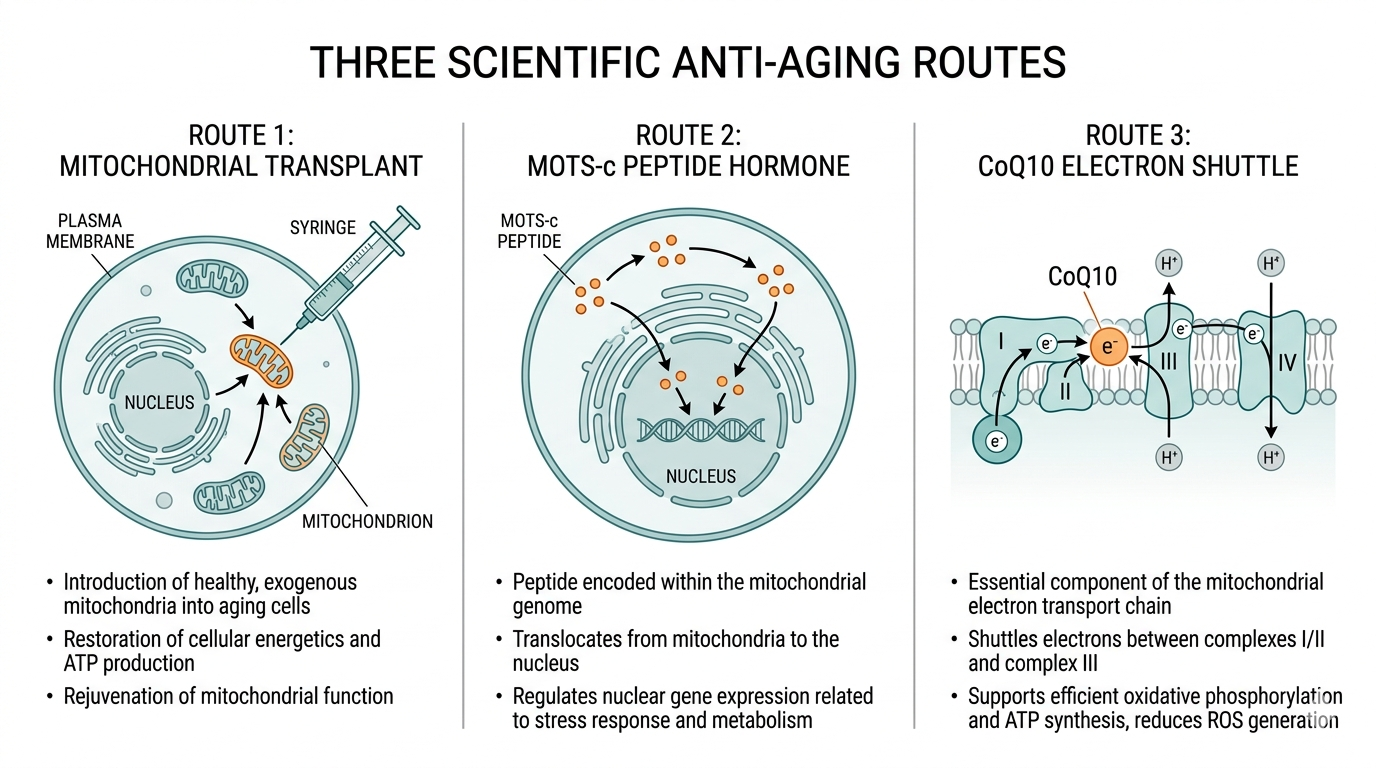 Three new routes in aging intervention: mitochondrial transplantation, MOTS-c peptide hormone, and CoQ10's electron transport chain role.
Three New Routes: From Supplementing to Replacing
Route One: Transplanting Fresh Mitochondria
This sounds like science fiction, but its clinical origins are surprisingly grounded. James McCully's team at Harvard Medical School and Boston Children's Hospital pioneered autologous mitochondrial transplantation in infants with congenital heart disease. They harvested healthy mitochondria from the infant's own muscle tissue and injected them into ischemia-damaged cardiac tissue. Results across their 2017-2021 reports showed consistently positive trends (Emani & McCully, 2017; Doulamis & McCully, 2021).
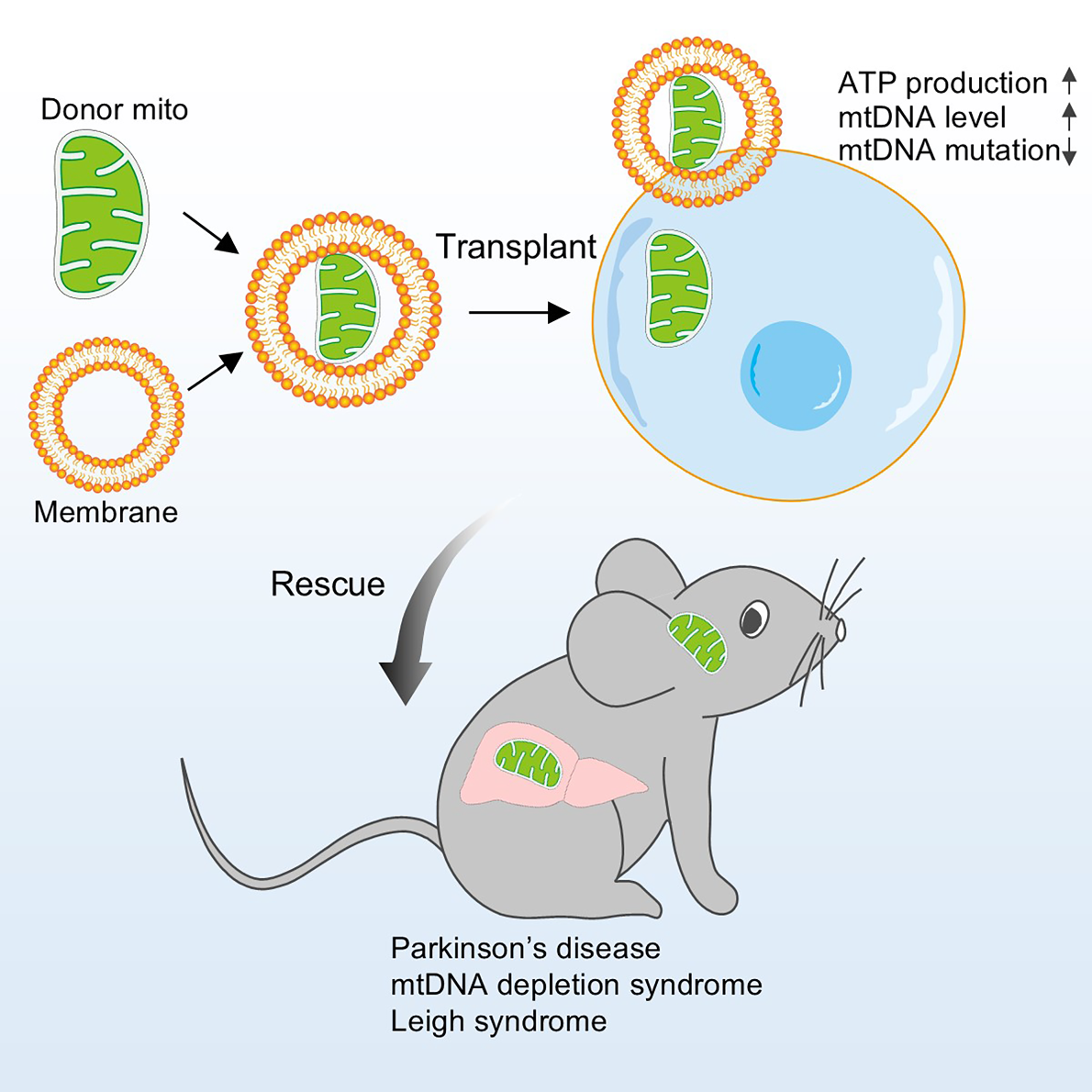 Adapted from Du et al. (2026), Cell. Encapsulated mitochondrial transplantation: donor mitochondria wrapped in lipid membranes are transplanted into damaged cells, restoring ATP production and mtDNA integrity.
Cramer pushed further. Mitrix Bio's Mitlet technology uses liposomes derived from young platelets to encapsulate mitochondria, with each Mitlet carrying approximately eight intact mitochondria. These can be mass-produced in bioreactors and theoretically administered via intravenous infusion. Nature Metabolism published a consensus nomenclature for mitochondrial transfer in 2024, signaling the field's move toward standardization.
Cramer himself flew to Texas, receiving four Mitlet infusions under the state's "Right to Try" regulatory framework. He acknowledges this is an n=1, uncontrolled experiment where placebo effects cannot be excluded. But he also notes that he is the oldest human on Earth to have undergone mitochondrial transplantation, with a stated goal of reaching 129.
Route Two: MOTS-c, a Hormone Encoded by Mitochondria Themselves
Mitochondria are more than power plants. Researchers have discovered that mtDNA harbors short sequences encoding small peptides with hormonal functions. MOTS-c, encoded by the mitochondrial 12S rRNA gene region, is just 16 amino acids long.
During exercise, skeletal muscle MOTS-c expression can increase roughly 11.9-fold, with circulating levels rising in parallel. It promotes muscle glucose uptake via AMPK activation and, critically, can enter the nucleus to alter nuclear gene expression, suppressing inflammation and enhancing metabolic flexibility.
In animal studies, 100% of MOTS-c-treated subjects reached maximum treadmill speed, compared to 16.6% in controls, along with fat loss while preserving muscle mass.
Route Three: CoQ10 Is Not an Antioxidant — It's the Electron Transport Chain's Sole Courier
Most people know CoQ10 for its "antioxidant" properties. But its truly irreplaceable role is as the only mobile electron carrier on the inner mitochondrial membrane.
The electron transport chain has four protein complexes fixed in the inner membrane. Complex I receives electrons from NADH, Complex II from FADH2, but neither can pass electrons directly to Complex III. CoQ10 physically shuttles through the lipid bilayer to bridge the gap. Without CoQ10, the chain breaks between Complex I/II and Complex III, the proton gradient collapses, and ATP production halts.
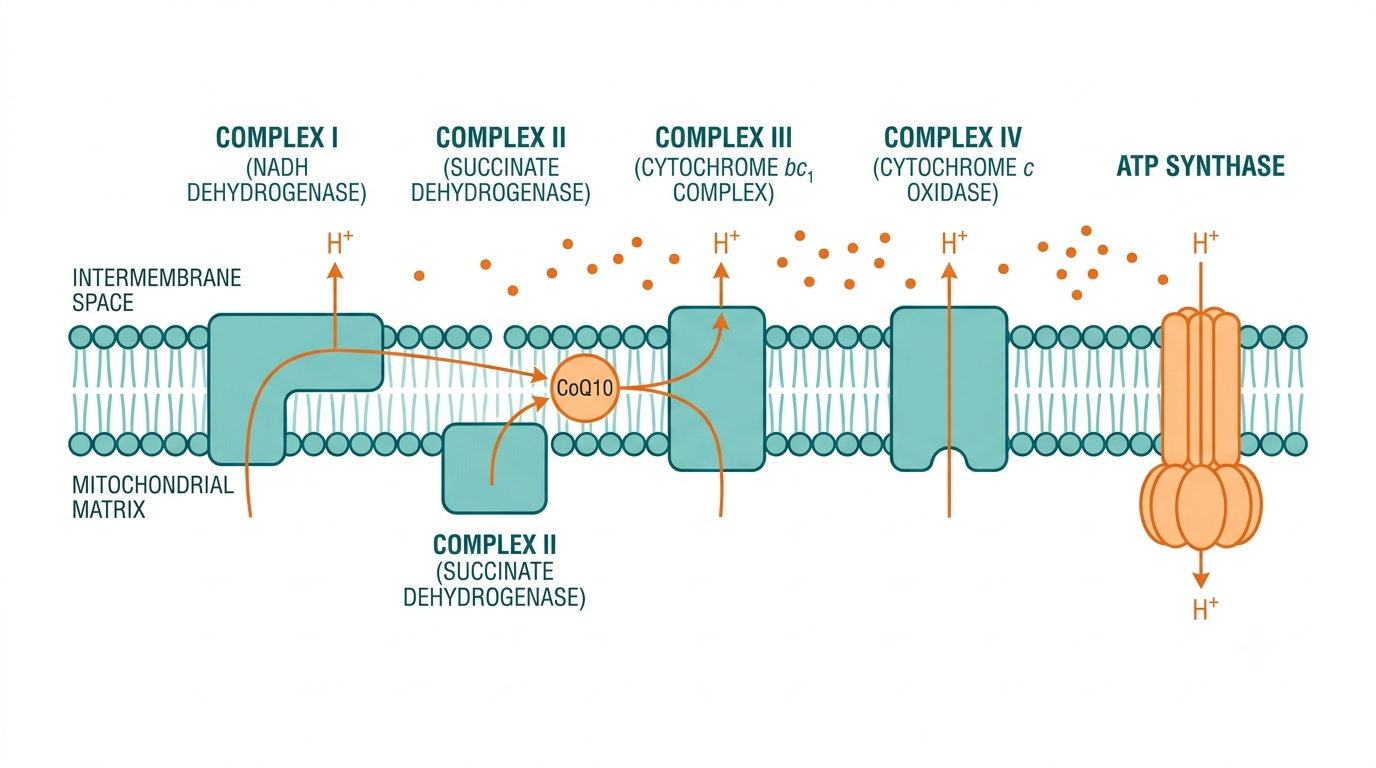 CoQ10 as the sole mobile electron carrier in the electron transport chain: shuttling between Complex I/II and Complex III.
The problem: CoQ10 biosynthesis shares the mevalonate pathway with cholesterol. Approximately 200 million people worldwide take statins, which inhibit HMG-CoA reductase — the rate-limiting enzyme of that pathway. Meta-analysis confirms that statins significantly reduce circulating CoQ10 regardless of drug type, dosage, or treatment duration (Qu et al., 2018). Meanwhile, human cardiac CoQ10 peaks at age 20, drops over 30% by 40, and halves by 80 (Kalen et al., 1989).
Beyond Mitochondria: Cross-Organ Cascades
Two 2026 studies expanded our understanding of how mitochondrial dysfunction propagates across organ systems.
High glucose rewires neuronal energy architecture. Research in Science Signaling showed that chronic hyperglycemia destroys cognitive function through a precise cascade: glucose overload, glycolytic hyperactivity, lactate accumulation, impaired mitochondrial respiration, ER stress activation (CREB3 axis), synaptic dysfunction, and cognitive decline.
A garlic metabolite opens a new inter-organ axis. A Cell Metabolism study reported that S1PC from aged garlic extract activates a fat-brain-muscle signaling relay: S1PC promotes LKB1 activation in adipocytes, increases SIRT1 phosphorylation, drives secretion of eNAMPT-containing extracellular vesicles, which preferentially target the hypothalamus to raise local NAD+ levels, subsequently enhancing skeletal muscle oxidative metabolism via sympathetic signaling (Suzuki et al., 2026).
What You Can Do
Exercise is the single most powerful mitochondrial intervention known. Resistance training and high-intensity intervals drive PGC-1alpha expression, promote mitochondrial biogenesis, improve fusion/fission balance, and activate mitophagy. Exercise is also the primary trigger for endogenous MOTS-c. If you can only pick one thing, pick squats.
Reconsider CoQ10's role. If you're on statins, discussing CoQ10 supplementation with your physician is reasonable — not for "antioxidant" benefit, but for maintaining electron transport chain integrity.
Control blood glucose — for your brain, not just your metabolism. Every postprandial glucose spike is a micro-injury event for your mitochondria.
Stay skeptical, but stay attentive. Mitochondrial transplantation and MOTS-c therapy are in very early stages. An n=1 self-experiment is not clinical evidence. But the scientific logic behind these attempts is rigorous enough to warrant tracking.
Conclusion
Denham Harman asked the right question in 1972: are mitochondria the biological clock? Fifty years later, the answer increasingly appears to be yes. But the way to fix the clock is not what he imagined. Not wiping rust from the surface of gears, but acknowledging the gears themselves are worn — and finding ways to replace them.
We are no longer just slowing the damage. We are beginning to replace the parts.
References
- Harman D. (1972). The biologic clock: the mitochondria? J Am Geriatr Soc, 20(4), 145-147. PMID: 4324927
- Lopez-Otin C. et al. (2013). The Hallmarks of Aging. Cell, 153(6), 1194-1217. PMID: 23746838
- Emani S.M. & McCully J.D. (2017). Autologous mitochondrial transplantation for dysfunction after ischemia-reperfusion injury. J Thorac Cardiovasc Surg, 154(1), 286-289. PMID: 28457554
- Doulamis I.P. & McCully J.D. (2021). Mitochondrial transplantation for ischemia reperfusion injury. Front Pediatr, 9, 538. PMID: 34080142
- Nature Metabolism (2024). Mitochondrial transfer nomenclature consensus. doi: 10.1038/s42255-024-01200-x
- High glucose impairs cognition via mitochondrial-ER stress signaling. Science Signaling (2026). doi: 10.1126/scisignal.adx4313
- Suzuki et al. (2026). S1PC activates adipose eNAMPT-EV secretion via LKB1-SIRT1 axis. Cell Metabolism. doi: 10.1016/j.cmet.2026.04.006
- Qu H. et al. (2018). The effect of statin treatment on circulating coenzyme Q10 concentrations. Eur J Med Res, 23, 57.
- Kalen A. et al. (1989). Age-related changes in the lipid compositions of rat and human tissues. Lipids, 24(7), 579-584.
- Cramer J.G. & Benson T. Cellular Bioenergetic Crisis (CBC) theory white paper.
- Du S. et al. (2026). Transplantation of encapsulated mitochondria alleviates dysfunction in mitochondrial and Parkinson's disease models. Cell. doi: 10.1016/j.cell.2026.02.023