Opening Scene
Picture this: Your company deploys an advanced AI model to handle complex customer service tasks. The first two days are spectacular—the model understands intricate problems and provides elegant solutions. But by day three, something strange happens. The model forgets the user's original request, repeats the same queries endlessly, and even executes actions that were never requested.
Your first instinct: "The model isn't smart enough."
But the truth might be the opposite. The model might be intelligent enough to handle 99% of tasks. The problem isn't its intellect—it's the absence of systematic mechanisms to manage its behavior.
Think of a high-performance race car. Without safety systems, braking mechanisms, and coordinated controls, no amount of speed helps—it's just dangerous. AI models face the same challenge. And Harness Engineering is the "operating system" designed for them.
What Is Harness Engineering
AI engineering has undergone two major paradigm shifts over the past decade.
First shift: The rise of Prompt Engineering. Researchers discovered that rephrasing prompts significantly impacts LLM output quality. So everyone began optimizing prompt wording, structure, and logic.
Second shift: The emergence of Context Engineering. People realized that the background information provided to models—retrieved documents, conversation history, relevant data—matters as much as (or more than) the prompt itself.
Third shift (happening now): Harness Engineering, our focus today.
What is Harness? In essence, Harness Engineering encompasses everything around the model except the model itself. The model is intelligent, but intelligent models need a complete ecosystem to ensure reliable task completion, expected behavior, and rapid failure detection.
The core principle: "The model decides what to do. The Harness decides whether it can actually get done."
Think of piloting an aircraft. The pilot (model) decides course changes, speed adjustments, and maneuvers. But the control surfaces, engines, and navigation systems (Harness) ensure these decisions translate into safe flight. Without these systems, no pilot—however skilled—can fly safely.
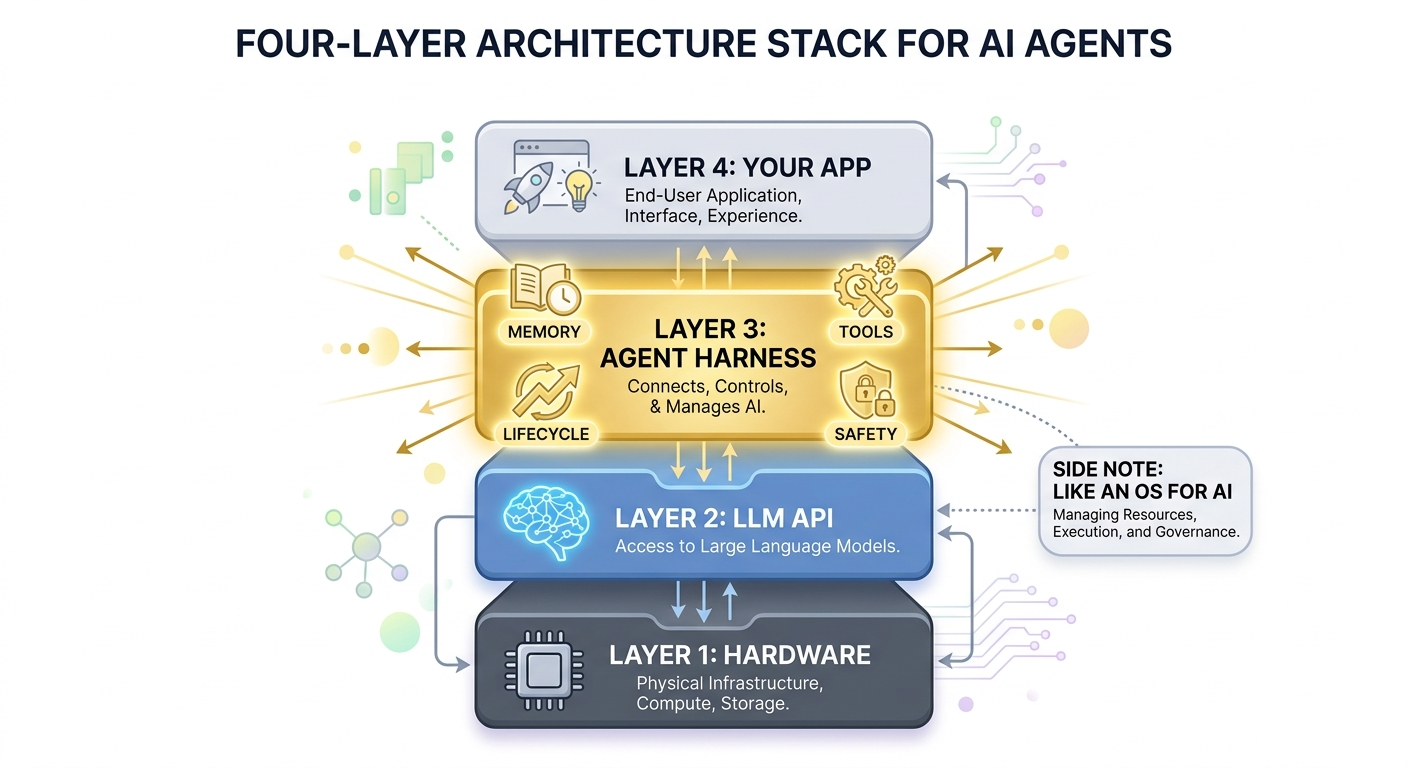 Figure 1: AI engineering's three paradigm shifts. From optimizing prompts, to leveraging context, to building complete management systems.
Six Core Harness Modules
A complete Harness system comprises six key modules, much like an operating system requires file systems, memory management, and process scheduling.
1. Prompt Management This isn't static prompt writing. It's dynamic and context-aware. Harness adjusts prompts at runtime based on task phase, user goals, and accumulated results. Sometimes the model needs creative thinking; other times, rigorous logic. Different contexts demand different prompts.
2. Memory Management In long tasks, which information should persist? Which should be forgotten? Which should be summarized? Harness actively manages context windows, preventing critical information loss while filtering irrelevant data. This guards against "context rot."
3. Tool Orchestration Modern AI systems invoke multiple tools: database queries, API calls, computational engines. Harness determines when to call which tool, ensuring correct output formats and logical sequencing.
4. Lifecycle Control Complex tasks traverse multiple phases: planning, execution, verification, adjustment, reporting. Each phase has different requirements and constraints. Harness manages phase transitions, maintaining task integrity.
5. Safety Guard Prevents hallucinations, unsafe action execution, and unintended side effects. When the model attempts dangerous actions, Harness intercepts and requires confirmation or re-evaluation. It's a safety net.
6. Observability What's the model executing? Why make that decision? What's the current progress? Harness provides complete transparency, enabling both humans and systems to understand what's happening. Essential for debugging and improvement.
These modules don't operate in isolation—they interact deeply. Prompt management influences tool orchestration; memory management impacts safety guards; observability feeds back into lifecycle control.
Six Collaboration Patterns in Action
Abstract system design requires concrete execution patterns. The open-source Harness plugin implements six collaboration patterns, each tailored to different task types. Most importantly: A/B testing demonstrates that systems using these patterns achieved 60% quality improvement and 100% win rate across 15 different tasks.
Pipeline: Tasks execute sequentially. One step's output feeds the next step's input. Like a production line where each station completes its work in turn.
Fan-out/Fan-in: A task splits into multiple parallel subtasks, whose results converge. Imagine analyzing a problem from multiple angles—Fan-out lets multiple models analyze simultaneously, Fan-in synthesizes all perspectives.
Expert Pool: The system contains multiple specialized models or configurations, each strong in particular domains. Harness routes tasks to the most suitable "expert."
Producer-Reviewer: One model generates a candidate answer; another "reviews" it for quality. This Generator-Evaluator separation shows remarkable results: 52.8% → 66.5% (+27% improvement).
Supervisor: A high-level supervising model observes other models' behavior and intervenes when problems arise. Like a company's quality assurance department.
Hierarchical Delegation: Complex tasks decompose hierarchically. Top-level models set strategy; lower-level models execute specifics. Naturally mirrors large organizations' decision structures.
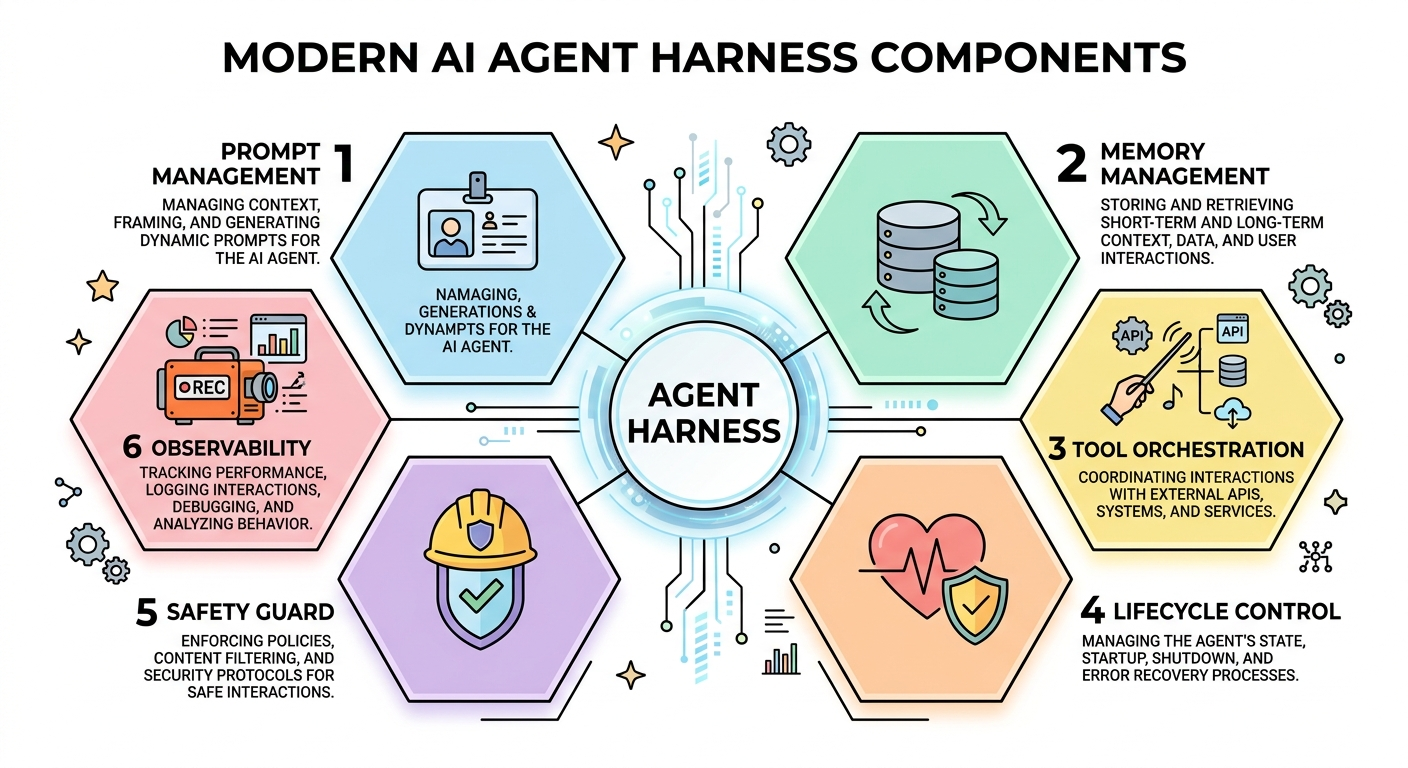 Figure 2: Harness's six collaboration patterns. Different task types benefit from different patterns.
Four Critical Failure Modes in Long Tasks
Why is Harness infrastructure so essential? Long tasks particularly risk failure. AI systems encounter four typical failure modes.
Context Rot: By step 50, the model may "forget" the core requirement from step 1. The information doesn't disappear—it drowns in subsequent conversation. The memory management module prevents this through periodic summaries and pinning critical information.
Runaway Loops: A model action produces results. The model interprets results as success signals and repeats the action endlessly, entering infinite loops. Lifecycle control sets explicit termination conditions and detects loops.
Compounding Hallucinations: A model generates false information at step one. It bases subsequent decisions on this false premise. Final answers become completely unreliable. Safety and verification mechanisms fact-check at critical steps.
Unintended Action Execution: The model misinterprets instructions and executes unrequested actions. For instance, asked to "query sales data," it executes "delete sales data." Safety guards intercept high-risk actions, requiring additional confirmation.
These four hazards aren't capability issues—they're system design gaps. Harness exists precisely to fill these gaps.
The Magic of Generator-Evaluator Separation
If I said using the same model—but adjusting its role and prompt—boosts performance from 52.8% to 66.5% (+27%), would you believe it?
Welcome to the Producer-Reviewer collaboration pattern's power.
The logic is straightforward: The same model, when prompted to "generate creative marketing copy," behaves very differently from when prompted to "evaluate whether this copy is persuasive." Generation mode leans creative and risk-taking; evaluation mode leans critical and rigorous.
The practical approach: First, let the model generate a candidate answer in "generation" mode. Then use the same model in "evaluation" mode to assess the answer. If evaluation fails, let the generator retry based on feedback, creating self-improving loops.
The design philosophy underlying this is Progressive Disclosure—don't load all information at once. Instead, reveal only necessary information when needed. During evaluation, the model sees only the candidate answer and evaluation criteria, unburdened by generation process details.
From Hierarchy to Intelligence: Organizational Transformation
Harness Engineering's impact transcends technology. It's reshaping organizational structure itself.
Traditional organizations have three layers: Individual Contributors (ICs) execute work, managers decide who does what, executives set direction. Under Harness architecture, this transforms into: ICs handle execution, DRIs (Directly Responsible Individuals) make critical decisions, player-coaches (senior contributors) both contribute and coordinate others. AI fills some traditional managerial roles—task distribution, progress monitoring, quality control.
Anthropic's internal case best illustrates this: 3 engineers produced 1 million lines of code in 5 months with zero manual writes. How? Because AI doesn't just generate code—Harness ensures quality, logical consistency, and seamless integration. Human engineers shifted from "writing code" to "guiding AI to write code" and "verifying AI output."
This isn't replacing human engineers—it's elevating their role. They become system architects, quality gatekeepers, decision-makers.
Spec & Verify: Revolutionizing Code Review
Code review is software development's most critical yet time-consuming practice. Traditionally, developers submit code and reviewers inspect every line for logic, style, and potential bugs. For large projects, this takes hours or days.
Spec & Verify offers a fundamentally different approach.
First, don't review code directly—review specifications (Specs). Developers write what code should do, not how. Specs are terser than code, capturing requirements' essence more clearly.
Second, verification isn't manual inspection—it's AI-driven. AI serves as a "specification verifier": given a specification and code, it verifies that code satisfies the specification. If not, it pinpoints specific gaps.
Third, this creates self-improving loops. AI provides verification results; developers revise code or specs based on feedback; AI re-verifies. Each loop improves quality.
This approach offers threefold advantages:
- Specifications become reviewable artifacts, higher-level and clearer than code.
- AI verification is fast and consistent, unaffected by fatigue.
- Self-improving loops ensure continuous quality elevation.
Conclusion: Reshaping AI's Future
AI models grow more intelligent daily. But this isn't the endpoint—nor the primary bottleneck. The real constraint is system design—how to reliably deploy intelligent models, prevent long-task failures, seamlessly integrate with human processes and organizational workflows.
Harness Engineering represents AI engineering's maturation. The shift from "How do we make AI smarter?" to "How do we make intelligent AI reliably complete tasks?" will profoundly impact software development, organizational management, and knowledge work itself.
For developers, it's time to study Harness system design. Not because models lack intelligence, but because intelligent models require intelligent systems for coordination. The next time an AI system fails at a long task, ask from the Harness perspective: Is the model unintelligent, or is the system design incomplete?
The answer often reveals the real problem.
And that's what Harness Engineering is revolutionizing.