Context Engineering: Why What You Feed AI Matters More Than Which AI You Use
A new model drops. You upgrade. The outputs still make you wince.
Here's the uncomfortable truth: the problem was never the AI.
The Ingredients Problem
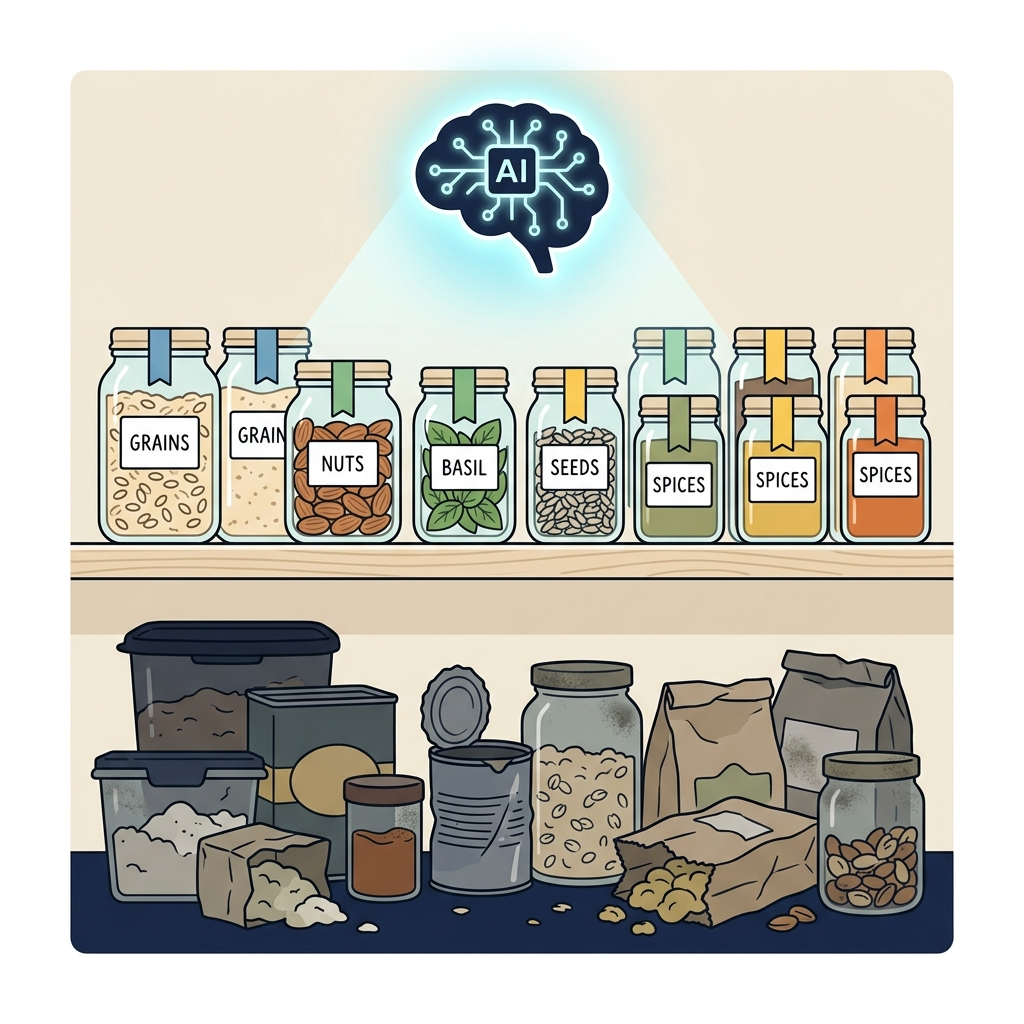
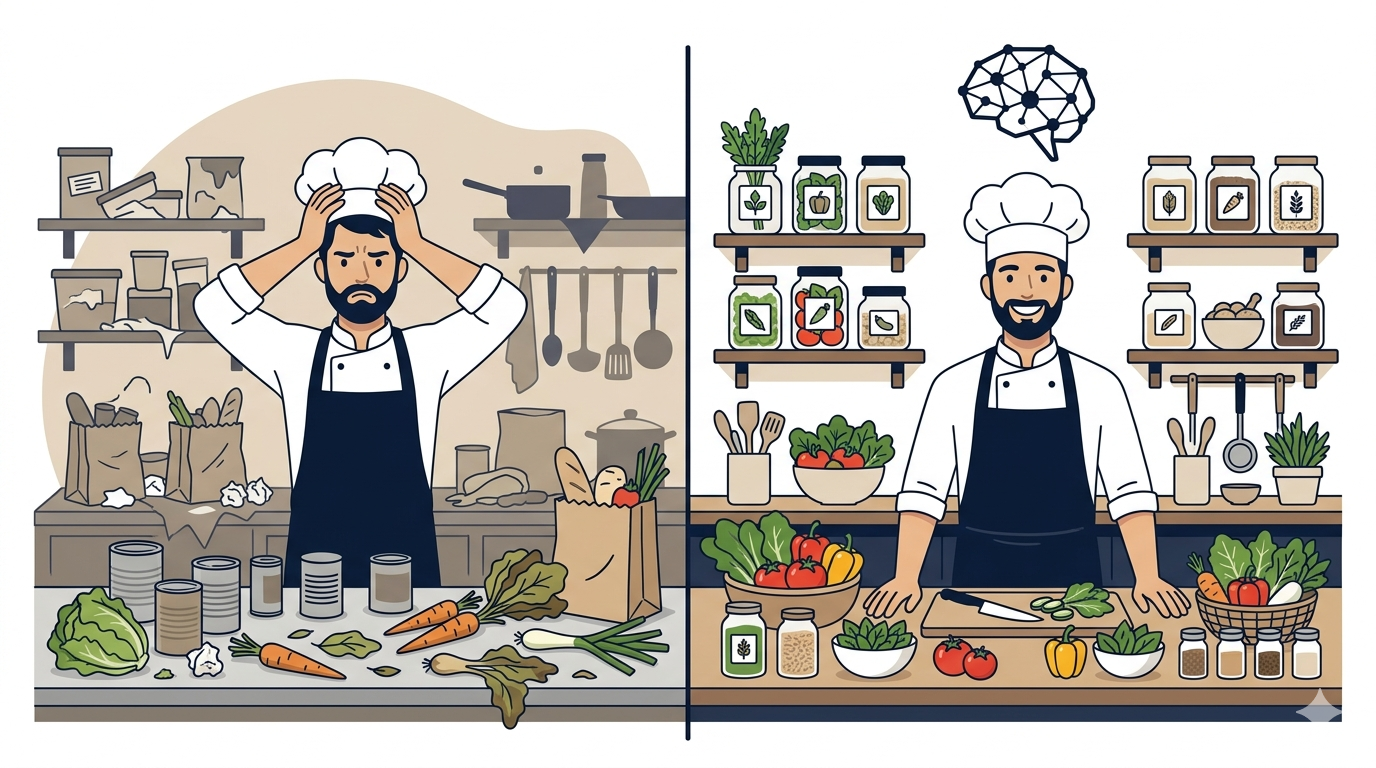
Think about it this way. Take the world's best chef — a Michelin-starred genius who can transform a handful of humble ingredients into something transcendent. Now hand them three-day-old leftovers scraped from the back of the fridge.
The result? Still terrible food.
Swapping out the chef doesn't fix anything. The bottleneck was always the ingredients.
This is exactly what's happening when you upgrade your AI model and nothing meaningfully improves. The model is the chef. The context — everything you feed into it — is the ingredients. And most people are serving their AI spoiled groceries while blaming the kitchen.
What "Context" Actually Means
Context isn't just your prompt. It's everything the AI receives before it generates a response: your instructions, the background documents you paste in, the conversation history, the examples you provide, the constraints you set.
Walk into a library and say "I want a book." The librarian blinks. What genre? Fiction or nonfiction? For a child or an adult? You haven't given them anything to work with.
That's what most AI interactions look like. Vague inputs, vague outputs, and then frustration aimed at the model.
Here's a number worth sitting with: the performance gap between GPT-4o and Claude on equivalent tasks is typically under 20%. But the gap between well-structured context and poorly structured context on the same model? That can exceed 300%.
You are almost certainly leaving more gains on the table through sloppy context than you could ever recover by switching models.
Navigation vs. Search
There's a useful way to think about what good context does for an AI.
Imagine you're visiting an unfamiliar city. You could pull out your phone and Google every question as it comes up — restaurants, transit routes, hidden gems. You'll get there eventually. Or you could grab coffee with a friend who's lived there for a decade. They don't just answer questions; they anticipate them. They hand you a mental map. You're navigating, not searching.
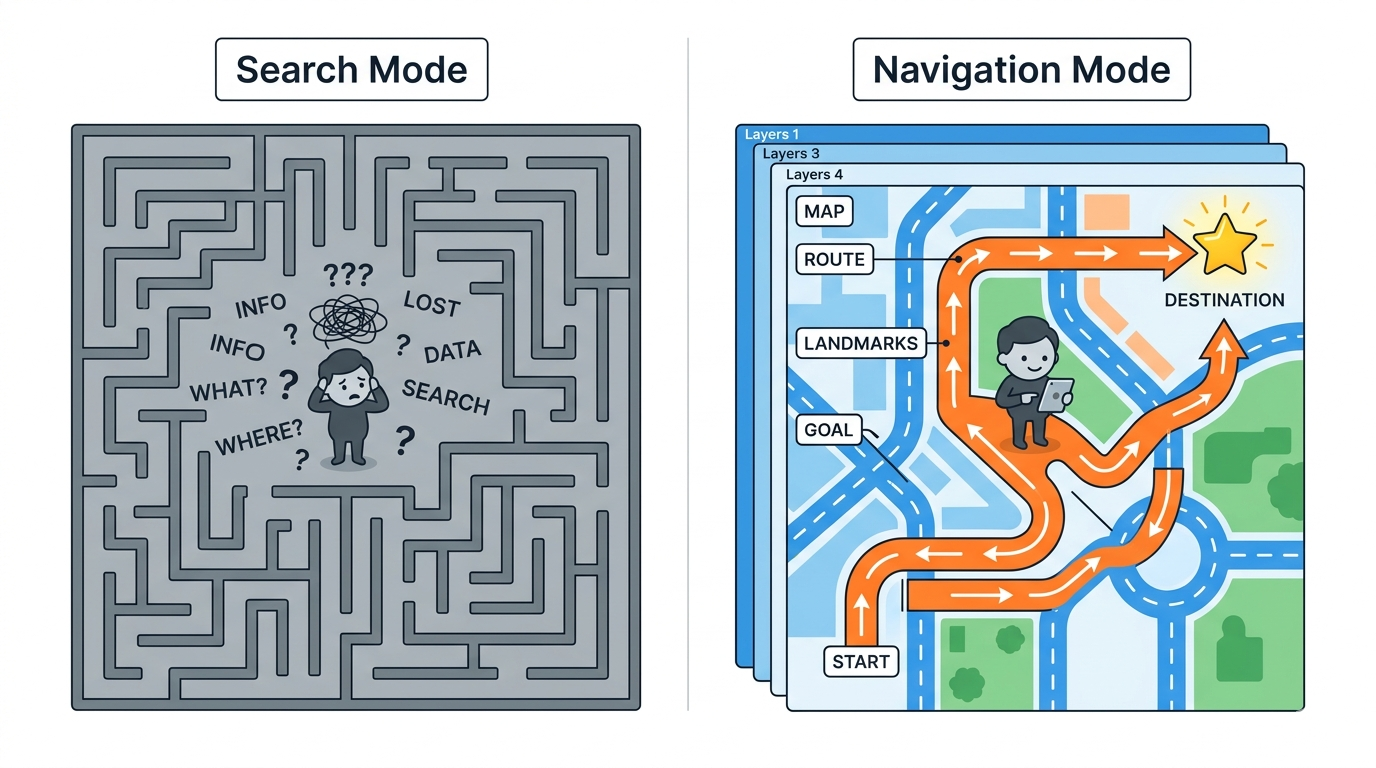
Good context turns AI into your local friend. Instead of forcing the model to construct understanding from scratch, you hand it an organized map of what it needs to know. It spends its energy on analysis and synthesis, not on guessing what you actually mean.
This is why engineers who work seriously with AI treat context as an asset — something to be versioned, refined, and quality-checked over time, the same way you'd manage a codebase.
Your Data Needs a Label
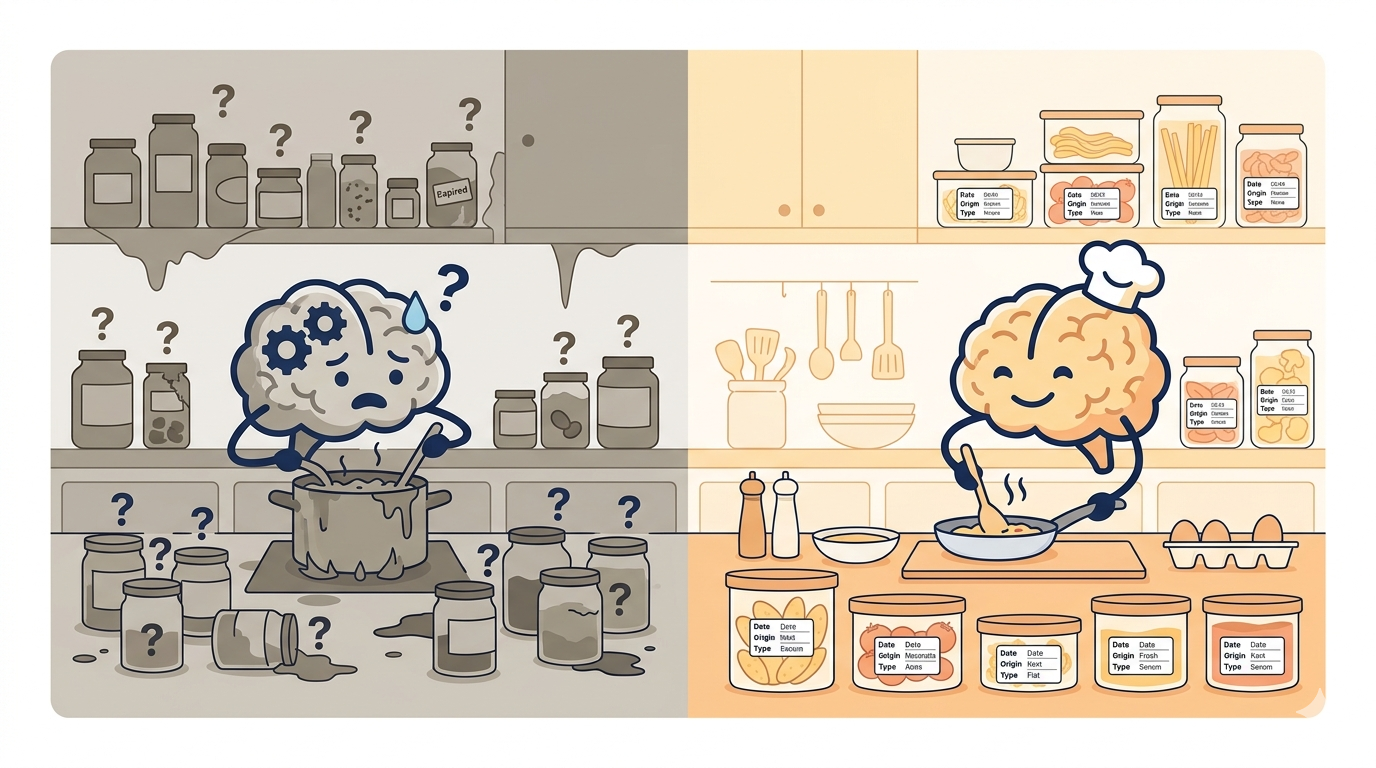
Here's a mistake that's easy to overlook. You paste in a number — say, a Q3 revenue figure. The AI sees it. But which year? Which currency? Is that strong or weak relative to expectations?
Raw data without metadata forces the AI to guess. And it will guess, confidently and silently, which is the worst kind of error.
Think of metadata as the label on a specimen jar. Without it, you have an unidentified liquid. With it, you have a diagnostic sample with context, provenance, and meaning.
There's also the freshness problem. A GPS running on a year-old map doesn't know about the new highway that opened in the spring. It will confidently route you the wrong way. The same thing happens when you feed AI outdated internal documents, deprecated policies, or stale data. The model has no way of knowing the map is wrong — it can only work with what you give it.
The practice of checking whether your AI's knowledge is drifting from current reality is sometimes called drift detection. It's less glamorous than prompt engineering, but it's just as important.
Three Things to Do Differently
Stop reflexively upgrading models. Before you pay for the next tier or switch providers, audit your context quality. The upgrade will cost you money. Better context is free.
Treat your prompts as assets, not throwaway text. Version control them. Keep a library of what works. Iterate on them the way you'd iterate on any other tool you rely on.
Send your data with its documentation. Every piece of information you hand to an AI should come with enough context to be interpreted correctly: timeframe, unit, source, significance. Don't make the model guess.
The Real Competitive Advantage
The people who get genuinely impressive results from AI aren't the ones with the largest compute budgets or access to the most powerful models. They're the ones who've done the unglamorous work of organizing what they know.
Before you ask AI to do something for you, ask yourself a different question first: what ingredients am I actually handing it?
That's where the real leverage lives.
If this reframed how you think about working with AI, share it with someone who's still blaming the model.