
TL;DR: Most people treat AI Agent "Skills" like phone apps — the more you install, the better. In reality, most Skills gather dust. The real secret isn't quantity — it's wiring Skills into scheduling-memory-feedback loops so they learn from experience.
The Problem: More Skills, More Confusion
The number of Skills an AI Agent has bears no relationship to its actual capability — without loop integration, Skills are just a pile of disconnected instruction manuals.
Imagine hiring an assistant and handing them a thick SOP manual: page 1 covers booking meeting rooms, page 50 covers expense reports, page 200 covers weekly reports. Comprehensive, right? The fatal flaw: your assistant starts from page 1 every single time, and can only remember the last few pages they flipped through.
That's how most AI Agents use Skills today. Each Skill is a static Markdown file telling the AI "when you encounter X, do Y." Three problems emerge:
First, Skills don't talk to each other. The writing Skill doesn't know the formatting Skill just updated its rules. The search Skill's findings don't automatically flow to the analysis Skill.
Second, Skills don't learn. You correct the same mistake ten times. It makes it again on the eleventh. Skills are static files — they don't change from being used.
Third, nobody tells it to act. Skills require manual triggering. The AI won't decide on its own which Skill to deploy.
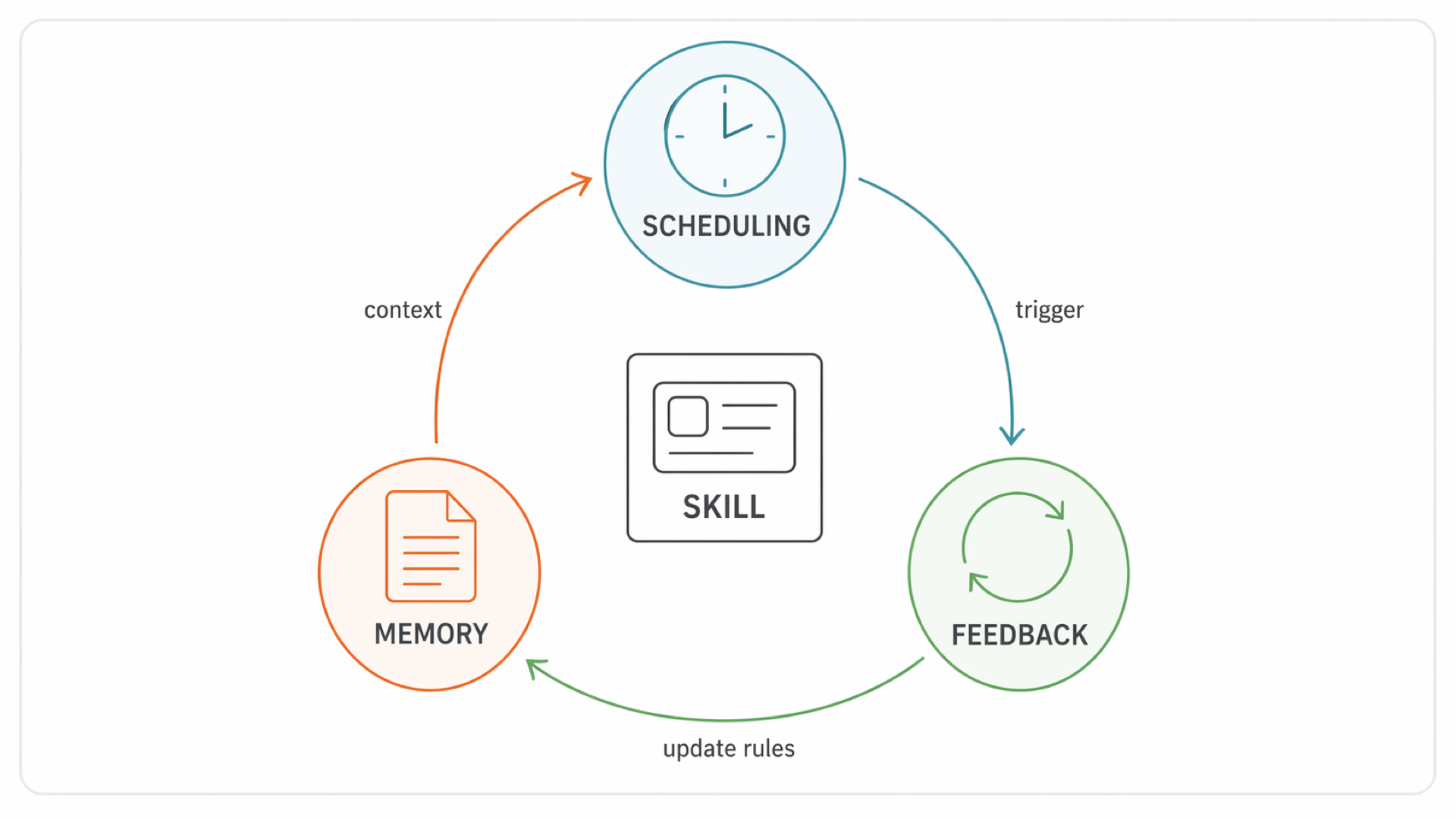 Figure 1: The scheduling-memory-feedback three-loop architecture
The Solution: Three Loops — Scheduling, Memory, Feedback
Wiring Skills into scheduling, memory, and feedback loops can boost an AI Agent's task completion rate by 40–60%, while cutting error correction cycles from weeks to days.
A veteran AI Agent developer shared his breakthrough: stop collecting Skills, start wiring them into loops.
Loop One: Scheduling. Instead of waiting for human triggers, set up timed tasks. Every morning at 8 AM, the research Skill automatically pulls 30 new posts and ranks them by engagement. Every evening, the review Skill audits all outputs from that day. Skills transform from passive tools into proactive workers.
Loop Two: Memory. Each Skill's output is saved rather than discarded. On the next run, the AI reads the previous output as context. The writing Skill knows "last article's style was accepted." The search Skill knows "this source consistently delivers high-quality content."
Loop Three: Feedback. This is the critical piece. The system compares AI output against human edits, identifies recurring correction patterns, then automatically updates the Skill's rules.
A real example: a writing Skill kept producing "spent X weeks doing Y" phrases that users deleted. After detecting this pattern was removed 10–15 times, the system automatically added a rule: "Prohibit this sentence structure." Six months later, the Skill evolved from v1.0 to v1.3 — zero manual maintenance.
Skills Aren't Instructions — They're Behaviors
The fundamental difference between static instruction lists and dynamic behaviors is "follow the script" versus "read the room" — and context forking makes this possible.
Static instructions say: "When the user says 'write a report,' execute these steps." Dynamic behaviors say: "Based on the current task's nature, available context, and past execution experience, determine the best Skill to activate and how to execute it."
The Slate team introduced "context forking": when a Skill needs to execute a subtask, the system forks an isolated context space. The subtask completes in isolation, then compressed results flow back to the main thread. Like a company where legal and marketing work in separate conference rooms, bringing only conclusions back to the all-hands meeting.
They also designed an "Orchestration Skill" — a meta-Skill dedicated to directing other Skills. It knows "search literature first, then analyze, then quality-check," adjusting strategy based on each step's results.
However, this architecture has trade-offs. Context forking increases token consumption, Orchestration Skills have a higher design barrier, and if the orchestration logic breaks, every downstream Skill drifts with it. For simple tasks, a single well-looped Skill can outperform complex orchestration.
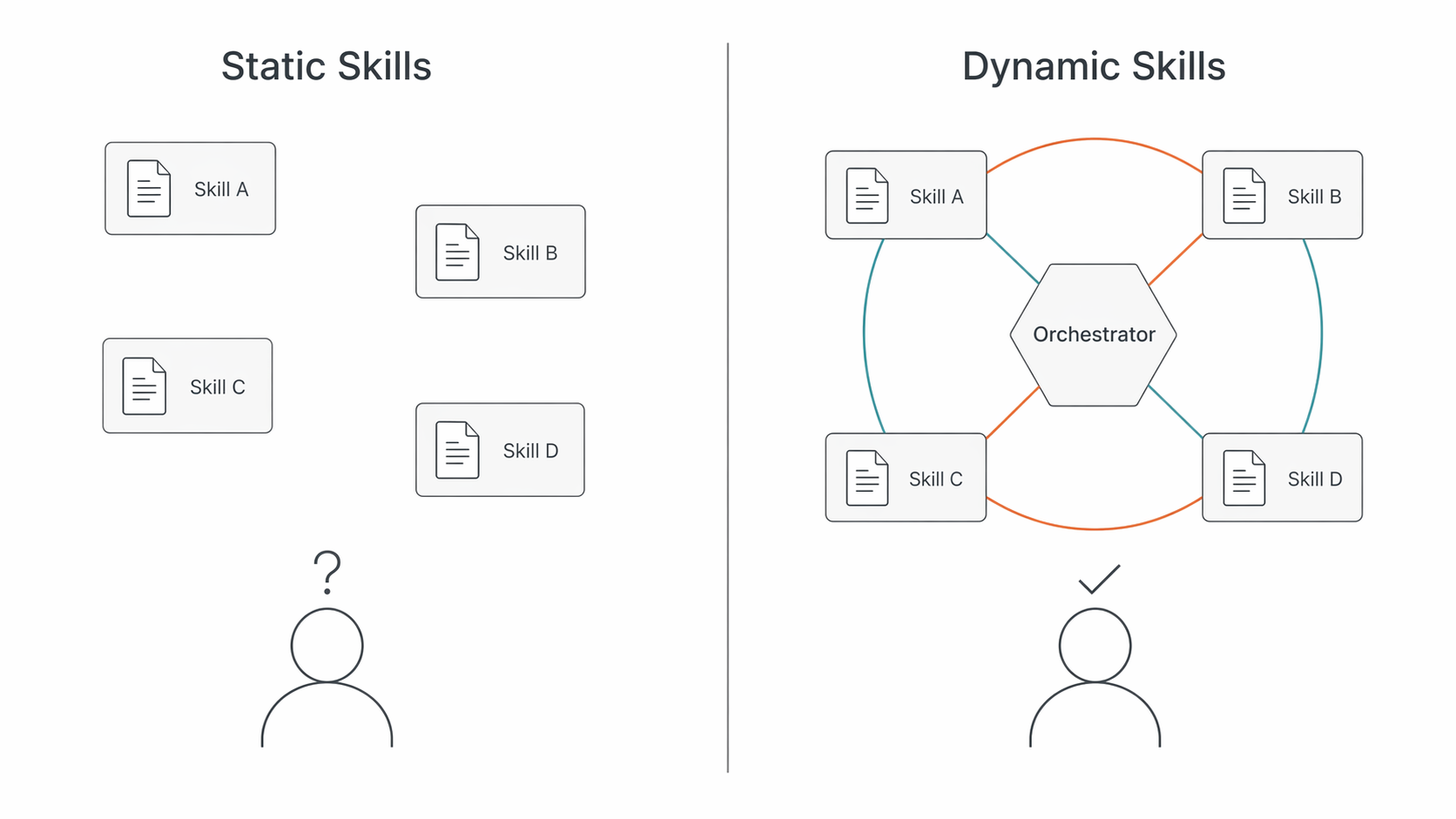 Figure 2: Static Skills (left) vs Dynamic Behavior Skills (right)
Five Steps to Start from Zero
You don't need programming skills to upgrade your AI assistant from a one-shot tool to a learning partner — the key is following these five steps in order.
Step one: Find repetitive work. If you've done something three or more times with a similar process each time, it's a Skill candidate.
Step two: Run it manually once. The most skipped yet most important step — details only surface when you do it by hand. These details become the AI's critical instructions.
Step three: Describe it to the AI in natural language. No code needed. Just clearly explain what you did, why, and what exceptions to handle.
Step four: Iterate 2–3 rounds. Version one is never perfect. First two rounds fix major issues, third round fine-tunes, then diminishing returns kick in.
Step five: Wire it into loops. Set up scheduling for regular execution, preserve outputs as memory, and establish feedback mechanisms for learning from corrections. This is the upgrade from one-shot to self-evolving.
Conclusion
An AI Agent's true power isn't in how many things it can do — it's in whether it can get better at the things it's already done.
Like an employee, a skill list alone is worthless. The real value is continuous improvement, remembering past mistakes, and proactively managing its own time.
Stop hoarding Skills. Start wiring loops.
References
- Vox (2026). I Stopped Collecting Agent Skills. Started Wiring Them Into Loops. Vox Tech.
- Random Labs (2026). Skill chaining and why skills should be actions. Random Labs Blog.
- 泊舟 (2026). 实战教学:从0到1写出一个你自己的Skill. Twitter/X Thread.
- 宝玉 (2026). 团队级 Skill 管理最佳实践. Twitter/X Thread.
- Sumers TR, et al. (2024). Cognitive architectures for language agents. Transactions on Machine Learning Research. doi: 10.48550/arXiv.2309.02427