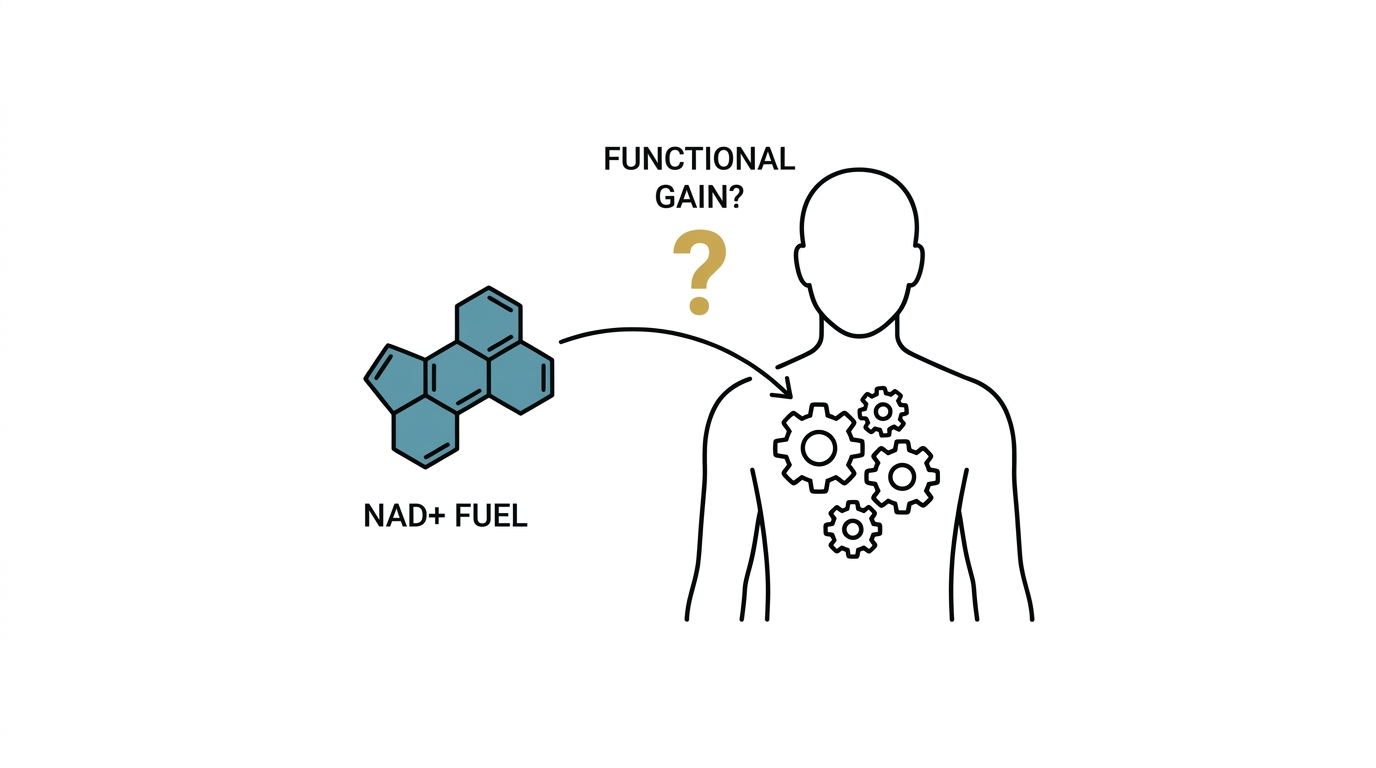
Your NAD+ Numbers Went Up. But Did You Actually Get Younger?
The supplement industry has a gift for turning a promising molecule into a simple story: your NAD+ declines with age, so you take a precursor like NMN or NR to
Long-form analysis at the intersection of AI and life sciences — all spells, sorted by time.
The supplement industry has a gift for turning a promising molecule into a simple story: your NAD+ declines with age, so you take a precursor like NMN or NR to
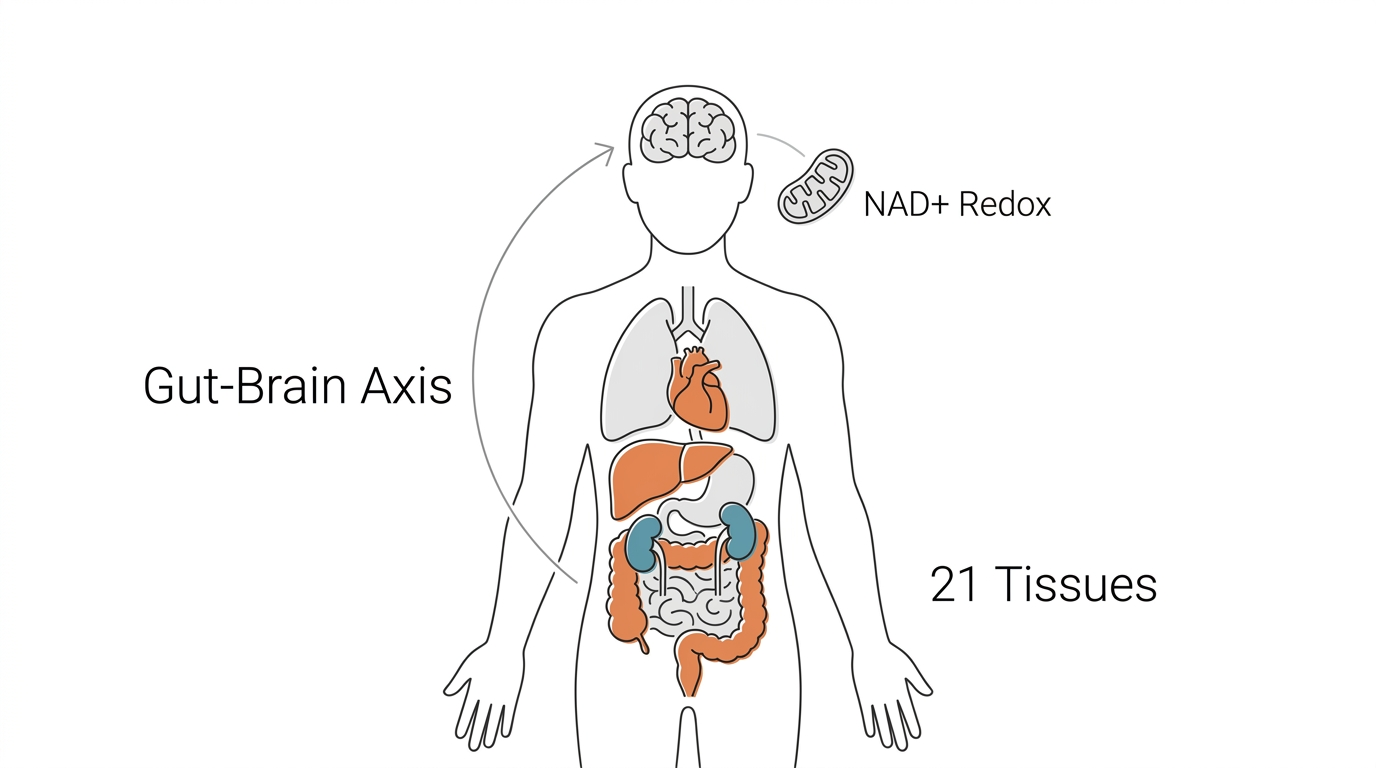
Three landmark 2026 studies reveal aging as a coordinated, organism-wide remodeling: one-quarter of 536 cell types shift with age, gut bacteria disrupt brain memory via medium-chain fatty acids, and the NAD+/NADH redox ratio, not absolute NAD+ levels, may determine mitochondrial resilience in Alzheimer's disease.
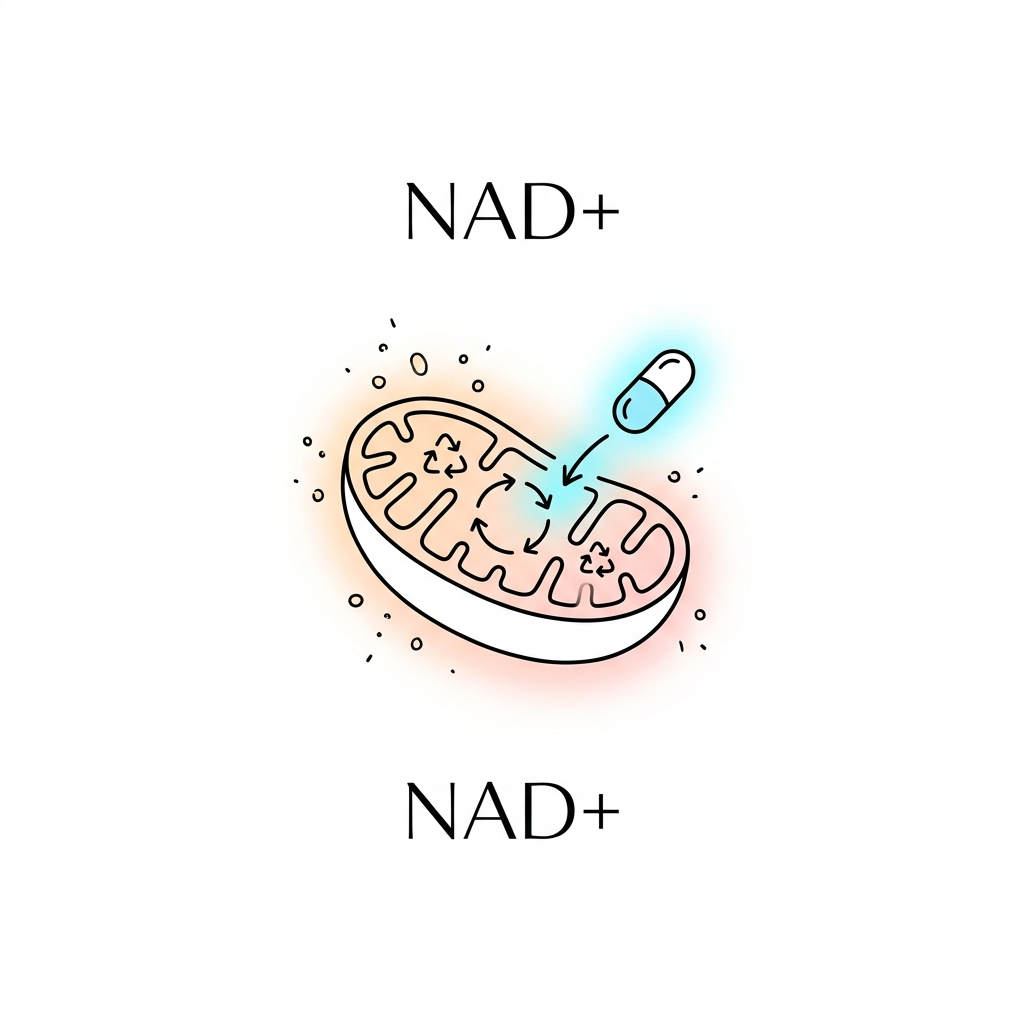
By 40, your mitochondria run on half the NAD+ they had at 20. How NAD+ decline and the SIRT3 switch dim your cellular power plants, and what the science says about fighting the brownout.
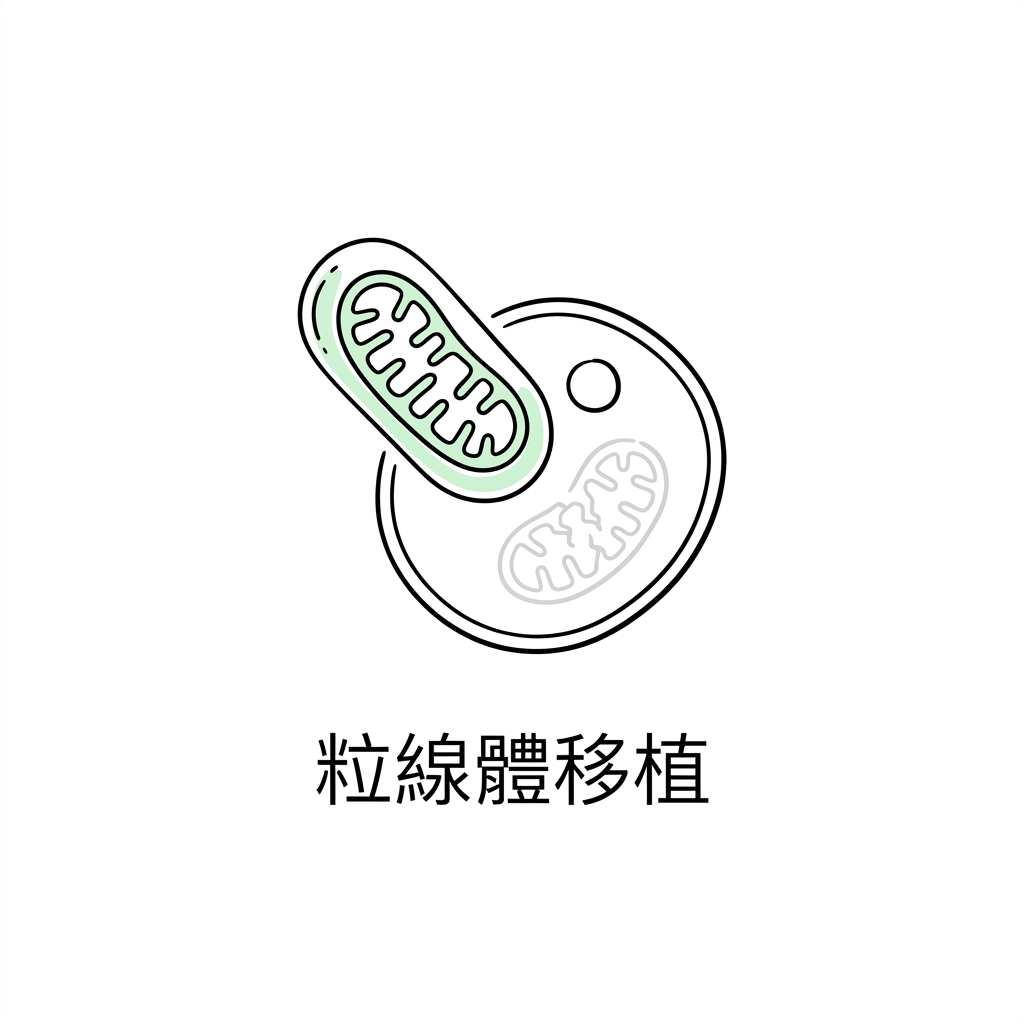
# Your Cell's Battery Just Got Replaced: Scientists Actually Did It > **TL;DR**: When your phone battery dies, you swap it out. In 2026, scientists did the sam
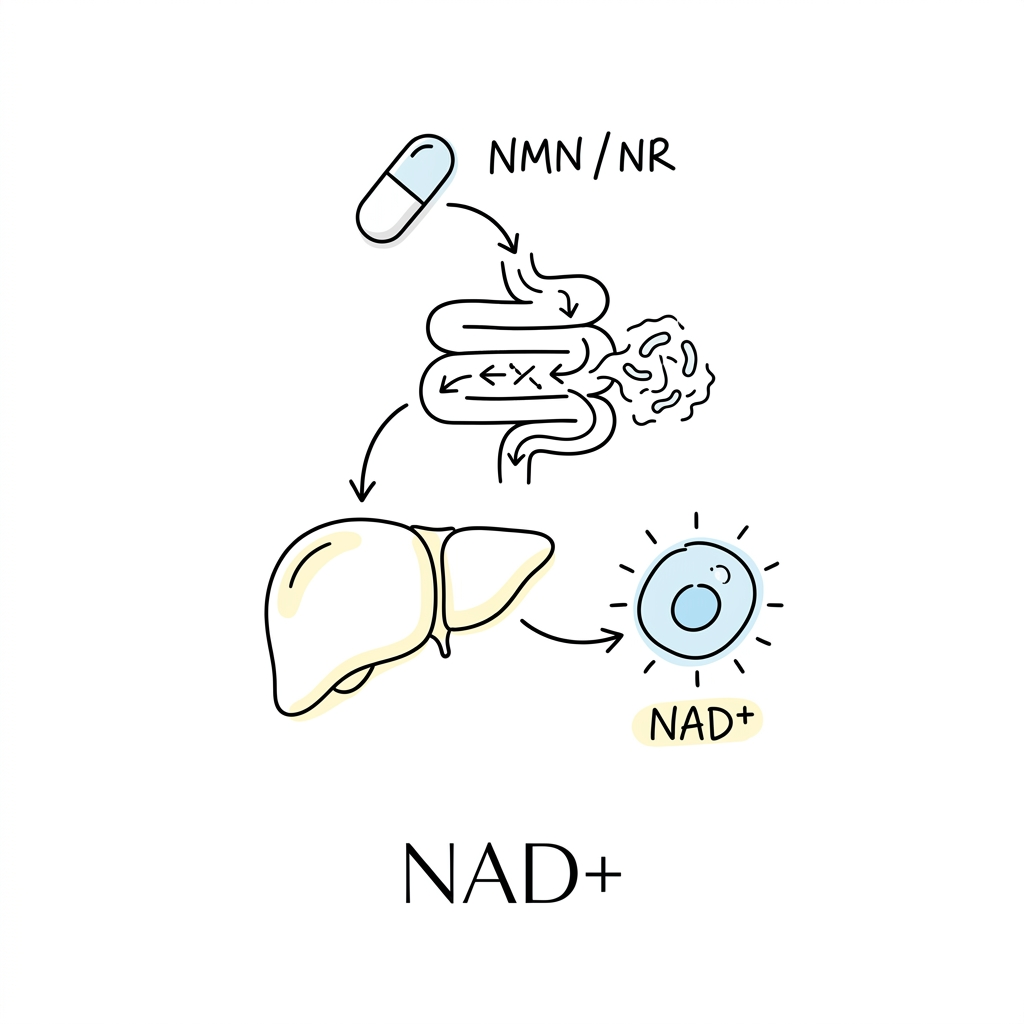
NMN and NR do raise blood NAD+. But the science shows the benefits are real, limited, and work nothing like supplement ads claim. Here is what actually holds up.
Think about a phone you've had for a few years. You've swapped the screen. You cleared the storage. But the battery? It just doesn't hold a charge anymore. By n